School Changing Room Layout Guide UK: Safe, Practical and Supervised Design Planning
May 11, 2026
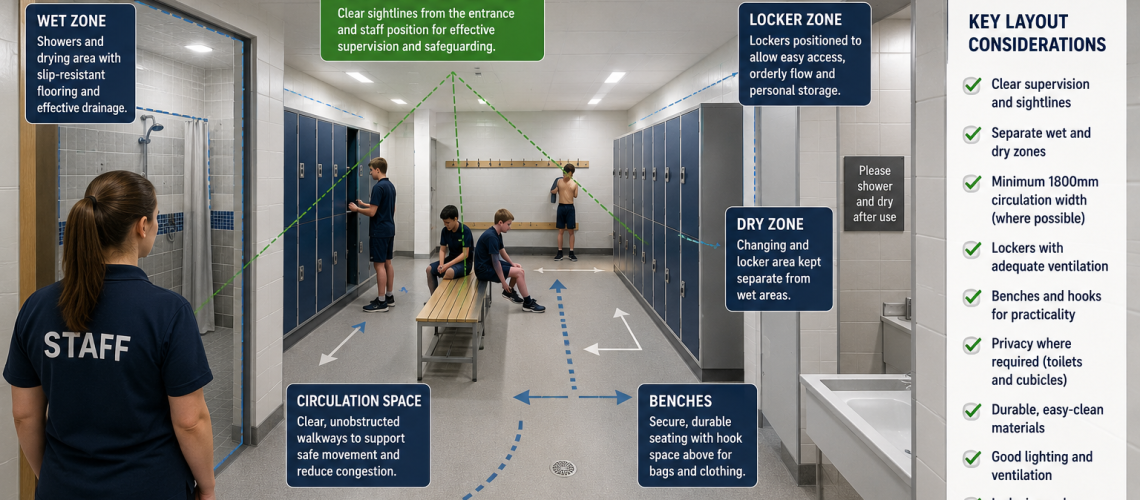
School changing room layouts must balance privacy, supervision, movement flow and safety. Poor layouts create congestion, reduce safeguarding visibility and make changing spaces difficult to manage during busy periods.
Quick answer: Separate wet and dry areas, keep benches clear of main routes, maintain supervision sightlines and avoid layouts where students must cross through changing zones unnecessarily.
Key layout priorities
- Clear zoning (changing, lockers, circulation)
- Wet and dry separation
- Supervision without compromising privacy
- Safe movement at peak times
Bench and locker positioning
- Do not place benches directly in circulation routes
- Keep space between lockers and seating
- Avoid opposing locker rows with narrow gaps
Safeguarding and visibility
Layouts should allow staff awareness of movement without exposing private changing areas. Entrances and exits should remain visible.
Common layout failures
- Wet users crossing dry changing space
- Benches blocking access to lockers
- Hidden corners reducing supervision
FAQ
Do school changing rooms need zoning?
Yes. Zoning reduces congestion and improves safety.
Should lockers be inside changing rooms?
Only where space allows safe movement and supervision.
Discover more from Blog Total Locker Service
Subscribe to get the latest posts sent to your email.