Workplace Changing Rooms: Staff Welfare and PPE Layouts
April 13, 2026
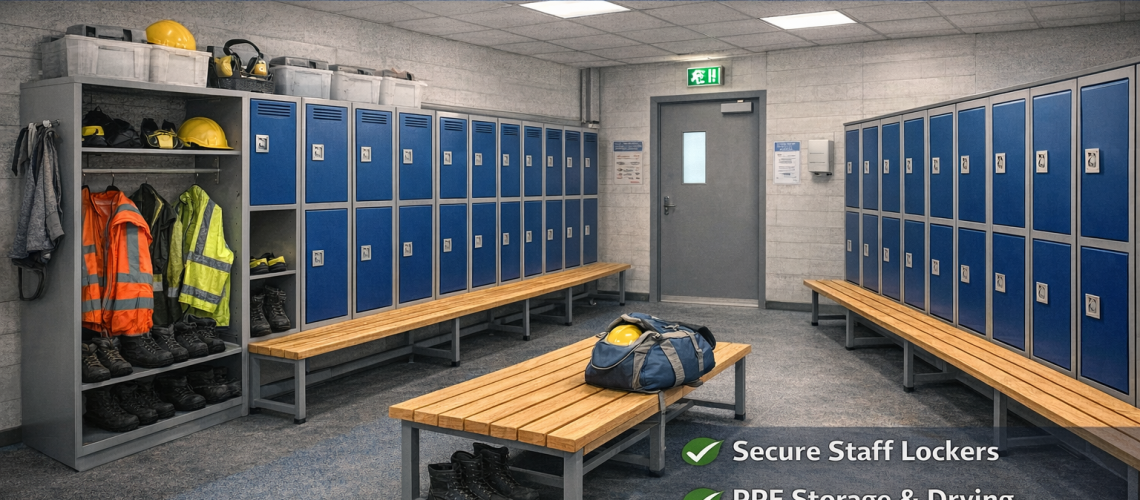
Workplace changing rooms do more than give staff a place to store clothing. In many environments, they form part of the wider welfare setup and support how a site manages hygiene, security, comfort and day-to-day operations. When the layout works well, staff can change efficiently, store personal items properly and access protective clothing or equipment without unnecessary delay. When it does not, the room quickly becomes cramped, disorganised and harder to manage.
That matters across a wide range of settings. Factories, warehouses, transport depots, food production sites, healthcare premises, leisure venues and maintenance environments may all need workplace changing areas, but the details can vary depending on shift patterns, PPE needs and how staff move through the building. A good design starts with those practical realities rather than treating the room as a simple row of lockers and benches.
This guide explains how to plan workplace changing rooms with staff welfare and PPE layouts in mind, helping create spaces that are secure, practical and easier to maintain.
Why workplace changing rooms matter
A changing room is part of the working environment, not just an extra space at the edge of it. It can affect how quickly shifts begin, how well uniforms and PPE are managed, how clean work areas remain and how staff experience the site overall.
Where employees need to change before starting work, the room helps create a clear transition between personal clothing and job-specific dress. That may be important for hygiene, presentation, safety or all three. In some sectors, it also helps separate dirty and clean activity, which is essential for maintaining standards.
From a welfare perspective, staff need somewhere that feels usable, organised and fit for purpose. That does not mean over-designing the space. It means making sure the layout supports everyday routines without creating unnecessary friction.
Start with how the room is actually used
No workplace changing room should be planned in isolation from the operation it serves. The first step is understanding what staff need to do there. In one environment, employees may simply store coats, bags and personal items before heading onto the floor. In another, they may need to change fully into uniforms, safety boots, high-visibility clothing or specialist protective equipment.
The timing of that use matters too. Some workplaces have predictable shift starts and finishes, which means the room becomes busy in short bursts. Others have staggered starts, making traffic more spread out. A layout that works well for steady low-volume use may fail when large groups arrive at the same time.
It also helps to understand whether PPE is issued daily, stored permanently, shared between shifts or kept close to the changing area for quick access. The answers shape the room more than the available floorplan alone.
Staff welfare should be built into the layout
Workplace welfare is often discussed in terms of compliance, but good changing room design also has a practical human value. Staff need enough room to move, sit, change footwear, store belongings and prepare for work without feeling rushed into conflict with other users.
A well-planned room can support comfort through simple decisions such as sensible aisle widths, enough bench seating, clear locker numbering and a layout that does not force everyone into one small area at once. These details may seem basic, yet they strongly influence whether the room feels efficient or frustrating.
Welfare also includes the condition of the space. If the room is difficult to clean, poorly ventilated or always cluttered with PPE and bags, it quickly feels neglected. A better layout improves daily experience without needing to be elaborate.
Locker choice depends on what staff need to store
Lockers are usually the core of the room, but the right type depends on what needs to be kept inside. A staff member storing a coat, lunch bag and personal items has very different needs from one storing uniforms, boots, helmets or PPE.
That is why locker selection should start with storage content rather than defaulting to a standard size. Some workplaces benefit from full-height lockers for uniforms and footwear. Others may prefer compartment lockers where personal item storage is lighter. In some environments, two-person or multi-compartment layouts look space-efficient on paper but do not give enough room for real working kit.
Where PPE is bulky, awkwardly shaped or needs to dry between uses, the layout may need more generous locker space or a separate equipment storage solution. Trying to force everything into undersized compartments usually leads to overspill onto benches and floors.
Think carefully about personal clothing and workwear separation
In many workplaces, staff need to keep personal clothing separate from uniforms, PPE or contaminated items. This can be important for hygiene, cleanliness and organisation. The more clearly that separation is planned, the easier the room is to manage.
In some settings, a single locker with internal organisation may be enough. In others, staff may need two-compartment lockers or clearly separated clean and dirty storage arrangements. This is especially relevant where clothing may become soiled, damp or exposed to dust and debris during the working day.
Separation does not need to be complicated, but it should be deliberate. If personal items and workwear are constantly mixed together because the locker design does not reflect how the site operates, the room becomes less hygienic and less practical.
PPE layouts should support access, not clutter
PPE is one of the main reasons workplace changing rooms need careful planning. Safety boots, helmets, gloves, jackets, eye protection, hearing protection and specialist garments all take up space. If the layout does not account for them properly, they end up being left on benches, on top of lockers or in walkways.
A strong PPE layout makes equipment easy to access when needed and easy to put away afterwards. That may mean including lockers with sufficient height for boots and clothing, adding hooks or rails for selected items, or providing separate nearby storage for certain shared protective gear.
The key is to avoid making the changing room carry more than it can sensibly hold. PPE should be part of the design logic from the beginning rather than an afterthought added once the room is already in use.
Benches should help staff change comfortably
Bench seating is important in workplace changing rooms because staff often need somewhere to sit while changing footwear, adjusting clothing or preparing for a shift. The right bench layout supports that activity without interrupting the main route through the space.
Wall-mounted or central benches can both work depending on the size and shape of the room. What matters is that they are placed with enough space around them for both seated use and circulation. If benches sit too close to locker doors, staff end up competing for the same area. If they are placed directly in the main walkway, movement slows and congestion follows.
Bench design also affects cleaning and durability. Simple, robust benches with good floor access beneath are often easier to maintain in workplace settings.
Plan for peak shift times, not just average occupancy
One of the most common workplace design mistakes is basing the room on the total number of staff but not on when they actually use it. A room may appear large enough overall, yet still feel overcrowded if too many employees need it at the same time.
Shift overlap is often the pressure point. One group may be leaving while another is arriving, which doubles the demand for a short period. Where PPE changes are involved, this overlap can become even more intense because users spend longer in front of lockers and benches.
Planning for those busy periods usually leads to better aisle widths, more realistic bench provision and smarter locker placement. A room that works at peak time will usually work well the rest of the day too.
Traffic flow still matters in staff-only rooms
Because workplace users are familiar with the room, it can be easy to assume traffic flow matters less than it does in public spaces. In reality, poor movement planning causes just as much frustration. Staff may know where they are going, but they still need room to reach lockers, change footwear and move through the room quickly.
Main walkways should remain clear even when locker doors are open and benches are in use. Entrance points should not force everyone into a narrow choke point. If PPE storage, bag storage and seating all overlap in one section, congestion can build rapidly around shift start times.
A better layout separates circulation space from use space. That helps the room feel calmer, even when several staff members are using it at once.
Consider dirty environments and cleaning routines
In industrial, engineering, maintenance and service settings, changing rooms often deal with more than clothing. Dust, dirt, moisture and heavy footwear can all affect the space. That means product choice and layout need to support cleaning from the outset.
Lockers with accessible bases, benches that allow floor cleaning beneath, and layouts that do not trap dirt in narrow corners all help reduce maintenance problems. Where the room supports staff coming in from harsher working conditions, the finish needs to withstand more wear than a simple office locker area.
Ventilation may also be important, particularly where wet clothing, boots or used PPE are stored. Without good airflow, the room can quickly feel stale and harder to manage.
Security and access control may affect the layout
Staff changing rooms are usually semi-private or restricted areas, so the design often needs to reflect access control and security. This may influence entrance positioning, the use of assigned lockers, key or lock management and how the room connects to staff-only routes through the building.
In some workplaces, the room also sits close to canteens, welfare rooms, washrooms or production access points. That relationship matters. If staff must cross the wrong area in the wrong clothing, the workflow becomes less efficient and site standards can be harder to maintain.
Layout planning should therefore consider not just the room itself but how it links with the rest of the workplace.
Do not overlook smaller welfare details
The main focus may be lockers and PPE, but smaller details often shape how well a workplace changing room performs. Hooks, mirrors, shelves, drying space, easy-to-read numbering and a logical route between entry, storage and exit can all improve day-to-day use.
Not every site needs every feature, but overlooking all of them can leave the room feeling unfinished. The goal is not to add extras for the sake of it. It is to support the staff routine in a simple, durable way.
Questions to ask before finalising the design
Before choosing products or fixing the layout, it helps to answer a few clear questions:
- What exactly are staff storing in the lockers each day?
- Do personal clothing and workwear need to be kept separate?
- How much PPE needs to be stored, and is it personal or shared?
- When is the room busiest, and how much shift overlap happens then?
- Are benches positioned to support changing without blocking movement?
- Will the room be easy to clean around, beneath and behind the furniture?
- How does the changing room connect to the rest of the staff workflow?
These questions usually reveal whether the plan reflects real use or only the available floor area.
A better workplace changing room supports welfare and operations together
Workplace changing rooms need to do two things at once. They must support staff welfare by giving people enough space, comfort and practical storage, and they must support operations by managing clothing, PPE and movement efficiently. The best layouts achieve both without becoming overcomplicated.
When lockers suit the storage need, benches are positioned properly and PPE is built into the design from the start, the room becomes easier to use and easier to maintain. Staff can prepare for work more efficiently, and the site benefits from a tidier, more organised welfare area.
If you are planning a workplace changing room, start with the real routine of the people using it. Once that is clear, the right locker format, seating layout and PPE arrangement become much easier to choose.
Explore our workplace lockers, view our bench seating options, or browse the Total Locker Service blog for more guidance on staff storage and workplace welfare layouts.
Discover more from Blog Total Locker Service
Subscribe to get the latest posts sent to your email.