Staff vs Public Changing Rooms: Key Design Differences
April 13, 2026
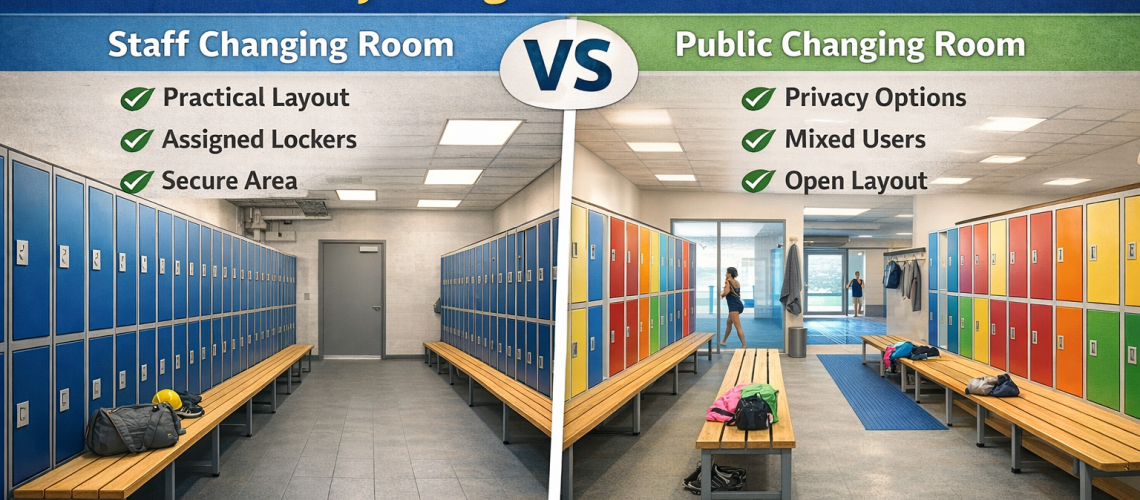
Changing rooms may look similar at first glance, but the way they are used can vary significantly depending on who the space is for. A staff changing room and a public changing room may both include lockers, benches and circulation space, yet their design priorities are often very different. One is usually shaped by routine, repeat users and operational needs. The other must often serve a wider mix of people, usage patterns and expectations.
That distinction matters when planning layout, locker choice, bench placement, privacy, durability and cleaning. A changing room that works well for employees may be unsuitable for public leisure use. In the same way, a public facility design may include features that are unnecessary or inefficient in a staff-only area.
This guide explains the key design differences between staff and public changing rooms, helping you plan a layout that matches the users, the environment and the level of demand placed on the space.
Why the user group matters so much
The most important question in changing room design is not simply how much space is available. It is who will use the room, how often they will use it and what they need from it.
Staff changing rooms are usually used by a defined group of people. The users often know the site, understand the routine and return to the same area every day. In many workplaces, they arrive at similar times, change quickly and use the space as part of a regular shift pattern. That creates a more predictable environment.
Public changing rooms are different. They may be used by visitors, members, pupils, guests or customers with varying levels of familiarity. Some may stay longer. Others may carry more personal items. Flow patterns can be less predictable, and first impressions usually matter more because people are judging the quality and cleanliness of the facility as they use it.
Once that difference is clear, many of the design decisions start to make more sense.
Staff changing rooms are often driven by function and routine
In workplaces, changing rooms are usually designed around practicality. Staff need secure storage, enough space to change comfortably and a layout that supports daily routines without slowing operations. The emphasis is often on efficiency, durability and easy management.
For example, a staff changing room in a warehouse, factory, hospital or transport setting may need to support uniform changes, PPE storage, personal belongings and shift overlap. The room may be busy for short periods at the start and end of shifts, then relatively quiet for the rest of the day.
That means the layout should cope well with peak movement, but it does not always need the same level of visual finish or broad-use flexibility expected in a public facility. What matters most is whether the room works reliably, remains easy to clean and gives staff the storage and access they need.
Public changing rooms need to handle variety and perception
Public changing rooms are usually more varied in how they are used. A leisure centre, gym, swimming pool, sports venue or visitor attraction may serve people of different ages, group sizes and confidence levels. Some users will move through quickly. Others may need more time, more privacy or more room for children, kit bags or changing support.
That variety creates more pressure on the design. Layouts need to be intuitive. Circulation routes need to be obvious. Lockers should be easy to find and easy to use. Bench seating may need to support both short stops and full changing activity. In many cases, the room also needs to look welcoming and well organised because it directly affects the overall impression of the site.
Public users may not forgive poor design in the same way as a regular staff team. If the room feels cramped, confusing or tired, it can reflect badly on the whole facility.
Locker allocation is usually more fixed in staff areas
One of the clearest differences between staff and public changing rooms is how lockers are allocated. In staff settings, assigned lockers are common. Employees may have a dedicated locker for daily use, sometimes for long periods. That makes the storage system more stable and more predictable.
Because of that, staff locker layouts can often be planned around repeat access. Users know where they are going, and the room can function with less need for wayfinding. Numbering still matters, but the storage pattern is less dynamic.
In public changing rooms, locker use is more likely to be temporary, rotating or shared. Users choose from what is available, often on arrival. That means visibility, ease of use and access flow become more important. The most obvious lockers may be used first, which can create hotspots near the entrance if the layout is not balanced properly.
Temporary-use systems may also require more attention to lock choice, user instructions and turnover between users.
Privacy expectations are often higher in public facilities
Both types of changing room need to support user dignity and comfort, but privacy is often a bigger design issue in public settings. Public users may be unfamiliar with the space, less confident in communal changing and more likely to expect a choice of open, semi-private or enclosed areas depending on the site.
In a staff changing room, users may be more accustomed to the shared environment and may prioritise speed and practicality over added privacy features. That does not remove the need for good design, but it can affect the balance of space given to open changing versus screened or individual areas.
Public facilities, especially family or leisure venues, may need to think more carefully about cubicles, modesty screens, family changing support and how the room feels to a first-time visitor. Even simple choices such as bench spacing, route lines and sightlines from the entrance can influence whether the space feels comfortable to use.
Durability matters in both, but the wear pattern is different
All changing rooms need robust products, but the nature of wear is not always the same. Staff changing rooms often experience repeated use by the same people in a predictable rhythm. That can mean steady wear over time, particularly around specific locker banks, bench areas or access points.
Public changing rooms may see more varied wear. User turnover is higher. Behaviour is less predictable. Some visitors may not treat the space with the same familiarity or care as a regular staff team. Wet clothing, sports kit, pushchairs, family use and peak-time crowding can all increase pressure on the room.
That is why public settings often benefit from finishes and materials chosen not only for strength but also for appearance retention. Scratches, swelling, corrosion and worn edges may be noticed more quickly by paying visitors or members than by an internal workforce using a staff-only room.
Cleaning priorities can vary between the two environments
Cleanability matters in every changing room, but public spaces often need to project visible cleanliness at all times. Users make quick judgements based on floors, locker fronts, bench tops and corners. A room that looks difficult to maintain can undermine trust in the whole facility.
Staff changing rooms still need good hygiene standards, especially in industrial, healthcare or food-related environments, but the design focus may lean more heavily towards practical cleaning access and durable surfaces rather than presentation alone.
For both settings, it helps to avoid layouts that trap dirt behind benches, beneath locker stands or in tight corners. Public rooms may need especially careful planning around wet areas, drainage, airflow and surface selection because high turnover increases the chance of visible mess building up quickly.
Bench design may differ based on dwell time and user behaviour
Benches serve different roles depending on the setting. In staff changing rooms, users may need straightforward seating for changing footwear, storing bags briefly or preparing for a shift. Practicality usually leads the decision.
Public users may spend longer in the room and may use benches in a wider range of ways. Parents may help children change. Leisure users may unpack equipment, dry off or organise clothing before leaving. That often increases the need for generous spacing, strong traffic flow and careful positioning so benches support activity without blocking movement.
In staff areas, benches can often be more straightforward and tightly integrated with the room’s routine. In public areas, they may need to support comfort, circulation and presentation as well as pure function.
Access control is usually more important in staff environments
Staff changing rooms are often part of a controlled operational area. The users are known, and access may need to be restricted for security, safeguarding or site management reasons. In some workplaces, the changing room sits close to staff entrances, welfare areas or secure work zones, so access control becomes part of the overall plan.
That can influence everything from door positioning to locker numbering and key management. It may also affect whether the room needs separate staff categories, departmental storage areas or space for personal protective equipment.
Public changing rooms are still controlled spaces in many cases, but the approach is different. The priority may be guiding users smoothly from reception or activity areas into the changing zone while preventing confusion, congestion or misuse. Access tends to be broader, so wayfinding and ease of understanding matter more than internal control alone.
Wayfinding is more critical in public changing rooms
Because staff users become familiar with the room quickly, signage and layout can often be simpler. That does not mean numbering and identification should be ignored, but the environment generally has built-in user familiarity.
Public users need more guidance. They may not know where lockers are, where to queue, which route leads to showers or exits, or how the locker system works. A confusing layout leads to hesitation, backtracking and bunching in busy areas.
Good public changing room design therefore relies more heavily on clear sightlines, logical zoning, visible numbering and intuitive placement of lockers, benches and doors. The room should explain itself as people move through it.
Capacity planning also works differently
Staff changing rooms are often designed around a known number of employees, departments or shifts. While overlap periods need to be accounted for, the user group is usually measurable. This makes capacity planning more predictable.
Public changing rooms may have wider fluctuations. Usage can vary by time of day, season, event schedule or class timetable. A room that feels comfortable off-peak may become highly congested before a swim session or after a group activity finishes.
That means public facilities often need more flexibility in layout and circulation. It may also influence locker selection, with some sites choosing a mix of sizes or arrangements to support different visitor needs.
Design style and finish expectations are not always the same
Appearance matters in both settings, but public spaces are usually judged more directly. Members, guests and visitors may see the changing room as part of the overall service quality. As a result, finishes, colours and layout presentation can play a larger role in public-facing projects.
Staff changing rooms still benefit from a clean, well-planned design, but the priority is often operational value rather than customer impression. Budgets may focus more on durability, reliable locking and practical capacity.
Even so, a staff changing room should never feel neglected. A well-maintained space supports staff experience, reinforces professionalism and can improve how the workplace functions day to day.
Questions to ask before choosing the layout
Before planning a staff or public changing room, it helps to answer a few practical questions:
- Are the users regular and known, or mixed and changing?
- Will lockers be assigned or used temporarily?
- How important is privacy within the space?
- Will users carry small personal items or larger bags and kit?
- Is the room mainly about fast routine use, or does it need to support longer dwell time?
- How visible does the room need to be as part of the site’s overall presentation?
- What are the busiest periods, and how much overlap happens then?
The answers will usually point quite clearly towards either a more operational staff-led layout or a more flexible, user-guided public layout.
The best design is the one that matches the real use of the room
There is no single correct design for every changing room. Staff and public facilities can both work well, but they succeed for different reasons. Staff changing rooms usually need practical, secure and efficient layouts that support routine use. Public changing rooms need clear, adaptable and welcoming layouts that cope with wider variation in behaviour and expectations.
Understanding that difference helps avoid poor decisions early in the project. It prevents under-designing public spaces and overcomplicating staff ones. Most importantly, it ensures the room works for the people who actually use it.
If you are planning a new changing area or reviewing an existing one, start by identifying the user group and the way the room is used day to day. From there, locker choice, bench layout, spacing and access planning become much easier to get right.
Explore our locker range, view our bench seating options, or browse the Total Locker Service blog for more changing room design guidance.
Discover more from Blog Total Locker Service
Subscribe to get the latest posts sent to your email.