Probe Fire Certified Lockers
January 6, 2020
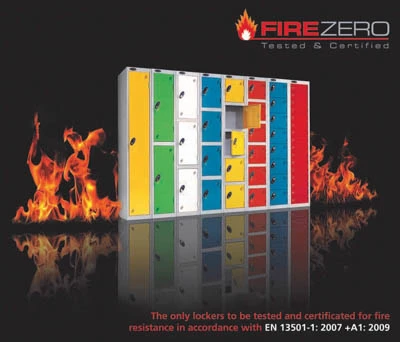
Probe steel lockers combine documented reaction-to-fire performance with ActiveCoat antibacterial powder coating. These features can be useful where a locker specification needs both robust steel construction and supporting information about fire behaviour and surface hygiene.
This guide explains the two features separately. The fire documentation relates to reaction to fire under EN 13501-1, while ActiveCoat is an antibacterial powder-coating technology used on painted Probe components.
Probe steel locker fire performance
Current Probe locker documentation states that Probe steel products have been fire tested and approved in line with EN 13501-1:2007 +A1:2009.
This standard concerns reaction-to-fire classification. It should not be confused with a timed fire-resistance rating such as 30, 60 or 90 minutes.
Where fire performance forms part of a school, workplace or public-building project, use the current classification report and manufacturer datasheet as supporting evidence rather than relying on historic marketing descriptions.
For a fuller explanation of the fire-test evidence and its limitations, see our Probe Fire-Tested Steel Lockers UK guide.
What is ActiveCoat?
ActiveCoat is an antibacterial powder-coating technology used on painted Probe products. The antibacterial ingredient is incorporated into the coating rather than applied as a temporary surface spray.
Current Probe documentation states that ActiveCoat has been tested by an internationally recognised microbiological laboratory against organisms including MRSA and E. coli, with a reported 99.9% reduction in population under the test conditions.
Where ActiveCoat can be useful
An antibacterial powder coating can be useful in environments where lockers are touched frequently and regular cleaning forms part of the site’s hygiene routine.
- schools and colleges;
- healthcare and staff-changing areas;
- workplaces and factories;
- catering and food-related changing facilities;
- retail staff areas;
- other shared-use locker environments.
ActiveCoat should be treated as a supporting surface feature, not as a replacement for normal cleaning and hygiene procedures.
ActiveCoat and cleaning
Probe’s care guidance recommends routine cleaning with a damp, non-lint cloth for painted products and warns against inappropriate cleaning chemicals that could damage the finish or reduce its protective performance.
Cleaning methods should therefore follow the current manufacturer care instructions for the selected locker finish.
Fire performance and antibacterial coating are different
The two features solve different specification questions and should not be merged into one broad marketing claim.
| Feature | What it addresses |
|---|---|
| EN 13501-1 reaction-to-fire classification | How the tested steel product behaves in relation to fire development and spread |
| ActiveCoat antibacterial powder coating | Antibacterial performance of the painted surface under the cited test conditions |
A project may value one or both features, but each should be specified and evidenced separately.
What to check before specifying Probe lockers
- Confirm the exact locker model and current manufacturer specification.
- Check the latest EN 13501-1 classification documentation where fire performance matters.
- Use reaction-to-fire terminology accurately.
- Confirm the current finish and ActiveCoat information for the selected product.
- Check the locker dimensions, compartment arrangement and locking method separately.
- Check installation, stability and fixing requirements.
- Follow the manufacturer’s current care and cleaning guidance.
Probe locker construction and options
Probe steel lockers are available in a range of compartment configurations and colours, with ventilation and different locking options depending on the model.
Current manufacturer documentation should be used for exact dimensions, colours and lock availability because these details can change over time.
Probe locker documentation
For technical verification, use current product literature rather than legacy blog wording.
- Probe Metric Locker Datasheet
- Care of Probe Products
- Probe Steel Products EN 13501-1 Classification Report
Related Probe locker guides
- Probe Fire-Tested Steel Lockers UK – detailed reaction-to-fire guidance.
- Probe Lockers: Durable and Secure Storage – broader Probe locker information.
- Probe Replacement Locker Keys – replacement Probe keys cut to code.
- Probe Hasp Lock – replacement and retrofit hasp-lock information.
- Locker Specification Planning UK – defining technical and operational project requirements.
Probe Fire Performance and ActiveCoat FAQs
Are Probe steel lockers fire rated?
Probe steel products have documented reaction-to-fire testing to EN 13501-1:2007 +A1:2009. This should not be confused with a timed fire-resistance rating.
What is ActiveCoat on Probe lockers?
ActiveCoat is an antibacterial powder-coating technology used on painted Probe products. The antibacterial ingredient is incorporated into the coating.
Has ActiveCoat been tested against MRSA and E. coli?
Current Probe documentation states that ActiveCoat was tested against organisms including MRSA and E. coli, with a reported 99.9% reduction in population under the test conditions.
Does ActiveCoat replace routine cleaning?
No. Antibacterial surface technology should support, not replace, normal cleaning and hygiene procedures. Cleaning should follow current manufacturer care guidance.
Where should I check current Probe locker specifications?
Use the current Probe locker datasheet, care guidance and relevant fire-classification report for technical verification before specification or purchase.
Summary: Probe locker fire performance and ActiveCoat
Probe steel lockers combine two separately documented features: reaction-to-fire testing under EN 13501-1 and ActiveCoat antibacterial powder coating on painted components.
The strongest specification approach is to treat these features accurately and independently. Use the fire-classification documentation where reaction-to-fire evidence is required, and use the current ActiveCoat and care information where antibacterial surface performance is relevant.
Discover more from Blog Total Locker Service
Subscribe to get the latest posts sent to your email.