Medicine Cupboards vs Controlled Drug Cupboards: What Is the Difference?
March 24, 2026
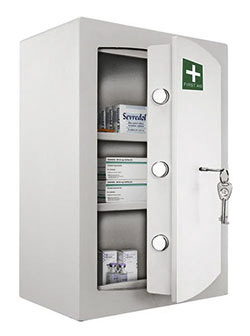
Medicine cupboards and controlled drug cupboards are often mentioned together, but they are not the same thing. Both are used to support secure storage in healthcare and care settings, yet they serve different roles and should not automatically be treated as interchangeable. This is where buyers can go wrong. A lockable cupboard for routine medicines may be entirely suitable for one room, while a more specific controlled drug storage solution may be needed for another.
That distinction matters because good storage is not just about locking items away. It is about matching the cabinet to the stock, the room, the people who need access and the level of control required. When one cupboard is expected to do every job, the result is usually muddled storage, mixed categories and weaker day-to-day handling.
This guide explains the difference between medicine cupboards and controlled drug cupboards, where each is commonly used, what buyers should look for and why separating these two storage needs usually leads to a cleaner and safer setup. If you are comparing general secure healthcare storage, you can also browse our medical cabinet range.
Why people confuse medicine cupboards and controlled drug cupboards
The confusion is understandable. Both cupboard types are associated with healthcare storage. Both are designed to restrict access. Both may be made from steel and fitted with secure locks. From a distance they can even look similar.
The difference is not mainly visual. It is functional. A medicine cupboard is typically used for the broader category of routine medicines storage in healthcare and care environments. A controlled drug cupboard is a more specific solution used where controlled drugs require the additional level of secure custody that applies to that category of stock.
In practical terms, that means the question should never be, “Which cupboard looks more secure?” The real question is, “What exactly is being stored, what rules apply to it, who needs access and what level of control is appropriate?” Once those answers are clear, the right cupboard type usually becomes obvious.
What is a medicine cupboard?
A medicine cupboard is a secure cupboard used for the storage of medicines and related clinical items in healthcare and care settings. It is generally chosen for routine medicines storage rather than for the specialist custody of controlled drugs. In many surgeries, treatment rooms, clinics and care environments, a medicine cupboard is the everyday storage point for medicines that need to be kept secure, organised and accessible only to authorised staff.
Medicine cupboards are often made from steel and fitted with a lockable door or doors. They may be wall-mounted or floor-standing depending on the room and the amount of stock. Adjustable shelving is common because stock profiles change and healthcare teams need flexibility in how they separate items internally.
The key purpose of a medicine cupboard is not simply to provide a lock. It is to support routine, organised medicines storage. That means helping staff separate categories, see stock clearly, avoid overcrowding and maintain good order during daily use. A good medicine cupboard supports safer systems by reducing clutter, improving visibility and making it easier to keep the storage area tidy.
In many environments, a medicine cupboard will sit alongside other cupboards used for dressings, disposables and treatment room supplies. That can be a strong arrangement because it keeps the medicine cupboard focused on medicines rather than turning it into a catch-all storage space.
What is a controlled drug cupboard?
A controlled drug cupboard is a more specific storage solution used for controlled drugs where secure custody requirements apply. It is not merely a stronger-looking medicine cupboard. It exists because some controlled drugs carry a higher diversion risk and therefore need more specific secure storage arrangements than ordinary routine medicines.
That is why controlled drug cupboards should be treated as a separate specification decision. Buyers should not assume that a general lockable medicines cupboard automatically covers this need. In many cases, a site will require one cupboard for routine medicines and a separate controlled drug cupboard for stock that falls under more specific secure-custody handling.
The controlled drug cupboard is therefore part of a narrower, more regulated storage question. It is chosen around the type and volume of stock, the service provided, the setting and the site’s procedures for controlled-drug management. This makes it different in principle from the broader medicine cupboard category.
The simplest way to understand the difference
If you want the simplest distinction, it is this:
- Medicine cupboards are for broader routine medicines storage in healthcare and care settings.
- Controlled drug cupboards are for controlled drugs where additional secure-custody requirements apply.
That difference shapes everything else: the specification, the role of the cupboard, the internal organisation, the access model and the buying process.
Where medicine cupboards are commonly used
Medicine cupboards are common in GP surgeries, treatment rooms, clinics, health centres, dental practices, care homes and similar environments where medicines need to be stored securely in a structured and manageable way. They may also be used in hospital clinical areas as part of a broader local storage system.
In these settings, the cupboard often supports day-to-day workflow. Staff need practical access, good shelf organisation and a layout that makes sense under routine pressure. The cupboard must help the room stay tidy rather than becoming another source of clutter.
That is why medicine cupboards are usually chosen around visibility and usability as well as basic security. A badly planned medicines cupboard may technically lock, but if it is too small, too crowded or poorly positioned, it still undermines safe working.
Where controlled drug cupboards are commonly used
Controlled drug cupboards are used where services handle controlled drugs that need that additional level of secure custody. The exact requirement depends on the setting and the stock involved, but the principle is the same: this is not general-purpose storage. It is a more specific response to a more specific category of medicine risk.
That means buyers should avoid treating controlled drug cupboards as simply “the more secure option” for all medicines. In many rooms that would be the wrong approach. The aim is not to over-engineer every cupboard. The aim is to match the cupboard to the type of stock and the relevant handling requirements.
Construction differences
Medicine cupboards and controlled drug cupboards may both use steel construction, but they are not selected for exactly the same reason. A medicine cupboard is chosen to provide strong, practical, day-to-day secure storage with good organisation. A controlled drug cupboard is chosen around a more specific secure-custody need.
For medicine cupboards, practical features often take centre stage. Buyers tend to focus on shelf flexibility, wall-mounted versus floor-standing format, ease of cleaning, useful internal space and lock type. A good medicine cupboard should make daily storage simpler and clearer.
For controlled drug cupboards, the construction question is narrower and more security-led. The buyer is thinking about the cupboard’s suitability for stock requiring stronger custody controls, not just whether it looks tidy in the room. That is why these cupboards should not be selected casually or folded into a general cupboard search without proper thought.
Locking and access control
Both types of cupboard restrict access, but the access model may differ in practice because the underlying purpose differs.
For medicine cupboards, the lock needs to suit routine authorised access. In many settings that may mean a straightforward key lock, cam lock or another practical format that supports daily use by the appropriate staff. The main challenge is often key control and keeping the cupboard organised.
For controlled drug cupboards, the access question is more specific. The cupboard forms part of a tighter storage process around stock that carries a higher diversion risk. That means buyers should think carefully about who has access, how access is controlled and whether the cupboard location and surrounding area also support that level of control.
In both cases, the cupboard is only part of the system. Procedures, responsibility, key handling, checks and room layout all matter. A good cupboard helps the system work. It does not replace the system.
Internal organisation and shelf layout
One of the biggest practical differences is how the cupboard is expected to function internally.
A medicine cupboard usually needs enough shelving and enough usable space to separate routine stock sensibly. That may include boxed medicines, liquids, topicals or high-use items that need to be reached quickly and checked regularly. Adjustable shelves are helpful because they let the storage adapt over time.
A controlled drug cupboard is not a general organisation cupboard in the same way. Its role is narrower. It is there to store a specific category of stock securely, not to absorb every medicine-related item in the room. This is another reason why the two cupboard types should not be merged by assumption.
When one cupboard is expected to do both jobs, the result is often poor. Either the medicine storage becomes too cramped, or the controlled-drug requirement gets blurred into a broader cupboard arrangement that lacks clarity. Separate roles usually produce better storage.
Why one cupboard often should not do both jobs
It is tempting to think that one cupboard could save space, reduce cost and simplify the room. In practice, however, combining routine medicines storage with controlled drug storage often creates more problems than it solves.
First, it blurs the purpose of the cupboard. Staff no longer have one clear location for routine medicines and one clear location for controlled-drug custody. Second, it makes internal organisation harder because the cupboard is trying to serve two different storage logics at once. Third, it can encourage a “one secure box for everything” mindset, which usually weakens the overall storage plan rather than strengthening it.
In many settings, separate cupboards are the clearer solution. One medicine cupboard for routine medicines. One controlled drug cupboard where that specific need exists. That structure is easier to understand, easier to manage and easier to keep organised.
How to decide which cupboard you need
Start with the stock profile, not the catalogue.
- What exactly is being stored?
- Is it routine medicines storage, or controlled drugs needing separate secure custody?
- How often will the cupboard be opened?
- Who needs access?
- Does the room need a wall-mounted or floor-standing solution?
- Would one cupboard be enough, or would two separate cupboards create a clearer system?
Once those questions are answered, the decision becomes much more straightforward. A general medicines storage need points towards a medicine cupboard. A controlled-drug custody need points towards a controlled drug cupboard. If both needs exist, the answer may be both.
Common buying mistakes
There are a few common errors that come up again and again when buyers compare medicine cupboards and controlled drug cupboards.
- Assuming they are interchangeable: they are not.
- Buying the more secure-looking cupboard for everything: this often ignores the real storage role.
- Failing to separate routine medicines from controlled-drug storage decisions: this leads to mixed intent and mixed use.
- Choosing by dimensions alone: internal layout, access and cupboard role matter more than external size alone.
- Ignoring workflow: the cupboard has to work in the room, not only on paper.
- Overloading one cupboard: a crowded cupboard is harder to manage and easier to misuse.
These mistakes are avoidable when the cupboard is chosen around the function it has to perform, rather than around a vague idea of “secure storage”.
Medicine cupboards for general secure healthcare storage
For many surgeries, clinics, treatment rooms and care settings, the immediate need is a strong medicine cupboard rather than a controlled drug cupboard. In those cases, the goal is to choose a cupboard that provides dependable day-to-day secure storage, sensible shelf space and a layout that helps staff maintain order.
That is where broad medical cabinet selection becomes important. Cabinet format, mounting style, usable shelf space and lock type all shape how effective the cupboard will be in real use. If you are reviewing that broader category, our secure medical cabinets are designed to support organised healthcare storage in professional settings.
Final thoughts
Medicine cupboards and controlled drug cupboards may sound similar, but they should not be treated as the same product category. A medicine cupboard supports broader routine medicines storage. A controlled drug cupboard supports a narrower and more specific secure-custody need. Once that difference is understood, it becomes much easier to plan storage properly.
The right question is not which cupboard is “better”. The right question is which cupboard matches the stock, the room and the level of control required. In many cases, the best answer is a medicine cupboard for general secure storage and a separate controlled drug cupboard where the service needs it.
For wider medical cabinet options, browse our medical cabinet range. For the broader topic hub, see our complete guide to medical cabinets.
Discover more from Blog Total Locker Service
Subscribe to get the latest posts sent to your email.