Locker Room Storage Design: Hooks, Shelving and Organisation
April 13, 2026
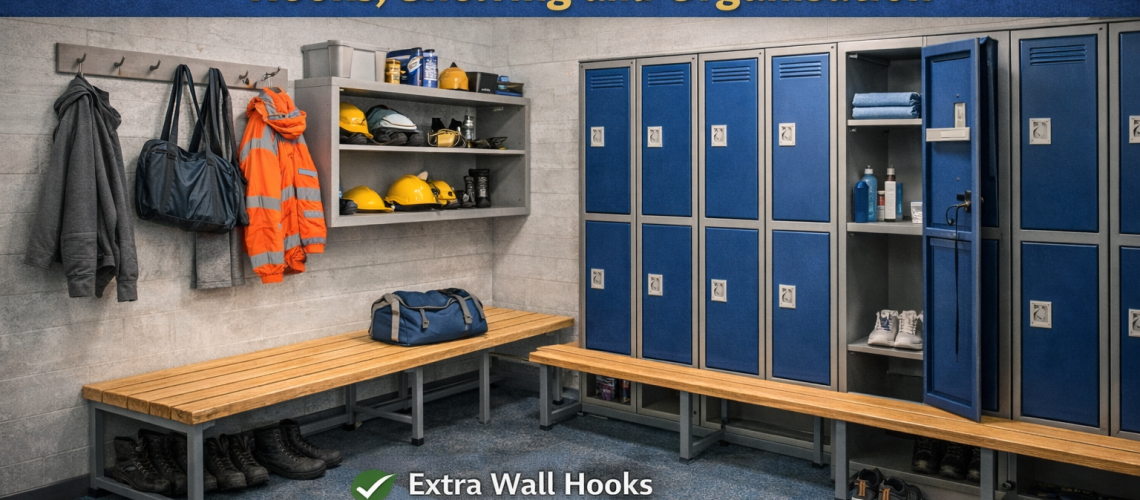
Locker room design is often judged by the lockers first, but storage planning goes further than that. Hooks, shelving, bench storage and small organisational details all affect how easy the room is to use. When these features are planned properly, the space feels tidier, movement is easier and users are less likely to leave belongings on the floor or spread them across benches. When they are overlooked, even a well-fitted locker room can become cluttered and awkward very quickly.
That is especially important in changing rooms used by schools, workplaces, gyms, leisure centres and sports facilities. People rarely bring only one small item with them. Bags, coats, shoes, towels, uniforms, wet clothing and personal items all need somewhere to go. If the storage design does not reflect that, the room starts to work against itself.
This guide explains how locker room storage design can be improved with better use of hooks, shelving and organisation, helping create spaces that are easier to manage and more practical for everyday use.
Why storage design matters beyond the locker itself
A locker room is not simply a row of compartments. It is a working space where people arrive, store belongings, change, retrieve items and leave again. During that process, they need temporary as well as permanent storage. A bag may need to be put down while someone changes shoes. A coat may need to hang separately from damp clothing. A towel may need a place to sit without ending up on the floor.
If every item is expected to fit inside a locker at every moment, the room may feel less practical than it should. Good organisation comes from supporting the full user routine, not only the final storage point. That is where hooks, shelves and supporting storage features become valuable.
These details also influence cleanliness and traffic flow. Items left on the floor reduce usable aisle space and make cleaning harder. Belongings spread across benches reduce seating capacity. Overflow around locker fronts creates congestion. A better storage layout helps control all of those issues.
Understand what users actually bring into the room
The first step in better storage design is understanding what users carry and how they use it. A school changing room may need to handle coats, PE kits and shoes. A workplace changing room may need uniforms, boots, PPE and lunch bags. A gym or leisure changing room may need space for towels, wash bags, swimwear and larger holdalls.
Each of these environments creates different storage pressures. A room planned only around one standard locker size may not reflect that variety. In some cases, the locker itself is enough. In others, supporting features make a big difference by giving people a place for items that do not sit neatly inside a compartment during use.
The more accurately the room reflects real behaviour, the less clutter builds up around it.
Hooks help keep frequently used items off the floor
Hooks are one of the simplest ways to improve locker room organisation. They give users a quick, visible place to hang items that need short-term access, such as coats, towels, bags or clothing being changed in and out of. That reduces the chance of those items ending up on benches or floors.
In some cases, hooks are best fitted inside lockers so personal items can hang neatly without being crushed. In other cases, external hooks or wall-mounted rails can support short-term use in the changing area itself. The right approach depends on privacy, security and how much open storage the environment can sensibly support.
Hooks are particularly useful where users need to separate garments briefly while changing. For example, wet and dry items may need to be kept apart, or workwear may need to hang differently from personal clothing. Even a small addition can make the room feel far more usable.
Placement matters. Hooks should help organisation without encouraging items to spill into circulation routes. If they are positioned where clothing hangs into a walkway, they can create the same problem they were meant to solve.
Shelving supports better organisation inside and outside lockers
Shelving is another highly effective storage feature because it helps divide space more clearly. Inside a locker, a shelf can separate shoes from clothing, toiletries from towels or personal items from work gear. That makes the storage easier to use and often helps keep the locker tidier over time.
External shelving can also help in selected environments. Open shelves may be suitable for specific non-valuable items, shared accessories or structured storage near the changing zone. In workplace settings, shelving may support PPE organisation. In leisure environments, it may help with temporary storage near family or drying areas, provided the layout remains easy to supervise and clean.
What shelving adds is structure. Instead of everything being pushed into one open cavity, items can be stored in a more logical way. That reduces mess and helps people find what they need more quickly.
Do not let bench seating become overflow storage
Benches are meant to support changing activity, but in poorly planned locker rooms they often become default storage surfaces. Bags are dropped there permanently, coats are piled up and spare items spread along the seating. That reduces the usefulness of the bench and can make the room feel crowded even when there is enough floor space.
One reason this happens is that users do not have a better temporary place for their belongings while changing. Hooks, shelves or more suitable locker design can reduce that pressure. Another reason is that the bench is closer and easier to access than the locker interior, especially if the locker is small or awkwardly organised.
Storage design should therefore aim to protect bench use rather than quietly relying on it. A bench works best when it remains available for sitting, changing footwear and brief item handling, not as a long-term holding area for everything else.
Think about shoes, boots and wet items separately
Footwear is one of the most common causes of locker room clutter. Shoes and boots are often placed under benches, beside lockers or in aisles because they do not fit well with the rest of the storage pattern. Wet or dirty footwear creates an even bigger issue because it affects hygiene and cleaning as well as organisation.
Where footwear is a regular part of the changing routine, it helps to plan for it directly. That may mean lockers with enough internal height, shelves that keep footwear off clothing, or clearly defined lower storage areas. In workplace changing rooms, boots may need especially careful planning because of their size and the dirt they bring into the room.
Wet items also deserve their own thought process. Towels, swimwear, used kit or damp workwear can create problems when pushed into the same space as dry belongings. Depending on the environment, separate compartments, internal hooks or specific drying-friendly storage may all improve the layout.
Storage organisation should support the user journey
A well-organised locker room feels intuitive because storage sits where users need it. Items used on arrival should be easy to place. Items needed during changing should be easy to reach. Belongings meant for full storage should fit without forcing awkward compromise.
That usually means thinking in stages rather than in single objects. A user might enter, remove a coat, sit to change shoes, access a bag, store personal items and then leave with only selected items in hand. Hooks, shelves and locker organisation should support that sequence instead of working against it.
When the layout aligns with the way people actually use the room, it stays tidier with less effort.
Open storage has benefits, but it needs control
Open storage can improve convenience, but it should be used carefully. Wall hooks, open shelves or shared storage points may help in some locker rooms, especially where users need quick access to non-valuable items. However, too much open storage can make the room feel cluttered and harder to manage.
In public or mixed-use settings, security and presentation matter more, so open storage may need tighter control. In staff-only or more routine environments, it may be easier to use selectively without creating the same problems. The question is not whether open storage is good or bad in itself. It is whether it suits the user group and the operational pattern of the room.
Where open storage is used, it should be clearly placed and easy to maintain. Otherwise it can become a catch-all area that increases clutter instead of reducing it.
Organisation reduces cleaning and maintenance issues
Better storage design helps cleaning as much as it helps users. Floors stay clearer when belongings are lifted off them. Benches stay more accessible when bags are not left across the seating all day. Locker fronts remain easier to reach when items are not hanging awkwardly from handles or piled nearby.
That matters because locker rooms often become messy through accumulation of small habits rather than one major failure. A lack of hooks encourages coats on bench ends. No shelf for shoes leads to footwear under seats. Undersized storage pushes bags into circulation space. Each of these problems makes cleaning more difficult and makes the room look more tired.
Simple organisational improvements often reduce visible clutter faster than adding more lockers alone.
Different locker rooms need different organisational features
There is no single perfect storage formula for every locker room. A school setting may need more emphasis on coat hooks and straightforward bag organisation. A workplace changing room may need better separation between PPE, workwear and personal items. A wet leisure changing room may benefit from moisture-resistant fittings and storage that copes better with towels and damp kit.
This is why copying a layout from one environment into another often leads to frustration. The storage design needs to reflect the specific use case. Good organisation is always contextual.
Questions to ask before choosing hooks, shelves and layout extras
Before finalising the storage design, it helps to ask a few clear questions:
- What items are users most likely to carry into the room?
- Which of those items need temporary access during changing?
- Will shoes, boots or wet items need separate internal organisation?
- Are benches being protected for seating, or relied on as overflow storage?
- Would internal hooks or shelves improve locker usability?
- Is any open storage secure, tidy and easy to supervise?
- Will the layout still be easy to clean once users start filling it with real belongings?
These questions usually show whether the storage plan supports real use or only looks neat when empty.
Better organisation makes the whole locker room work better
Locker room storage design works best when it goes beyond the locker door alone. Hooks, shelving and well-planned organisational details help users store belongings more naturally, reduce clutter and keep benches and walkways clearer. They also make the space easier to clean and more pleasant to use over time.
The aim is not to add extras for the sake of it. It is to support the real routine of the people using the room. When storage is planned around actual behaviour, the whole changing area becomes more efficient and more manageable.
If you are reviewing a locker room layout, it is worth looking at where clutter builds up and asking what storage feature is missing. In many cases, a better mix of hooks, shelving and organisation can solve the problem more effectively than simply increasing the number of lockers.
Explore our locker range, view our bench seating options, or browse the Total Locker Service blog for more guidance on locker room design and organisation.
Discover more from Blog Total Locker Service
Subscribe to get the latest posts sent to your email.