The Complete Guide to Lockers: Types, Uses and Choosing the Right Storage
March 13, 2026
The Complete Guide to Lockers: Types, Uses and Choosing the Right Storage
In schools, workplaces, gyms and public facilities, lockers are the best solution to provide secure personal storage. In environments where many people share a space, lockers help keep belongings organised and protected. Furthermore, they contribute to a safer and more efficient use of shared areas.
Manufacturers now design modern lockers to suit many environments. For example, schools use lockers for books and bags, gyms provide lockers for clothing and valuables, and workplaces install lockers for uniforms and personal items. As a result, lockers have become an essential part of everyday infrastructure in many buildings.
This guide briefly explains how lockers work, the different types available and how to choose lockers suitable for your place of work. In addition, it highlights key considerations for planning and maintaining your locker installation.
What Are Lockers?
A locker is an individual storage compartment that users can lock securely. Facilities usually install lockers in groups so many people can store belongings in the same location. Consequently, they provide a practical way to manage personal items in busy environments.
Most lockers are made from steel or other durable materials and are designed to withstand frequent daily use. Moreover, they are built to tolerate wear and tear over many years.
Lockers offer:
- Security for personal belongings
- Organisation in shared environments
- Safe storage perfect for clothing and equipment
- Convenient access during the day
Where Lockers Are Used
Lockers are used in many environments where individuals require secure personal storage. For instance, you will commonly find them in:
- Schools and universities
- Gyms and leisure centres
- Workplaces and factories
- Hospitals and healthcare facilities
- Sports centres and swimming pools
Additionally, each environment may need slightly different locker designs, depending on how people use the lockers. Therefore, it is important to match the locker type and layout to the specific setting.
Types of Lockers
Thankfully, lockers are available in several configurations depending on the number of compartments required. This means you can balance capacity with comfort and usability.
- Single Tier Lockers Coats, uniforms and larger items
- Two Tier Lockers Books, bags and clothing
- Four Tier Lockers Compact personal storage
- Six Tier Lockers High capacity locker areas
Different tier configurations allow facilities to maximise storage capacity while ensuring lockers remain easy to access. In other words, you can adapt the layout to suit both space and user needs.
Locker Materials
Lockers are manufactured from several different materials depending on their intended environment. As a result, you can select a finish that performs well in your specific conditions.
- Steel
- Plastic
- Laminate
Each material has its own benefits. For instance, steel lockers are widely used because they are durable and cost-effective. In contrast, facilities often install plastic lockers in wet environments such as swimming pools, while laminate lockers are commonly used in premium facilities. Consequently, material choice has a direct impact on longevity and appearance.
Locker Locks and Security
Locks ensure that stored belongings remain secure. Several lock systems are commonly used depending on how the lockers are allocated.
- Key locks
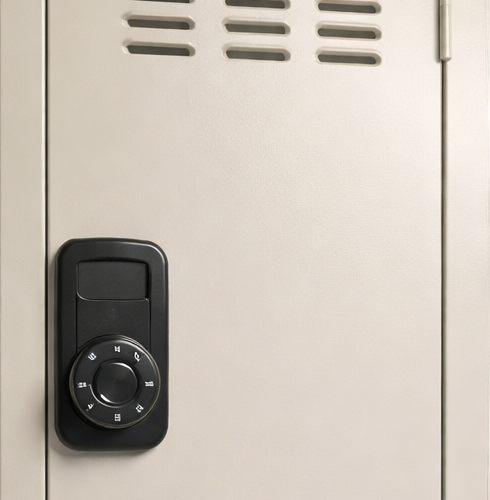
- Combination locks
- Coin return locks
- Digital locker locks
Different environments, therefore, may choose different lock systems depending on how lockers are managed. For example, gyms may prefer coin or digital locks for short-term use, whereas workplaces might favour key or combination locks for assigned lockers.
Planning Locker Layout
When installing lockers, plan the layout carefully so that users can access them safely. To achieve this, you should:
- Allow clear walkways between locker rows
- Check that locker doors open fully without blocking aisles
- Make sure the room has adequate lighting
- Position lockers in visible, well-used locations
In addition, locker rooms need enough space for users to change clothing or access belongings comfortably. Consequently, good planning improves both safety and user satisfaction.
Choosing Lockers for Your Facility
Choosing the right lockers depends on several important factors. For instance, you should consider:
- Number of users
- Available space
- Locker material
- Security requirements
- Type of items stored
Facilities with large numbers of users may prefer multi-tier lockers to maximise capacity, while workplaces storing clothing may prefer full height lockers. Therefore, there are many things to consider, which is why a survey may be necessary before installation.
Maintaining Lockers
Regular maintenance helps lockers remain secure and functional. In particular, lockers should be cleaned regularly and inspected to ensure locks and hinges remain in good condition.
- Inspect locker locks periodically
- Check hinges and door alignment
- And finally, clean your locker surfaces
By following these steps, you will ensure your lockers have a longer life and continue to perform reliably.
If you are planning a locker installation, it is worth exploring the range of lockers available from Total Locker Service. In doing so, you can compare different materials, configurations and lock types to find the most suitable solution for your facility.
Discover more from Blog Total Locker Service
Subscribe to get the latest posts sent to your email.