How to Choose the Right Locker Door Configuration for Your Site
April 10, 2026
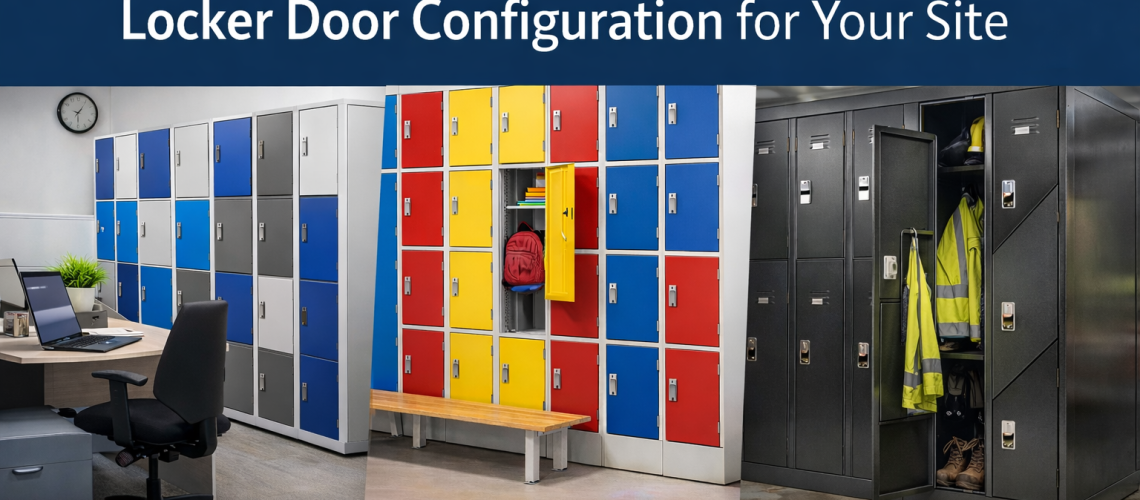
Choosing lockers is not only about material, colour or lock type. Door configuration matters just as much. It affects how much each user can store, how many people the locker bank can serve, how efficiently the room works and how well the lockers fit the site.
A locker that is too small becomes frustrating very quickly. One that is too large can waste valuable floor space. In many projects, the real decision is not simply whether to buy lockers. It is whether you need one-door lockers, two-door lockers, four-door lockers, six-door lockers or a more specialist format such as Z lockers.
This guide explains how locker door configurations work, where each type fits best and how to choose the right arrangement for schools, workplaces, leisure centres and commercial buildings. For a broader overview of lockers, including materials, sizes and lock options, see our main pillar page.
Why locker door configuration matters
Door configuration changes the balance between personal storage space and overall user capacity. A single-column locker with one door provides much more room per user than a four-door or six-door locker of the same size. That difference has a major impact on usability.
In schools, smaller compartments may be enough for books and coats. Within workplaces, staff may need space for bags, laptops and personal items. Across changing rooms, hanging space often becomes essential. Industrial environments may require storage for PPE, boots and workwear.
Because of this, locker configuration should be based on storage behaviour rather than assumption. The best option depends on how lockers are used in real conditions.
The main locker door configurations
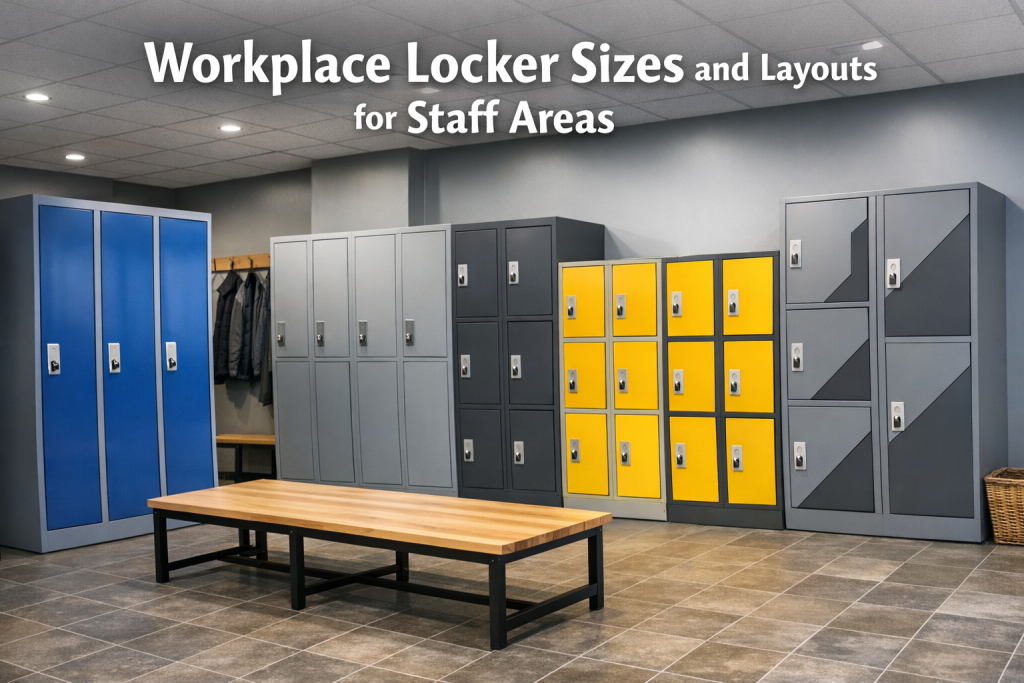
Most locker ranges are available in several door formats. Each one suits a different balance of capacity and usability.
One-door lockers
One-door lockers offer full-height storage. They suit workplaces, staff areas and changing rooms where users need more space or hanging capacity.
- more storage per user
- room for coats and larger items
- clear personal allocation
- simple internal layout
The trade-off is lower overall capacity, which may reduce the number of users supported in a given space.
Two-door lockers
Two-door lockers divide the height into two compartments. This provides a practical balance between user capacity and storage size.
They are commonly used in workplaces, schools and general commercial environments where moderate storage is sufficient.
Three-door lockers
Three-door lockers increase capacity while still offering usable storage space. They often suit schools and workplaces where users carry moderate amounts of equipment.
This format works well when floor space is limited but compartments still need to feel practical.
Four-door lockers
Four-door lockers prioritise capacity over space per user. They are suitable for lighter storage needs such as bags, books and small personal items.
If users need to store bulky items, this configuration may become restrictive.
Six-door lockers
Six-door lockers provide very high density. They are best used where storage needs are minimal and short-term.
They are less suitable for environments where users carry larger or more complex items.
Z lockers
Z lockers provide a more efficient way to include hanging space within a compact footprint. They are widely used in changing rooms and workplaces.
This format works well when users need to store clothing and bags without requiring full-width lockers.
How to match locker configuration to the site
The right configuration depends on both the environment and the user. A practical approach is to match locker type to sector requirements.
Schools
Education settings often require a balance between capacity and usability. Two-door, three-door and four-door lockers are common choices.
For more guidance, see Best Lockers for High Schools and School Locker Planning.
Workplaces
Office and staff environments often need more practical daily storage. One-door, two-door and Z lockers are common solutions.
Further reading includes Workplace Locker Guide and Locker Size Guide.
Changing rooms and leisure
Changing areas usually benefit from larger or hanging-friendly lockers. Z lockers and full-height lockers are often more suitable than small compartments.
Explore leisure lockers and pool lockers for suitable options.
Industrial settings
Industrial environments may require larger lockers or specialist formats. PPE, uniforms and equipment often demand more space and durability.
Consider wire mesh lockers, garment lockers and heated lockers where appropriate.
Questions to ask before choosing
- What needs to be stored?
- Is the locker assigned or shared?
- Do garments need to hang?
- Are larger items involved?
- How many users must be supported?
- How much space is available?
- Is capacity or usability the priority?
Common mistakes to avoid
Choosing maximum capacity by default
Fitting as many lockers as possible into a space can reduce usability and lead to dissatisfaction.
Ignoring real storage behaviour
Users rarely store items neatly. Real-world storage needs should guide the decision.
Forgetting hanging space
Where clothing is involved, hanging space is often essential. Smaller compartments may not be suitable.
Door configuration and layout planning
Locker configuration affects how people move through a space. Higher density can increase congestion if layout is not considered carefully.
For installation and layout advice, see Locker Installation Regulations and Installation Checklist.
Standard lockers vs Z lockers
Standard lockers suit general storage. Z lockers are better when hanging space is needed within a compact footprint.
Compare options here: Z lockers.
Final thoughts
The right locker door configuration improves usability, capacity and long-term satisfaction. One-door, multi-door and Z lockers all have their place depending on the environment.
Matching configuration to real storage needs is the most effective way to achieve a successful outcome. Start with the full locker range to compare your options.
“`
Discover more from Blog Total Locker Service
Subscribe to get the latest posts sent to your email.