Industrial Lockers & PPE Storage: Compliance and Separation
February 18, 2026
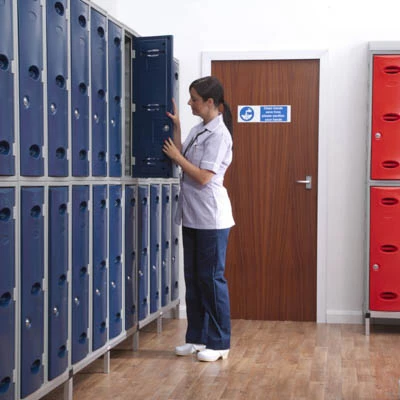
Industrial lockers are not simply storage units. In factories, warehouses and logistics centres, they form part of workplace compliance infrastructure. They support hygiene control, personal protective equipment (PPE) storage, and security in high-risk environments.
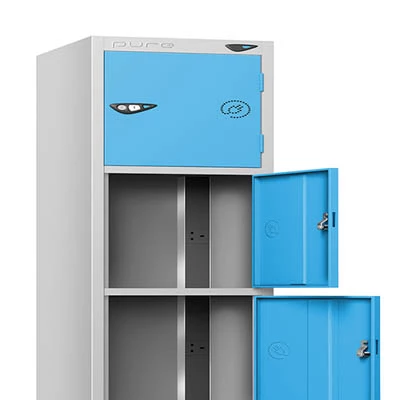
Incorrect specification can create contamination risks, regulatory breaches and avoidable safety issues. Correct specification improves welfare standards, operational efficiency and long-term durability.
This guide explains how industrial lockers should be specified in line with UK workplace welfare regulations. It covers clean and dirty separation, ventilation requirements, heavy-gauge construction and security considerations in manufacturing environments.
For a broader overview of locker types across sectors, see our complete lockers guide.
Why Industrial Lockers Are Different
Industrial environments place far greater demands on lockers than office settings. Workers may store:
- Contaminated workwear
- High-visibility clothing
- Safety boots
- Respiratory equipment
- Hard hats and protective gloves
Lockers must withstand impact, dirt exposure and frequent use. They must also support hygiene separation where required.
Clean and Dirty Separation
In many industrial settings, separating clean clothing from contaminated workwear is essential. This is particularly relevant in food production, pharmaceuticals, waste processing and heavy manufacturing.
Clean/dirty separation can be achieved through:
- Twin-compartment lockers
- Full-height partitioned lockers
- Dedicated clean and dirty locker banks
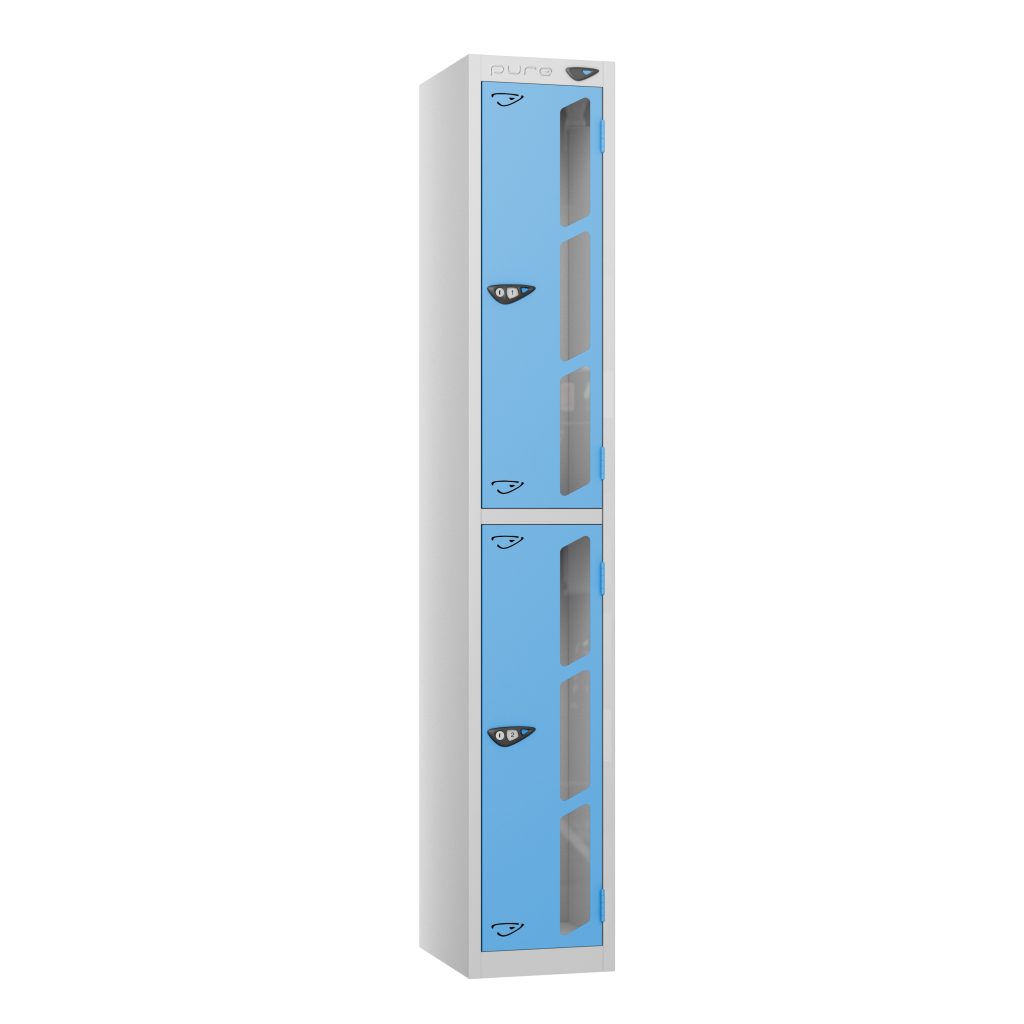
Dual-compartment lockers allow employees to store personal clothing separately from protective workwear within the same unit. This reduces cross-contamination risk and supports regulatory compliance.
Workplace Welfare Regulations in the UK
The Workplace (Health, Safety and Welfare) Regulations require employers to provide suitable facilities for storing clothing where special workwear is required. Storage must be appropriate and sufficient for the workforce.
Where work involves exposure to hazardous substances or contamination, employers must provide facilities to prevent personal clothing becoming soiled.
Industrial lockers therefore form part of compliance planning, not optional fit-out decisions.
Ventilated Lockers for PPE Storage
Ventilation is critical in industrial locker environments. PPE such as gloves, boots and protective garments may retain moisture after use.
- Perforated doors improve airflow.
- Top and bottom vents encourage circulation.
- Raised bases reduce moisture accumulation.
Ventilated lockers reduce odour build-up and improve hygiene standards. In some sectors, airflow is essential to prevent bacterial growth.
Heavy-Gauge Steel Construction
Industrial lockers must withstand significantly more abuse than standard school or office lockers. Heavy-gauge steel improves structural integrity and long-term durability.
Benefits of heavy-gauge construction include:
- Resistance to door bending
- Reduced hinge stress
- Improved resistance to impact from tools and boots
- Longer lifespan under high traffic
Thin-gauge imports may reduce upfront cost but often deform or fail prematurely in factory environments.
Security in Factory Environments
Industrial environments frequently contain valuable personal belongings, specialist tools or access cards. Locker security is therefore critical.
- Reinforced door frames improve forced-entry resistance.
- Quality cam locks or digital locks reduce tampering.
- Master key systems support facility management.
Where high-value items are stored, consider upgraded locking systems rather than basic budget locks.
Layout and Workforce Planning
Industrial locker layout must account for shift patterns and peak congestion. Aisle widths should support safe movement of workers wearing PPE.
Clear routes must be maintained to comply with fire safety regulations. Overcrowding locker rooms can create operational and compliance risks.
10-Year Cost Considerations
Industrial lockers should be evaluated over a 10–15 year horizon. Heavy-gauge steel lockers may cost more initially but typically last significantly longer than light-gauge alternatives.
Over time, reduced replacement cycles, lower maintenance costs and improved structural durability provide stronger return on investment.
Common Specification Mistakes
- Failing to separate clean and contaminated clothing
- Under-specifying steel thickness
- Ignoring ventilation needs
- Selecting low-grade locks in high-security areas
- Overcrowding locker rooms
Each of these errors increases long-term operational cost and compliance risk.
Final Thoughts
Industrial lockers play a central role in workplace welfare, hygiene and security. They must be specified according to environmental risk, workforce size and regulatory requirements.
Clean and dirty separation, ventilation design, heavy-gauge steel construction and secure locking systems are not optional extras. They are core components of compliant industrial facilities.
By planning industrial lockers correctly, employers reduce contamination risk, improve durability and support long-term operational efficiency.
Discover more from Blog Total Locker Service
Subscribe to get the latest posts sent to your email.