How Long Do Lockers Last? Lifecycle & 10-Year Cost Analysis
February 18, 2026
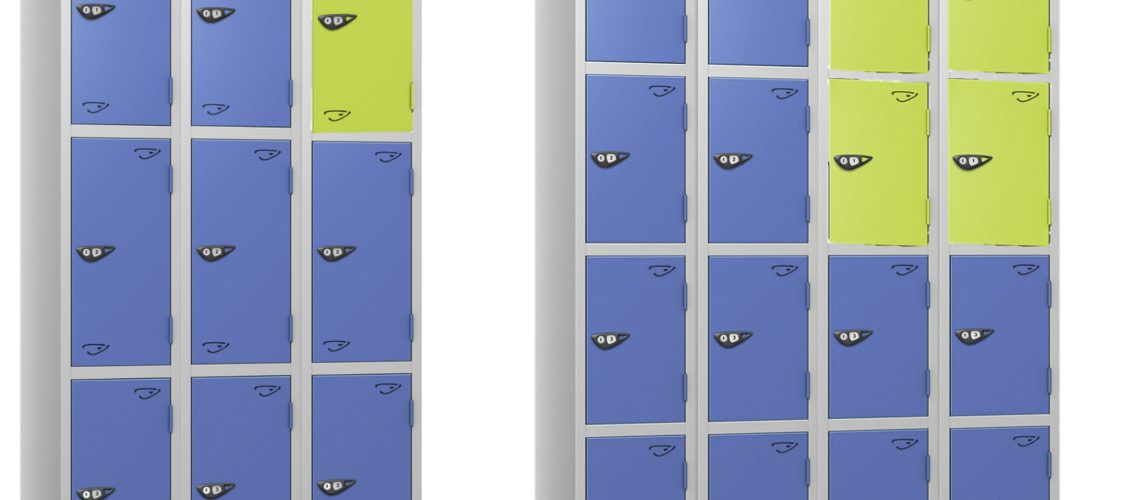
Locker lifespan depends on much more than age. Material, construction, frequency of use, environment, lock type, installation quality, maintenance and replacement-part availability all affect how long a locker remains useful.
For schools, workplaces, factories, warehouses, leisure centres, healthcare facilities and other UK organisations, the better procurement question is often not simply “How much do these lockers cost today?” but “What will this locker system cost over the period we expect to use it?”
This guide explains locker lifespan and lifecycle cost, including the factors that shorten or extend useful life, repair versus replacement, refurbishment, lock-system costs, maintenance and how to compare locker specifications over 5, 10 or 15 years.
If you are choosing new lockers, start with our commercial lockers and Locker Planning UK guide. If you are reviewing an existing estate, use our Locker Replacement Planning UK guide.
Quick answer: how long do lockers last?
There is no reliable single lifespan that applies to every commercial locker. A lightly used office locker in a dry environment may age very differently from a school, factory or leisure locker opened many times each day.
Useful locker life depends on the combination of:
- locker material and construction;
- frequency and intensity of use;
- door, hinge and frame design;
- lock suitability;
- humidity and water exposure;
- corrosion risk;
- impact and vandalism;
- cleaning products and methods;
- installation quality;
- replacement-part availability;
- maintenance; and
- whether the locker still suits the organisation’s storage and access requirements.
A structurally sound locker can remain useful for many years where locks, keys, hinges, doors and other serviceable parts remain replaceable. Conversely, a poorly specified locker can become uneconomical long before its structure has completely failed.
Physical lifespan vs useful operational lifespan
Locker lifespan can mean two different things.
| Type of lifespan | Meaning |
|---|---|
| Physical lifespan | How long the locker remains structurally serviceable |
| Useful operational lifespan | How long the locker continues to meet storage, access, security and management requirements |
A locker can therefore remain physically sound while becoming operationally outdated. A keyed locker installation might still work mechanically, for example, while creating excessive administration after a workplace changes from permanent allocation to high-turnover shared use.
That does not automatically mean the locker bodies need replacing. In some cases, changing the lock or access system may extend their useful operational life. See our Locker Lock Upgrade Guide UK.
What affects locker lifespan?
1. Locker material
The material should suit the actual environment. Powder-coated metal lockers can provide long service in appropriate dry internal areas, while laminate, plastic and specialist constructions may be better suited to different moisture, appearance or cleaning requirements.
Material selection should therefore begin with the environment rather than assuming one locker construction is universally more durable.
For standard commercial metal products, see our metal lockers.
2. Construction quality
Door rigidity, hinge construction, frame strength, fixings and finish quality all influence how well a locker tolerates repeated daily use.
Small differences can become important after thousands of opening and closing cycles, particularly in schools, factories, gyms and other high-use settings.
3. Frequency of use
A locker assigned permanently to one office employee may experience far fewer operating cycles than a leisure locker used by several different people during one day.
High turnover increases wear on components including:
- locks;
- keys;
- cams;
- hinges;
- catches;
- door edges;
- numbering; and
- electronic-lock batteries where fitted.
4. Environment
Humidity, wet clothing, swimming-pool environments, industrial contamination, cleaning chemicals and poor ventilation can accelerate deterioration where the specification is unsuitable.
The locker body and the locking hardware should be considered together. A moisture-resistant locker fitted with unsuitable lock components can still create ongoing maintenance problems.
For airflow and moisture considerations, see our Locker Ventilation & Airflow Guide UK.
5. User behaviour
Overloading compartments, forcing locks, slamming doors, hanging excessive weight from doors and deliberate vandalism can shorten useful life considerably.
Where repeated impact or misuse is a known risk, choose the construction and lock type with that environment in mind rather than relying only on routine maintenance after damage occurs.
6. Maintenance
Small faults are usually easier and cheaper to correct before they cause secondary damage. A loose hinge can alter door alignment, which can then place additional stress on the lock and cam.
For practical repair decisions and replacement components, use our Locker Parts and Servicing guide. The current guide specifically covers repair-versus-replacement decisions for locks, hinges, doors and other serviceable parts. :chatgpt-content-reference{index=”2″}
Locker lifespan by environment
Instead of assigning every locker a fixed number of years, it is more useful to identify which conditions increase wear or reduce service life.
| Environment | Main lifespan considerations |
|---|---|
| Office | Moderate use, appearance, allocation changes and key administration |
| School | High door cycles, impact, lost keys, numbering and replacement parts |
| Factory or warehouse | Heavy use, shift changes, PPE, dirt and robust construction |
| Gym | High user turnover, lock wear, cleaning and shared-use operation |
| Pool or wet changing room | Humidity, water exposure, corrosion resistance and suitable locks |
| Healthcare | Frequent cleaning, staff turnover, access management and maintainable surfaces |
| Outdoor or exposed location | Weather, water management, UV exposure and corrosion protection |
What is locker lifecycle cost?
Locker lifecycle cost is the total cost associated with the locker system during the period being assessed rather than only its initial purchase price.
Depending on the installation, whole-life cost can include:
- locker purchase;
- delivery;
- installation;
- site preparation;
- stands, plinths or accessories;
- numbering and identification;
- lock hardware;
- replacement keys;
- replacement locks;
- electronic-lock batteries;
- software or licensing where applicable;
- maintenance labour;
- replacement doors, hinges and fittings;
- administration time;
- downtime;
- refurbishment;
- removal; and
- eventual replacement.
A locker with the lowest purchase price can therefore have a higher lifetime cost if it needs more repairs, earlier replacement or substantially more administration.
A simple locker lifecycle cost formula
Total lifecycle cost = purchase + delivery + installation + operation + maintenance + administration + refurbishment + replacement or disposal.
This does not need to become a complicated financial model. Its main purpose is to ensure competing specifications are compared using the same assumptions.
Compare lockers over 5, 10 and 15 years
The appropriate review period depends on the organisation, but using several time horizons can reveal cost differences that disappear when only the initial quotation is considered.
5-year comparison
A five-year view places greater emphasis on initial capital expenditure. It may be appropriate for temporary facilities, short leases or sites where future requirements are uncertain.
10-year comparison
A ten-year review begins to expose differences in replacement keys, locks, repairs, maintenance frequency and refurbishment requirements.
15-year comparison
A longer review gives greater weight to maintainability, spare-part availability, refurbishment potential, access-system changes and whether the original locker specification can adapt to future requirements.
Build a fair whole-life locker comparison
| Cost factor | Option A | Option B | Option C |
|---|---|---|---|
| Locker purchase | Record | Record | Record |
| Delivery | Record | Record | Record |
| Installation | Record | Record | Record |
| Expected maintenance | Estimate | Estimate | Estimate |
| Locks and keys | Estimate | Estimate | Estimate |
| Administration | Estimate | Estimate | Estimate |
| Refurbishment | Estimate | Estimate | Estimate |
| Replacement during review period | Yes / No | Yes / No | Yes / No |
| End-of-period condition | Assess | Assess | Assess |
Use the same assumptions for every option. A detailed spreadsheet can still be misleading if one quotation includes delivery, installation and locks while another does not.
Do not compare locker purchase prices alone
When comparing quotations, establish exactly what is included.
- Is delivery included?
- Is installation included?
- Are stands or plinths included?
- Is numbering included?
- Which lock is supplied?
- Are master or override keys included?
- What warranty applies?
- Are replacement parts available?
- Can replacement keys be supplied?
- What lead time applies?
- Who is responsible for unloading?
- Are site restrictions or special delivery requirements chargeable?
A meaningful comparison needs equivalent specifications rather than two headline product prices.
Locker installation affects whole-life cost
Installation is not simply an initial project expense. Poor installation can create problems that affect locker performance for years afterwards.
- Uneven floors can affect door alignment.
- Poorly linked locker banks can reduce stability.
- Incorrect restraint or fixing can allow movement.
- Poor ventilation can increase moisture problems.
- Inadequate drainage can expose locker bases to unnecessary water.
- Insufficient clearance can increase door-impact damage.
Use our Locker Installation Planning UK guide for delivery routes, fixing, floor conditions, drainage, ventilation and live-site coordination. :chatgpt-content-reference{index=”3″}
For the complete project sequence before installation, use the broader Locker Planning UK guide. :chatgpt-content-reference{index=”4″}
Locker locks can significantly affect lifecycle cost
The locker body is only one part of the cost. The access system can create substantial differences in maintenance and administration throughout the life of the installation.
| Lock type | Lifecycle considerations |
|---|---|
| Key operated | Replacement keys, cylinders, master-key control and leaver administration |
| Hasp and padlock | Simple locker hardware but user or site padlock management |
| Mechanical combination | Code resets, override procedures and mechanical wear |
| Coin operated | Keys, coin mechanisms, servicing, refurbishment and changing user requirements |
| Electronic keypad | Batteries, programming, override and replacement electronics |
| RFID or managed access | Credentials, batteries, electronics, administration, software and technical support where applicable |
The lowest-cost access method depends on the operating model. A keyed lock can remain entirely appropriate for permanently assigned lockers, while a high-turnover shared-use installation may justify a different solution.
Compare access methods in our Locker Locking Systems: Keys, Codes & Smart Access guide or browse our current locker lock range. :chatgpt-content-reference{index=”5″}
Replacement keys can extend locker life
A lost key does not mean a locker has reached the end of its useful life. Where the lock is still serviceable and the correct code is available, replacing the key may be all that is required.
Keeping accurate key and lock records therefore has lifecycle value because it reduces unnecessary lock replacement and helps facilities teams maintain older locker estates more efficiently.
For replacement keys, use our locker key service.
Repair, refurbish or replace?
Locker age alone should not decide whether an installation is replaced.
| Condition | Likely first option |
|---|---|
| Sound locker, lost key | Replace the key |
| Sound locker, failed lock | Replace or upgrade the lock |
| Sound carcase, damaged door | Investigate compatible replacement door |
| Several worn components but sound structure | Consider planned refurbishment |
| Repeated faults with rising maintenance cost | Compare refurbishment with phased replacement |
| Severe corrosion or structural instability | Plan replacement |
| Locker no longer suits storage or access needs | Consider reconfiguration, lock upgrade or replacement |
For individual components, browse our replacement locker parts. The current parts range includes doors, hinges, shelves, hooks, number plates and other repair components. :chatgpt-content-reference{index=”6″}
When does locker refurbishment make sense?
Refurbishment is strongest where the main locker carcase remains structurally sound and the overall dimensions and layout still suit the site.
A refurbishment programme can include:
- replacement locks;
- new doors;
- hinge repairs;
- new cams and catches;
- replacement numbering;
- new internal fittings;
- repainting;
- corrosion treatment; and
- access-system upgrades.
Refurbishment becomes less attractive where the locker body itself is failing or the original material, dimensions or layout no longer suit the application.
See our Locker Refurbishment UK guide for the complete repair, repainting and lock-upgrade process. :chatgpt-content-reference{index=”7″}
Maintenance can extend useful locker life
Maintenance cannot make an unsuitable locker suitable for its environment, but it can protect the useful life of a correctly specified installation.
Routine inspections can identify:
- loose hinges;
- door misalignment;
- worn locks;
- bent cams;
- missing fixings;
- corrosion;
- damaged shelves or hooks;
- missing number plates; and
- electronic-lock batteries approaching replacement.
Maintenance history is also useful evidence when deciding whether repeated repair expenditure is beginning to justify refurbishment or replacement.
Use our Locker Parts and Servicing guide for fault identification, repair routes and service support. :chatgpt-content-reference{index=”8″}
Replacement-part availability matters
A locker is easier to keep in service when compatible locks, keys, hinges, doors and other components remain obtainable.
Before buying a large locker estate, ask:
- Can replacement keys still be supplied?
- Are replacement locks readily available?
- Can doors and hinges be replaced?
- Are numbering and internal fittings replaceable?
- Is the lock based on a common fixing arrangement?
- Is technical support available after the original purchase?
Long-term parts support can be more valuable than a small difference in initial purchase price.
Future-proof the locker specification
No locker specification can predict every future requirement, but some decisions make later changes easier.
- Choose lockers with a practical replacement-parts route.
- Record manufacturer and model details.
- Record lock and key information.
- Use a clear locker numbering system.
- Consider whether locks can be upgraded later.
- Allow sensible capacity for expected growth.
- Avoid unnecessary specialist complexity.
- Keep condition and maintenance records.
- Standardise products where doing so genuinely simplifies support.
For estate-level asset records, see our Locker Asset Management UK guide. It covers condition, lock type, repair history and replacement status across larger locker estates. :chatgpt-content-reference{index=”9″}
Standardisation can reduce support costs
Large organisations can gradually accumulate many different locker brands, lock systems, key series and replacement components.
Reasonable standardisation can simplify:
- replacement-key ordering;
- master-key management;
- spare-part stocking;
- maintenance training;
- lock replacement;
- future procurement; and
- multi-site support.
Standardisation should not mean fitting the same locker everywhere regardless of conditions. A wet leisure environment and a dry office may legitimately need different products.
Locker sustainability and product life
Keeping a serviceable locker in use can avoid premature replacement and reduce unnecessary material consumption.
Repair and refurbishment should therefore be considered before disposal where the locker remains structurally suitable and operationally useful.
However, keeping unsuitable or repeatedly failing lockers indefinitely is not automatically sustainable. Repeated parts, servicing, site visits and emergency replacement also consume resources.
A practical assessment should consider:
- expected remaining useful life;
- repairability;
- replacement-part availability;
- refurbishment potential;
- material suitability;
- maintenance frequency;
- transport and installation requirements;
- replacement frequency; and
- responsible end-of-life disposal or recycling.
Locker lifecycle cost in schools
School lockers can experience high daily use, concentrated movement between lessons, lost keys and frequent impact.
A school lifecycle comparison should therefore consider door and hinge durability, lock and key management, numbering, replacement parts, holiday maintenance and the cost of replacing complete banks.
For education-specific selection, see our School Lockers UK guide.
Locker lifecycle cost in workplaces
Workplace locker costs can be heavily influenced by allocation and administration. Hybrid working, temporary users, contractors and staff turnover can make access management almost as important as physical durability.
A simple assigned-key system may offer low lifetime cost where users remain stable, while a higher-turnover shared-use environment can justify a different access approach.
For workplace specification, use our Workplace Lockers UK guide.
Locker lifecycle cost in factories and warehouses
Industrial lockers can experience heavy utilisation, shift changes, PPE storage, dirt and impact. Construction strength, suitable compartment dimensions and easy replacement of locks and parts may therefore matter more than achieving the lowest initial product price.
For industrial applications, browse our workplace and industrial lockers.
Locker lifecycle cost in leisure facilities
Leisure centres should consider user turnover, moisture, cleaning, lock wear, wrist straps, coin or token mechanisms and wet-area suitability.
A locker that performs well in a dry workplace should not automatically be expected to provide the same life beside a swimming pool.
Locker lifecycle cost in healthcare
Healthcare locker estates can be affected by frequent cleaning, staff turnover, shifts and access-management requirements. Maintainable surfaces, suitable locks and accurate asset records can all influence lifetime cost.
See our Healthcare Staff Lockers UK guide for sector-specific planning.
When should lockers be replaced?
Replacement should be based on evidence rather than age alone.
Indicators that replacement may now provide better long-term value include:
- serious structural corrosion;
- unstable or distorted frames;
- repeated door failures;
- large numbers of recurring faults;
- poor availability of compatible parts;
- locks that can no longer support the operating model;
- dimensions that no longer meet storage needs;
- material unsuitable for the environment;
- rising maintenance expenditure; and
- layouts that no longer use the available space effectively.
For estate-level decisions, use our Locker Replacement Planning UK guide. It specifically covers repair, refurbishment, phased replacement and evidence-based estate renewal. :chatgpt-content-reference{index=”10″}
Start replacement planning with an estate audit
Large organisations should avoid deciding which lockers to replace from memory or appearance alone.
An estate audit can record:
- location;
- locker type;
- number of compartments;
- dimensions;
- lock type;
- condition;
- occupancy;
- repair history;
- corrosion;
- remaining suitability; and
- recommended action.
For a structured inspection process, see our Locker Estate Audit UK guide. :chatgpt-content-reference{index=”11″}
Record lifecycle information
Larger locker estates benefit from recording installation dates, product types, locks, repairs, refurbishment, condition and replacement history.
Real maintenance history makes lifecycle comparisons more accurate because future decisions can be based on actual failures and expenditure rather than assumptions.
For asset-level tracking, use our Locker Asset Management UK guide. :chatgpt-content-reference{index=”12″}
Questions to ask before buying lockers
- What will users store?
- How frequently will the lockers be used?
- Is the environment dry, humid, wet or industrial?
- Are lockers assigned or shared?
- Which lock best matches that operating model?
- Can replacement keys be supplied?
- Are replacement locks and parts available?
- Can the lock system be upgraded later?
- What does the quotation include?
- What maintenance is likely to be required?
- Can the locker be refurbished?
- How long does the organisation expect to use the installation?
- What happens when the lockers eventually reach end of life?
Locker lifespan and lifecycle cost FAQs
How long do lockers last?
There is no single lifespan that applies to every locker. Useful life depends on construction, material, frequency of use, environment, installation, maintenance and whether suitable replacement parts remain available.
What shortens the life of lockers?
Heavy use, impact damage, unsuitable materials, water, humidity, corrosion, poor installation, misaligned doors, inappropriate cleaning and neglected maintenance can all shorten locker life.
What is locker lifecycle cost?
Locker lifecycle cost considers the initial purchase together with delivery, installation, locks, keys, administration, maintenance, refurbishment and eventual replacement or disposal during the assessment period.
Are more expensive lockers always cheaper over their lifetime?
No. Higher purchase price does not automatically mean lower whole-life cost. Products should be compared using equivalent specifications, expected service conditions, repairability, maintenance, access-system costs and replacement-part support.
Is it better to repair or replace old lockers?
Repair can be appropriate where the locker structure remains sound and the problem affects a replaceable component. Replacement becomes stronger where lockers are structurally damaged, severely corroded, repeatedly failing or no longer suitable for the site.
Can refurbishment extend locker lifespan?
Yes. Structurally sound lockers can often remain in service through replacement locks, doors, hinges, numbering, internal fittings, repainting, corrosion treatment or access-system upgrades.
Does the locker lock affect whole-life cost?
Yes. Replacement keys, lock failures, resets, batteries, credentials, software and administration can all affect the lifetime cost of a locker installation.
How should organisations compare locker quotations?
Compare equivalent dimensions, materials, configurations, locks, delivery, installation, warranty, replacement-parts support and likely maintenance rather than comparing headline purchase prices alone.
Buy lockers for their working life, not just the purchase day
The best locker purchase is not automatically the cheapest product or the most expensive one. It is the specification that meets the operational requirement at a sensible whole-life cost throughout the period the organisation expects to use it.
Start with the environment and users. Choose suitable materials, construction and locks. Plan installation properly, keep accurate asset and maintenance records, repair serviceable components and compare refurbishment with replacement before making capital decisions.
For new projects, browse our commercial lockers and use our Locker Planning UK guide. For existing estates, continue to Locker Parts and Servicing, Locker Refurbishment UK or Locker Replacement Planning UK depending on the condition of the installation.
Discover more from Blog Total Locker Service
Subscribe to get the latest posts sent to your email.