How to Design a Locker Room (Step-by-Step Guide)
April 13, 2026
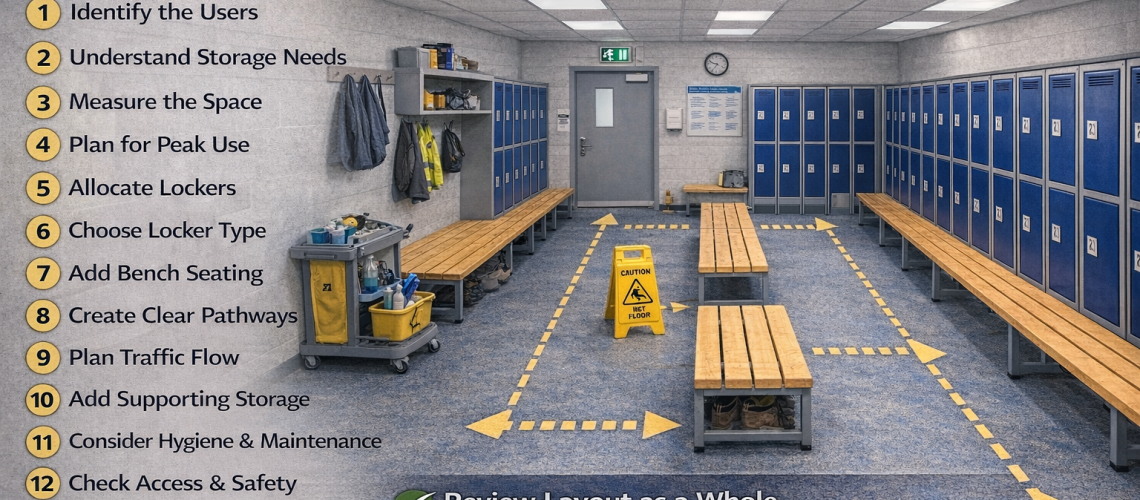
Designing a locker room is not only about fitting in as many lockers as possible. A good layout needs to work for the people using it, the belongings they need to store and the way they move through the space every day. When the design is right, the room feels organised, practical and easy to maintain. When it is rushed, even a room with good products can become cramped, cluttered and awkward to use.
That is why locker room design works best as a step-by-step process. Before choosing lockers, benches or accessories, it helps to understand the users, the environment and the demands the room will face at busy times. From there, you can make better decisions on layout, storage, traffic flow, hygiene and long-term maintenance.
This guide explains how to design a locker room step by step, helping you create a space that is practical, efficient and suited to the site.
Step 1: Identify who will use the locker room
The first question is always who the room is for. A school changing room, workplace welfare area, public leisure facility and wet poolside changing room all have different needs. The user group affects almost every design decision that follows.
Think about whether the room will be used by staff, pupils, visitors, gym members or mixed user groups. Consider whether they are regular users who know the space well or first-time users who need a more intuitive layout. It also helps to understand how much privacy, supervision, accessibility and durability the environment is likely to require.
Once the user type is clear, the room becomes much easier to plan properly.
Step 2: Understand what needs to be stored
Locker rooms are shaped as much by storage needs as by floor area. Different users bring different items, and the design needs to reflect that. In one environment, the room may only need to store coats, bags and shoes. In another, it may need to handle uniforms, PPE, wet clothing, towels, toiletries or sports kit.
Do not assume a standard locker size will suit every project. Start by thinking about what users actually carry, what needs to hang, what may be damp or dirty and what may need to stay separate from other items. Storage planning becomes much stronger when it is based on real use rather than default assumptions.
Step 3: Measure the space properly
Before working on layout options, you need a clear understanding of the room itself. Measure the full footprint carefully and note anything that affects how the space can be used. This includes door positions, windows, columns, ceiling height, service points, radiators, drainage areas, wet zones and any awkward corners or obstructions.
It is also important to think beyond the room outline alone. The usable space may be more limited than the total footprint suggests once access routes, locker door clearance and bench circulation are taken into account.
A room can look generous on a plan and still feel tight in practice if these details are missed.
Step 4: Plan for peak use, not just average use
A common mistake in locker room design is planning for average occupancy instead of the busiest times. In reality, many locker rooms experience short periods of heavy demand. Shift changes, lesson changes, sports sessions and class start times can all create sudden pressure on the layout.
That means the room should be judged by how it performs when several people are using it at once. Consider how many users are likely to arrive together, how long they stay in front of lockers, whether they need bench space and whether they are carrying bulky items such as bags, boots or towels.
If the room works only when half empty, it has not really been planned properly.
Step 5: Decide how lockers will be allocated
Not all locker rooms use storage in the same way. Some have assigned lockers used by the same person every day. Others rely on shared or temporary-use lockers, especially in public and leisure settings. This choice affects layout, numbering, lock selection and how users move through the room.
Assigned lockers often suit workplaces and staff areas because users know exactly where they are going. Shared lockers can work well in public environments, but they need a more intuitive arrangement because users will choose from what they see first. That can create hotspots near entrances if the room is not balanced carefully.
Getting this right early helps prevent layout and flow problems later.
Step 6: Choose the right locker type and size
With the storage needs and user pattern in mind, you can choose a locker format that suits the room. Full-height lockers, multi-door lockers, Z-lockers, specialist wet area lockers and workplace lockers all serve different purposes. The right answer depends on what needs to be stored and how the room is used.
Material choice matters as well. Steel lockers may suit many dry environments. Plastic lockers can be a strong option in wet or humid areas. Other finishes may be chosen for hygiene, appearance or sector-specific requirements. The best product is not always the densest one. It is the one that supports the storage need without making the room harder to use.
Step 7: Add bench seating where it is genuinely needed
Bench seating is a key part of many locker rooms, but it should be placed with purpose. In some rooms, users need somewhere to sit while changing shoes, sorting bags or preparing for activity. In others, too much seating can crowd the space unnecessarily.
Think about whether benches are needed along walls, between locker banks or in central islands. Then consider how people will move around them. Benches should support the changing process without blocking locker access or narrowing the main routes too much.
A good locker room does not simply fit benches where there is leftover space. It uses them to support the user journey.
Step 8: Separate circulation space from use space
This is one of the most important steps in the whole design. People need space not only to walk through the room but also to stop, open lockers, sit, change footwear and handle belongings. Problems start when the same strip of floor is expected to do all of those things at once.
Main routes through the room should stay clear enough for movement, even when lockers are open and benches are in use. Locker access zones should not fully block the main circulation path. Shower exits, entrance points and bench ends should also be positioned with movement in mind.
When circulation space and use space are planned separately, the room feels calmer and works more efficiently.
Step 9: Think about traffic flow through the room
Once the main furniture positions are in place, look at how users will move through the space step by step. They may enter, go to a locker, change, move to a shower, return, dry off and leave. In a workplace setting, they may arrive, store personal items, put on PPE and head into the work area. In a school, they may arrive in groups and need quick access before the next session.
Traffic flow should feel natural rather than forced. Avoid layouts that create pinch points, blocked aisles or awkward crossing patterns between wet and dry users. The easier the route feels, the better the room will perform under pressure.
Step 10: Include supporting storage and organisation
Lockers are only part of the storage picture. Many rooms also benefit from hooks, shelves, hanging rails or internal locker fittings that help users organise belongings properly. These features can reduce clutter and stop bags, coats, shoes or towels from ending up on floors and benches.
Think about whether users need temporary access to items during changing, whether footwear needs separate storage and whether damp or dirty items need to be handled differently from dry belongings. Small organisational details often make a surprisingly large difference to how tidy and practical the room feels.
Step 11: Consider hygiene, cleaning and maintenance from the outset
A locker room should be easy to clean and easy to maintain. That means allowing access beneath benches, avoiding dead zones where dirt collects and choosing materials suited to the environment. In wet rooms, drainage, ventilation and water control become especially important. In workplace settings, dirty boots, PPE or damp clothing may create extra maintenance needs.
Cleaning staff and site teams need to be able to reach key areas without constantly working around impossible gaps or overcrowded layouts. A room that looks neat on installation day but is hard to maintain will usually deteriorate faster than expected.
Maintainability should never be treated as an afterthought.
Step 12: Check access, safety and compliance
Before finalising the design, review the layout from a practical access and safety point of view. Users should be able to move through the room safely, reach storage without unreasonable difficulty and use the space in a way that suits the environment. Routes should remain clear enough during busy periods, and the room should support good hygiene and sensible supervision where needed.
Depending on the setting, you may also need to think more carefully about inclusive use, workplace welfare expectations, wet area controls or other site-specific requirements. The exact standards will vary, but the design should support safe and suitable daily use for the intended people.
Step 13: Review the layout as a complete system
At this stage, step back and look at the room as a whole rather than as individual products. Check whether lockers, benches, routes, supporting storage, wet zones and maintenance access all work together. Ask where clutter is likely to build up, where congestion may happen and which areas may wear fastest.
It can help to imagine a real user moving through the room from entry to exit. Where do they stop? What do they carry? What happens when several people do the same thing at once? This practical walk-through often reveals weaknesses that are easy to miss on a simple plan.
Step 14: Refine before installation, not after
Once the products are installed, layout changes become harder and more expensive. That is why this final review stage matters so much. Adjusting locker runs, bench positions or access routes on paper is far easier than correcting them later in a fully fitted room.
It is worth checking whether the design is trying to force in too much storage at the expense of usability. A slightly less dense but better-performing room often delivers more value than an overcrowded one that frustrates users every day.
A good locker room starts with good planning
Designing a locker room step by step helps avoid rushed decisions and creates a stronger result. The best rooms are shaped by the users, the storage need, the traffic flow and the practical demands of cleaning, safety and long-term use. They do not rely on fitting in the maximum number of lockers and hoping the rest works itself out.
When the design process starts with real use and moves through layout, storage, seating, flow and maintenance in a logical order, the finished room is more likely to stay practical and easy to manage. That benefits both the people using it and the site team responsible for keeping it in good condition.
If you are planning a new changing area or reviewing an existing one, a step-by-step approach is the best way to get the layout right before installation begins.
Explore our locker range, view our bench seating options, or browse the Total Locker Service blog for more guidance on locker room planning and changing room design.
Discover more from Blog Total Locker Service
Subscribe to get the latest posts sent to your email.