Cleaning and Maintenance Planning for Changing Rooms
April 13, 2026
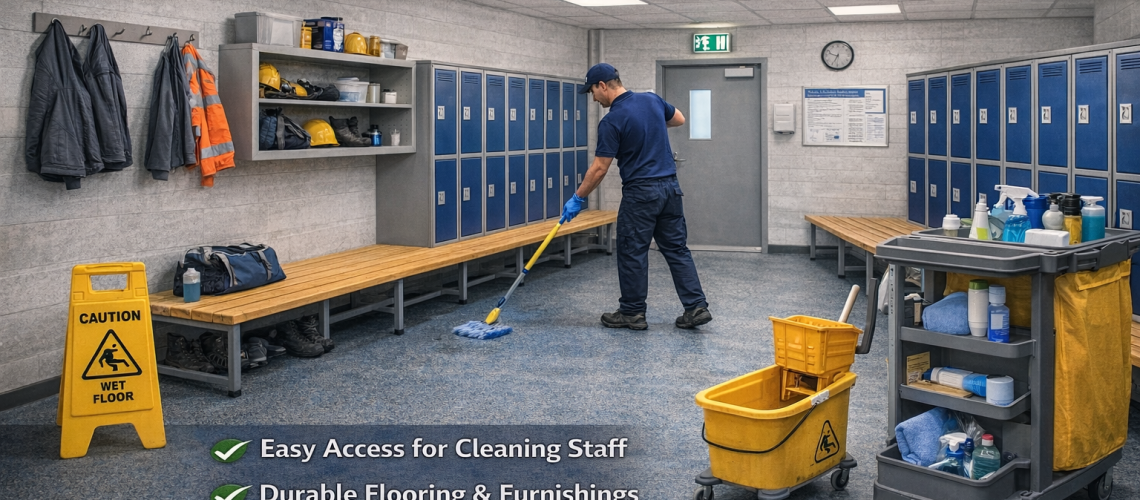
Cleaning and maintenance planning are essential parts of changing room design, not tasks to think about after installation. A room may look right on day one, but if it is difficult to clean, awkward to inspect or hard to maintain, standards often slip over time. Dirt builds up in corners, moisture lingers around benches, locker doors become marked and damaged, and small issues turn into larger repair problems.
That matters in schools, workplaces, leisure centres, gyms, sports facilities and wet area environments alike. Changing rooms experience frequent footfall, repeated contact with lockers and benches, and a steady flow of bags, shoes, clothing and personal items. In wet settings, there is the added pressure of water, humidity and hygiene control. A good layout supports cleaning and maintenance from the start so the room stays usable, presentable and easier to manage.
This guide explains how to plan cleaning and maintenance for changing rooms, helping create spaces that remain tidy, durable and fit for purpose over the long term.
Why cleaning and maintenance should be considered early
It is far easier to maintain a changing room that has been designed with upkeep in mind than to correct a difficult layout later. Cleaning staff need access beneath benches, around locker banks and into corners where dirt, dust, hair and moisture collect. Site teams also need to be able to inspect locks, doors, hinges, panels and fixings without major disruption.
When these needs are ignored, the room may still function in the short term, but it usually becomes harder to keep to a high standard. Narrow gaps trap debris. Overcrowded layouts slow floor cleaning. Furniture placed too tightly together leaves hidden areas untouched. Maintenance tasks then become reactive instead of planned.
Thinking about upkeep early usually leads to better product choices, better spacing and a room that holds its condition more effectively over time.
Changing rooms face several types of wear at once
Changing rooms are exposed to a mix of pressures that make regular cleaning and maintenance especially important. Foot traffic brings in dirt and grit. Bags and footwear scuff floors and benches. Locker doors open and close repeatedly. Damp clothing and towels increase moisture in the room. In wet areas, showers and pool use add water, humidity and a greater hygiene burden.
Because several types of wear happen at once, maintenance planning should not focus on only one element such as flooring or locker damage. The room needs to be treated as a system. Floors, storage, seating, walls, ventilation and circulation routes all affect how easily the space can be kept in good order.
A layout that reduces mess and allows easy access for cleaning will usually perform better than one that relies on staff working around awkward obstacles every day.
Good spacing makes cleaning easier
One of the simplest ways to improve maintenance outcomes is to give the room enough space for cleaning to happen properly. Benches placed too close to lockers, walls or one another create narrow gaps where dirt builds up. Tight aisles make it harder to clean floors thoroughly. Crowded layouts may save space on paper, but they often cost more in ongoing upkeep.
Cleaning access should be considered around the full footprint of each item. It is not enough for a bench or locker to fit physically. Staff also need room to reach beneath, behind or around it. Where that access is missing, hidden build-up is almost inevitable.
This matters just as much in dry staff changing rooms as it does in wet leisure environments. The exact type of dirt may differ, but poor access creates the same problem in the end.
Bench design affects both hygiene and maintenance
Benches are high-contact items in almost every changing room, so they need careful thought. Users sit on them, place bags on them, change shoes around them and often leave items beneath them. If the design makes floor access difficult, dirt, hair and general debris can collect underneath very quickly.
Open-frame benches or wall-mounted designs often help because they leave clearer access for routine cleaning. Fully enclosed or overly bulky seating can look solid, but it may create hard-to-reach voids that trap mess. The right bench height and spacing also influence whether cleaning staff can work effectively around the furniture.
Bench surfaces themselves should also be durable and easy to wipe down. In wet rooms especially, they need to cope with regular moisture exposure without breaking down or becoming difficult to keep hygienic.
Locker layout should allow inspection as well as cleaning
Lockers need maintenance as well as surface cleaning. Doors, hinges, locks, handles, number plates and body panels all experience wear over time. If the locker layout is too cramped, even simple inspection tasks can become inconvenient.
A good maintenance-friendly locker layout allows staff to identify damage, tighten fittings, replace parts and clean fronts and sides without excessive effort. Doors should be able to open without clashing constantly with benches or walkways. Gaps between units and walls should not become dead zones that are impossible to reach.
Where lockers are placed on stands, the underside clearance can help cleaning. Where they sit directly in ways that trap dirt or moisture, upkeep becomes harder. The right arrangement depends on the environment, but maintainability should always be part of the decision.
Wet area changing rooms need extra maintenance planning
Wet changing rooms place even more pressure on cleaning routines because water carries dirt, increases slip risk and keeps surfaces damp for longer. Poolside changing areas, shower zones and high-humidity rooms need layouts that help water move away from storage and seating rather than spread through the whole space.
Drainage, floor falls, ventilation and moisture-resistant materials all influence how easy the room is to maintain. If water sits around bench feet, locker bases or circulation routes, the room quickly looks tired and becomes harder to keep safe. In these settings, maintenance planning is closely linked to hygiene control.
The more clearly wet and dry zones are separated, the easier it is to clean the room effectively and prevent moisture-related wear.
Flooring should support regular cleaning, not fight against it
Flooring has a major effect on long-term maintenance because it carries the full pressure of foot traffic, footwear, moisture and cleaning routines. A floor that marks easily, traps dirt or becomes slippery under normal use adds to both safety and upkeep problems.
In dry changing rooms, the focus may be on durability and ease of sweeping or mopping. In wet areas, slip resistance, drainage and drying performance become more important. Either way, the floor should work with the cleaning routine rather than requiring constant extra effort just to stay acceptable.
Transitions between materials matter too. Poorly handled edges, awkward level changes or badly positioned mats can create maintenance weak points and make the room harder to keep consistently tidy.
Ventilation plays a bigger role than many sites expect
Cleaning alone cannot compensate for poor airflow. If damp air sits in the room for too long, surfaces stay wet, odours can build up and the environment may start to feel stale even with regular attention. This is especially relevant in wet changing rooms, but it also matters in workplace settings where boots, used PPE or damp clothing are stored.
Ventilation helps the room recover between busy periods. It supports hygiene, reduces the lingering effects of moisture and can lessen strain on surfaces and fittings over time. When a room never seems to dry out properly, cleaning standards are much harder to maintain visually as well as practically.
Organisation helps reduce maintenance problems
A well-organised changing room is usually easier to clean and maintain because belongings are less likely to end up in the wrong places. When coats hang on hooks, shoes sit in suitable storage areas and bags fit inside lockers rather than across benches, staff can reach more of the room during routine cleaning.
By contrast, poor organisation leads to clutter. Clutter slows cleaning, hides developing damage and makes the room look scruffier than it really is. This is one reason why storage planning, bench use and locker design should all be considered part of the maintenance strategy rather than separate issues.
Simple organisational features often reduce daily upkeep pressure more effectively than extra cleaning effort alone.
Plan routine inspections, not just reactive repairs
Maintenance planning should include regular inspection as well as routine cleaning. Small issues such as loose hinges, stiff locks, damaged number plates, worn bench fixings or chipped surfaces are easier to deal with early. Left too long, they tend to become more disruptive and more noticeable to users.
In practical terms, this means the room should be easy to walk through and check without moving half the furniture or working around constant obstruction. Clear numbering, accessible product layouts and sensible spacing all make inspection more straightforward.
A site does not need a complex system to benefit from this approach. Even basic, regular visual checks are more effective when the room has been designed with maintainability in mind.
High-use areas need extra attention in the layout
Not every part of a changing room wears at the same rate. Entrances, locker banks near the door, central benches, shower exits and main traffic routes usually receive the most pressure. If these high-use areas are badly planned, they show dirt and damage first.
That is why maintenance planning should focus on where pressure naturally concentrates. A slightly more durable finish, a clearer route, more cleaning access or better spacing in these areas can make a noticeable difference to how the room performs overall.
Watching where clutter, moisture or damage appears first is often the quickest way to identify where the layout is working against maintenance.
Different environments need different maintenance priorities
A school changing room, a staff welfare room, a gym locker area and a wet leisure facility all share some common maintenance needs, but the priorities are not identical. Schools may need robust layouts that cope with high turnover and general wear. Workplace environments may need stronger focus on boots, uniforms, PPE and daily routines. Wet leisure rooms need more attention to drainage, drying and moisture-resistant products.
This is why maintenance planning should be tied to the actual use case. A generic approach may miss the real pressure points in the room.
Questions to ask when planning cleaning and maintenance
Before finalising the layout, it helps to ask a few practical questions:
- Can cleaning staff reach beneath, behind and around benches and lockers easily?
- Do locker positions allow doors, locks and fittings to be inspected properly?
- Will the flooring cope well with the cleaning routine and the level of moisture in the room?
- Are wet and dry zones clearly separated where needed?
- Does the room have enough ventilation to dry out between busy periods?
- Are high-wear areas being given enough space and durability?
- Will clutter build up because the organisation and storage features are too limited?
These questions help show whether the room will remain manageable once it is in daily use, not just whether it looks neat at installation stage.
A maintainable changing room performs better for longer
Cleaning and maintenance planning are not separate from changing room design. They are part of what makes the space succeed. A room that is easy to clean, simple to inspect and practical to maintain stays presentable for longer, supports hygiene better and usually delivers better value over time.
Good spacing, sensible product choices, better organisation and clear wet or dry zoning all contribute to that outcome. The aim is not to create a room that needs no upkeep. It is to create one where upkeep is realistic, effective and built into the way the space works.
If you are planning or reviewing a changing room, it is worth looking beyond capacity and layout alone. Ask how the room will actually be cleaned, inspected and maintained every week. That question often leads to better decisions than focusing only on how many lockers fit into the footprint.
Explore our locker range, view our bench seating options, or browse the Total Locker Service blog for more guidance on changing room layouts and locker room upkeep.
Discover more from Blog Total Locker Service
Subscribe to get the latest posts sent to your email.