Wall-Mounted vs Floor-Standing Medical Cabinets: Which Is Best?
March 24, 2026
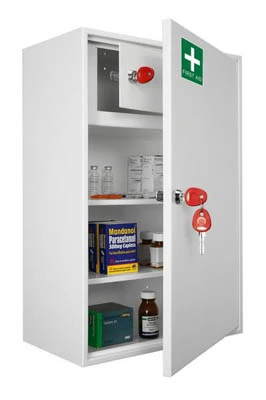
Choosing between wall-mounted and floor-standing medical cabinets is one of the most important decisions in healthcare storage planning. Both formats can work very well, but they solve different problems. The right choice depends on the room, the amount of stock being stored, the way staff use the space and how much internal organisation the cabinet needs to support.
Many buyers begin by focusing on dimensions or appearance, but the real question is how the cabinet will function once it is in daily use. A wall-mounted unit may look neat and save floor space, while a floor-standing cupboard may provide the capacity and shelf separation needed for a busier clinical setting. The best option is the one that supports secure storage, keeps the room organised and makes routine access easier for authorised staff.
This guide explains the difference between wall-mounted and floor-standing medical cabinets, the strengths of each format, the environments where they are most commonly used and how to decide which is best for your setting. For broader storage advice, see our complete guide to medical cabinets. If you are ready to compare products, you can also browse our medical cabinet range.
Why cabinet format matters
Medical cabinets are not just storage boxes. They form part of the working layout of a room. That means the format you choose affects more than capacity alone. It affects cleaning, visibility, access, organisation and how clutter builds up over time.
A poorly chosen cabinet can create daily friction. It may block movement through the room. It may be too small internally and become overcrowded. It may open awkwardly or sit at the wrong height for regular use. It may even encourage staff to store unrelated items together because the layout does not support proper separation.
A well-chosen cabinet does the opposite. It supports clear internal organisation, suits the wall or floor space available and fits naturally into the way the room is used. That is why the wall-mounted versus floor-standing decision should be made early rather than treated as a cosmetic detail.
What is a wall-mounted medical cabinet?
A wall-mounted medical cabinet is fixed above floor level and uses vertical wall space instead of occupying floor area. These cabinets are often used in treatment rooms, consulting rooms, GP surgeries, dental practices and compact clinical spaces where maintaining clear floor space is important.
Wall-mounted cabinets are popular because they help keep a room looking tidy and efficient. They can place key items at a practical working height and reduce the visual heaviness that sometimes comes with larger cupboards. They are also useful where space is limited and every square metre matters.
Most wall-mounted medical cabinets are best suited to moderate quantities of stock rather than very high-volume storage. That does not make them a lesser option. It simply means they work best when matched to the right room and the right storage requirement.
What is a floor-standing medical cabinet?
A floor-standing medical cabinet sits directly on the floor and usually provides more overall storage capacity than a compact wall-mounted unit. These cupboards are often chosen for treatment areas, clinic back rooms, larger healthcare rooms and settings where more shelf space or better category separation is needed.
Floor-standing cupboards are especially useful when a site handles a broader range of medicines or clinical supplies. Their larger format can make it easier to separate stock by type, frequency of use or function. In some rooms, that extra capacity is essential to keeping the storage manageable.
They are not automatically better than wall-mounted cabinets. Their strength lies in capacity, internal flexibility and a greater ability to support wider stock profiles. Where that is needed, a floor-standing cabinet can be the clearer and more practical solution.
The main advantages of wall-mounted medical cabinets
Wall-mounted cabinets offer several clear benefits when used in the right setting.
- They save floor space. This is the biggest advantage in compact treatment rooms and consulting spaces.
- They can make cleaning easier. With no cabinet base sitting on the floor, the area beneath stays more accessible.
- They often look neater in small rooms. This helps reduce the sense of visual clutter.
- They can place frequently used items at a practical height. This can support faster routine access.
- They work well where moderate storage is needed without a full-height cupboard.
In many clinical rooms, those advantages are enough to make wall-mounted cabinets the best choice. They allow the space to feel more open while still providing secure, organised storage.
The main disadvantages of wall-mounted medical cabinets
Wall-mounted cabinets also have limits, and these should be understood before buying.
- They usually offer less total capacity. If stock volume is high, they can become crowded quickly.
- They may provide fewer shelf positions. That can reduce segregation options.
- They depend on suitable wall fixing. The wall and installation position need proper thought.
- They are not ideal where heavy or bulky stock must be stored.
- They can be the wrong choice for rooms trying to handle too many functions in one cupboard.
A wall-mounted cabinet works best when the storage need is clearly defined and the room suits the format. Problems usually appear when buyers try to make a compact unit handle more stock than it reasonably should.
The main advantages of floor-standing medical cabinets
Floor-standing cabinets are often chosen because they give buyers more room to work with. That extra space can improve organisation and reduce the pressure to stack too much into one cupboard.
- They offer greater capacity. This is useful for sites storing a wider range of items.
- They usually provide more shelves or larger shelf areas.
- They support better separation between categories. This can make the cupboard easier to manage.
- They are well suited to busier clinical environments.
- They can reduce overcrowding compared with undersized wall-mounted units.
In some settings, that extra capacity is what keeps the room workable. A taller cupboard can create a more deliberate layout and stop the storage area feeling permanently overloaded.
The main disadvantages of floor-standing medical cabinets
Floor-standing cabinets are not perfect for every room. They take up more visible space and can feel too dominant in smaller areas if poorly chosen.
- They use floor space. In a compact treatment room this can be a major drawback.
- They can make a room feel more crowded.
- They require enough clearance for doors to open properly.
- They may become dumping spaces if they are oversized for the task.
- They are not always the neatest solution where stock volumes are modest.
The key is to match cupboard size to actual need. A large cupboard in a small room is not automatically an upgrade. Sometimes it simply introduces a different form of clutter.
Which is better for small treatment rooms?
In many small treatment rooms, wall-mounted medical cabinets are the better fit. They keep the floor clearer, support easier cleaning and make better use of vertical space. They can also help the room feel calmer and more open, which matters when multiple functions are being carried out in a limited area.
That said, a wall-mounted cabinet is only the right answer if the stock level is realistic for the cupboard size. If the room needs to hold more items than a compact unit can manage, forcing everything into a small wall cabinet often leads to overcrowding and mixed storage. In those cases, a carefully chosen floor-standing cupboard or a two-cabinet arrangement may still be the better solution.
Which is better for higher-volume storage?
Where the room needs to store a broader range of medicines or a higher volume of routine stock, a floor-standing medical cabinet is often the stronger choice. The extra internal space allows better shelf separation and makes it easier to keep categories distinct.
This is especially useful in busier clinical settings where staff need to retrieve items quickly and the cupboard has to remain manageable over time. Larger cupboards are not a substitute for good organisation, but they do give teams more room to maintain it.
How room layout affects the decision
The room itself often tells you which format is most suitable. Look beyond the cabinet dimensions and consider the working layout.
- Is there enough clear wall space for a mounted unit?
- Will a floor-standing cupboard obstruct movement?
- Can the doors open fully without hitting equipment or furniture?
- Would a wall-mounted position place items at a more practical height?
- Does the room need to stay visually open and uncluttered?
These questions matter because a cabinet should support the flow of the room rather than fight it. Storage works best when it feels built into the environment, not squeezed into the last available space.
Capacity versus accessibility
This is often the real trade-off. Wall-mounted cabinets usually improve accessibility to a moderate amount of stock in a compact footprint. Floor-standing cabinets usually improve capacity and category separation, but they require more room.
Buyers sometimes choose purely on capacity and end up with a cupboard that is too large for the space. Others choose purely on neatness and end up with a cabinet that is too small for the stock. The better approach is to balance both sides: enough space to stay organised, but not so much bulk that the room becomes awkward.
A useful test is this: when the cabinet is fully in use on a busy day, will staff still be able to find, replace and check items easily? If the answer is no, the format or size is wrong.
Internal organisation matters more than buyers expect
The best cabinet format is the one that supports good internal organisation. That means enough usable shelf space, enough visibility and enough structure to separate product types sensibly. A smaller cabinet can work very well if the stock profile is controlled and the internal layout is clear. A larger cabinet can work badly if it becomes a mixed-use dumping area.
For many healthcare settings, the right answer is not simply wall-mounted or floor-standing in the abstract. It is which option makes it easier to maintain order over time. That is why stock profile and user behaviour matter so much in the buying decision.
When a wall-mounted cabinet is usually the better choice
A wall-mounted medical cabinet is usually the better choice when:
- the room is compact
- floor space is limited
- stock volume is moderate
- high-use items need to sit at a convenient working height
- the room benefits from a cleaner, more open appearance
- the cabinet is being used mainly for one clearly defined storage role
This is why wall-mounted formats are often popular in treatment rooms, smaller surgeries and private clinical spaces where tidy presentation and efficient space use matter.
When a floor-standing cabinet is usually the better choice
A floor-standing medical cabinet is usually the better choice when:
- the site stores a wider range of items
- greater capacity is needed
- stock benefits from stronger separation by category
- the room can comfortably accommodate a larger cupboard
- the cupboard will support a busier clinical workflow
- a compact wall unit would become overcrowded too quickly
This often makes floor-standing cupboards a stronger fit for larger treatment areas, clinic support rooms and care settings handling more routine stock.
Should you ever use both?
Yes. In some rooms or departments, a combination works best. A wall-mounted medical cabinet can hold high-use items that need to be easy to reach, while a floor-standing cupboard can hold reserve stock or broader category storage. This can be especially effective where the room needs both quick access and stronger overall capacity.
Using both formats can also reduce overcrowding. Instead of forcing one cupboard to do everything, each cabinet has a clearer role. In many settings that creates a better organised, more sustainable storage system.
Common buying mistakes
There are several common mistakes buyers make when comparing wall-mounted and floor-standing medical cabinets.
- Choosing by looks alone: a neat cabinet is not useful if it is too small or badly placed.
- Focusing only on external dimensions: the internal layout matters more than many people expect.
- Ignoring how the room actually works: the cabinet should support the workflow, not obstruct it.
- Buying too small: this often leads to crowded shelves and mixed storage.
- Buying too large: this can make a room feel cramped and encourage unrelated items to accumulate.
- Forgetting about door clearance and access space: a cupboard that opens awkwardly never feels right in use.
These mistakes are avoidable when the cabinet is chosen around stock, room layout and daily use rather than on size or appearance alone.
How to make the right choice
If you are deciding between wall-mounted and floor-standing medical cabinets, start with five practical questions:
- How much stock will the cabinet hold?
- Does the room have more available wall space or more available floor space?
- Will a compact unit stay organised, or will it become crowded?
- Do staff need high-use items at a particular working height?
- Would one cabinet be enough, or would two smaller roles work better?
Those questions usually reveal the right format quickly. A compact room with moderate stock often points to a wall-mounted solution. A higher-volume storage need usually points to a floor-standing cupboard. In some cases, the best answer is a planned mix of both.
Choosing the right medical cabinet from Total Locker Service
The right medical cabinet should fit the room, support secure storage and stay organised in real use. Whether that means a wall-mounted unit, a floor-standing cupboard or a combination of both depends on the practical needs of your setting.
If you are reviewing lockable storage for a surgery, clinic or care environment, see our medical cabinet range for secure options designed for healthcare storage. You can also return to our pillar guide to medical cabinets for broader buying advice.
Final thoughts
Wall-mounted and floor-standing medical cabinets both have a clear place in healthcare storage. One is not universally better than the other. The best choice depends on the room, the stock volume and the way staff use the space.
Wall-mounted cabinets are often ideal for compact rooms, tidy layouts and moderate stock levels. Floor-standing cupboards are often better for larger storage needs, stronger separation and busier working environments. Once you match the format to the real use case, the decision becomes much easier.
Discover more from Blog Total Locker Service
Subscribe to get the latest posts sent to your email.