Sustainable Lockers: Environmental & ESG Considerations
February 18, 2026
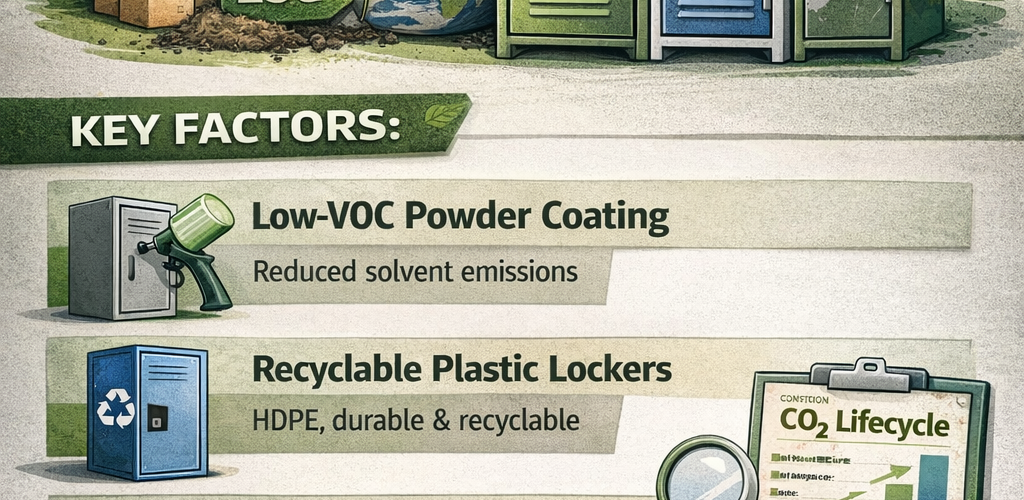
Sustainable lockers are no longer a niche procurement concern. In 2026, environmental and ESG (Environmental, Social and Governance) considerations increasingly influence purchasing decisions across schools, workplaces and industrial environments. Lockers, as long-term infrastructure assets, form part of that evaluation.
This guide explores the environmental impact of locker materials and manufacturing processes. It covers powder coating, recyclable plastics, UK manufacturing versus imports, lifecycle carbon modelling and why durability itself is a sustainability strategy.
For a broader overview of locker types and applications, see our complete lockers guide.
What Makes a Locker “Sustainable”?
Sustainability in locker procurement involves more than selecting recycled materials. A truly sustainable locker considers:
- Material sourcing
- Manufacturing emissions
- Transport footprint
- Expected lifespan
- End-of-life recyclability
Durability and lifecycle carbon cost are often more significant than short-term recycled content percentages.
Powder Coating: Environmental Considerations
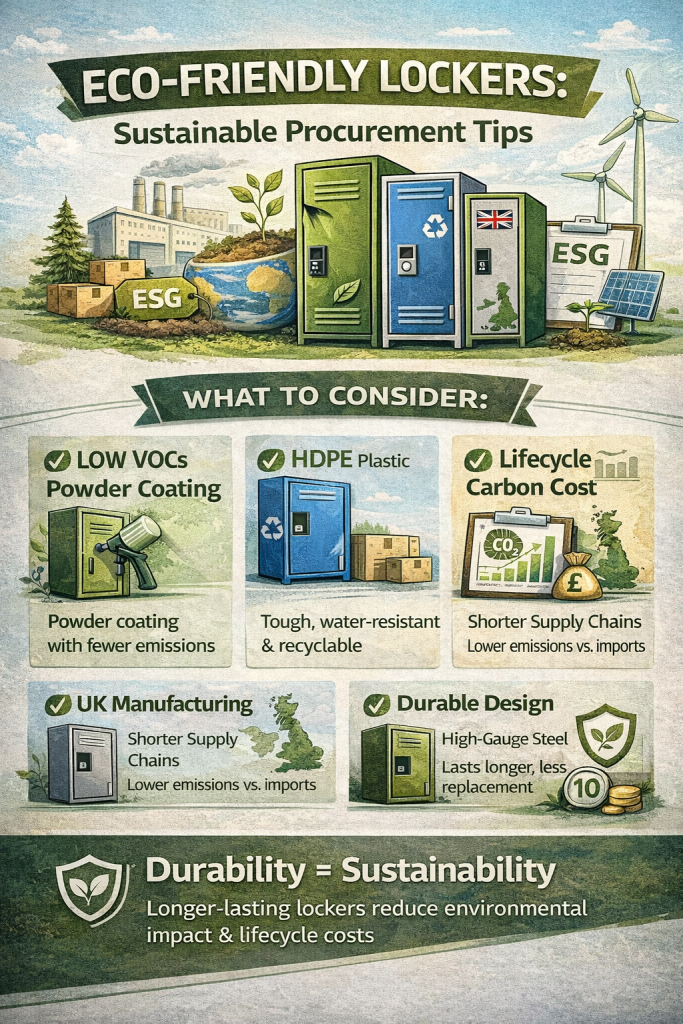
Powder coating is widely used on steel lockers. Compared to traditional solvent-based paints, powder coating typically produces lower volatile organic compound (VOC) emissions.
Advantages include:
- No solvent evaporation during curing
- Overspray recovery and reuse
- Long-lasting surface protection
However, powder coating still requires energy-intensive curing ovens. The sustainability of powder-coated lockers depends partly on manufacturing energy sources and process efficiency.
Recyclable Plastic Lockers
High-density polyethylene (HDPE) lockers are increasingly specified in wet and high-impact environments. From an ESG perspective, plastic lockers offer both advantages and challenges.
Advantages
- Non-corrosive material extends lifespan
- Often recyclable at end of life
- Reduced repainting requirements
Considerations
- Petrochemical origin of raw materials
- Transport footprint if imported
In humid environments where steel may corrode prematurely, plastic lockers may offer a lower lifecycle carbon cost due to extended service life.
UK Manufacturing vs Imported Lockers
Transport emissions significantly influence overall carbon footprint. Lockers imported from overseas may travel thousands of miles before installation.
UK-manufactured lockers typically offer:
- Reduced shipping emissions
- Shorter supply chains
- Greater traceability
- Improved quality control
While upfront cost differences may exist, local manufacturing often aligns better with ESG reporting requirements.
Lifecycle Carbon Cost
One of the most overlooked aspects of sustainable lockers is lifecycle carbon modelling. A locker that lasts 15 years generates fewer emissions over time than one replaced after six years.
Lifecycle analysis should consider:
- Manufacturing emissions
- Transport footprint
- Maintenance requirements
- Replacement cycles
- End-of-life recycling
Frequent replacement increases embodied carbon. Durability reduces overall environmental impact.
Durability as a Sustainability Strategy
In procurement discussions, sustainability often focuses on materials. However, durability is equally important.
A heavy-gauge steel locker lasting 15 years may be more sustainable than a thin-gauge unit replaced twice within that period.
Reducing replacement frequency lowers:
- Manufacturing emissions
- Transport emissions
- Disposal waste
- Installation labour impact
Durability aligns directly with ESG performance metrics.
Maintenance and Environmental Impact
Maintenance also influences sustainability. Lockers requiring frequent repainting or repairs increase material consumption and labour energy use.
Ventilation design, corrosion resistance and robust locking systems reduce maintenance frequency.
ESG Reporting and Procurement Policies
Many organisations now incorporate ESG scoring into supplier selection. Locker suppliers may be evaluated on:
- Environmental certifications
- Supply chain transparency
- Carbon reduction strategies
- Recyclability commitments
Sustainable locker procurement should align with broader corporate ESG objectives rather than being treated as an isolated purchasing decision.
Common Sustainability Mistakes
- Focusing solely on recycled content
- Ignoring transport emissions
- Choosing low-durability products to reduce upfront cost
- Overlooking end-of-life recyclability
Final Thoughts
Sustainable lockers are defined not just by material choice, but by lifecycle performance. Powder coating efficiency, recyclable plastics, local manufacturing and long-term durability all influence environmental impact.
Procurement teams should evaluate lockers over a 10–15 year horizon. Reduced replacement cycles and lower maintenance demands often deliver the strongest environmental outcomes.
In modern ESG-focused procurement, sustainability is not optional. It is a measurable component of long-term asset planning.
Discover more from Blog Total Locker Service
Subscribe to get the latest posts sent to your email.