Medical Storage Compliance UK: Complete Guide 2026
March 3, 2026
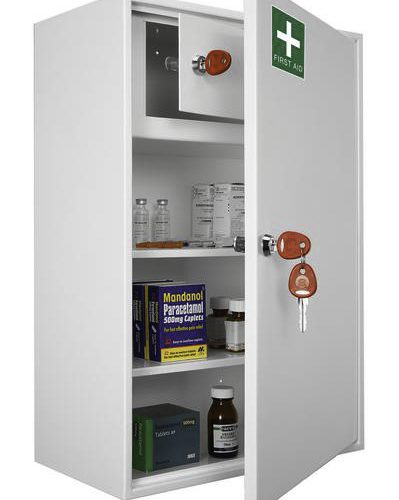
Medical storage in the UK is governed by regulation, professional guidance and risk-based standards. Whether you operate a GP surgery, hospital ward, pharmacy, dental practice or private clinic, medicines must be stored securely, safely and in a way that can be evidenced during inspections.
This guide explains medical storage compliance in the UK, what typically gets checked, and how to select appropriate medical cabinet security for your setting.
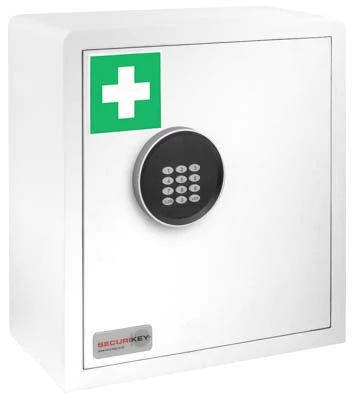
What “medical storage compliance” means in practice
Compliance is not just about buying a lockable cupboard. It is a combination of physical security, controlled access, clear responsibility and consistent record keeping. Inspectors and internal auditors typically look for proof that medicines are stored in a way that reduces risk of theft, tampering, contamination, mix-ups and unauthorised access.
- Secure cabinets suited to the medicines stored
- Restricted access (and evidence of how access is controlled)
- Appropriate segregation (for example controlled drugs vs general medicines)
- Clear accountability for keys, codes or authorisation
- Documented checks, incidents and corrective actions
Key drivers of medical storage requirements in the UK
Medical storage compliance draws from multiple sources. The exact requirements depend on the medicines stored, the clinical environment and the risk profile of the service. Most organisations align their practice to a blend of legal duties, regulator expectations and internal policies.
- Controlled drugs legislation and associated guidance
- Regulatory expectations (including CQC inspection focus on safe medicines management)
- NHS and local trust guidance (where applicable)
- Professional standards and governance procedures
- Health and safety risk assessment outcomes
If you are specifying cabinets for a regulated setting, treat the cabinet as one control within a wider system. Security, access, monitoring and records all need to align.
Controlled drugs storage
Controlled drugs require enhanced security. In practice this usually means a dedicated, lockable cabinet of robust construction, securely fixed to the building structure, with access limited to authorised staff. The exact approach should match the drug schedules in scope, your local governance and the assessed risk.
- Dedicated controlled drug cabinet (not used for general medicines)
- Robust construction and secure fixing to a solid structure
- Strict access control and key management
- Procedures for issuing, returning and auditing access
- Incident reporting for loss, suspected diversion or tampering
For compliant cabinet options and security-focused configurations, see our medical cabinet range here: Medical Cabinet Security.
CQC inspection expectations for medicine storage
CQC inspections commonly assess whether medicines are stored safely, securely and in a way that supports good governance. This often includes both the physical condition of storage and the operational controls around access and monitoring.
- Secure storage and restricted access
- Appropriate segregation (for example controlled drugs and high-risk medicines)
- Key or code control and accountability
- Routine checks and documented reviews
- Clear actions taken when issues are found
A strong cabinet choice helps, but inspections tend to focus on the system: how you control access, how you record it, and how you respond to risk.
Choosing the right type of medical cabinet
Different cabinet types suit different medicines and environments. Selection should be driven by risk assessment and operational need, not just available space.
- Controlled drug cabinets for controlled medicines requiring enhanced security
- General medicine cabinets for day-to-day clinical stock
- Wall-mounted cabinets for space efficiency where fixing and access controls are appropriate
- Floor-standing cabinets for higher capacity and multi-shelf storage
- High-security cabinets for higher-risk areas or where additional resilience is required
Locking options and access control
Lock choice should match staff workflows and risk. A lock is only as effective as the access controls around it. Consider how keys or codes are issued, stored and audited.
- Keyed locks for straightforward control where key registers are well managed
- Master key systems for multi-cabinet sites needing controlled override access
- Mechanical combination locks to reduce key handling where code control is practical
- Digital keypad locks where you need stronger operational control (ensure procedures for override and continuity)
Whichever lock type you choose, define responsibility clearly. If multiple people can access medicines, you will usually need a tighter access model and better records.
Fixing, location and physical environment
Cabinet placement affects both safety and security. Medical cabinets should be positioned to reduce unauthorised access while remaining workable for clinical staff. For higher-risk medicines, secure fixing and controlled room access matter.
- Fix cabinets securely where required, particularly for high-value or controlled medicines
- Keep cabinets away from public access zones
- Maintain clear sight lines where appropriate for supervision
- Ensure the storage area supports safe stock handling and reduces mix-up risk
Documentation and record keeping
Strong documentation turns “we do this” into “we can prove this”. Your storage system should be supported by simple, repeatable records that staff can maintain under pressure.
- Medicine storage policy and responsibilities
- Key register or code access procedure
- Controlled drug access and reconciliation processes (where relevant)
- Routine cabinet and stock checks with dated sign-off
- Incident logs and corrective action records
Common compliance failures
Many issues arise from small gaps that become routine. Addressing these early reduces disruption and helps keep audits smooth.
- Uncontrolled key access or shared codes
- Cabinets not securely fixed where required
- Damaged locks, worn hinges or poor door alignment
- Mixed storage where segregation is expected
- Missing or inconsistent records
Selecting compliant medical cabinet security
When specifying cabinets, confirm the cabinet type suits your medicines and setting, the lock and fixing method meet your risk assessment, and that you can operate the access controls reliably day to day.
- Cabinet construction and robustness
- Locking method matched to workflow and risk
- Secure fixing capability and suitable installation location
- Capacity, shelving and internal organisation
- Governance readiness (access control and record keeping)
Explore secure options here: Medical Cabinet Security.
Frequently asked questions
Do controlled drugs require a dedicated cabinet?
In many settings, yes. Controlled drugs typically require enhanced secure storage with restricted access and robust fixing, aligned to your governance and risk assessment.
Do medical cabinets need to be fixed to the wall?
Fixing requirements depend on cabinet type, medicine risk and local policy. Higher-risk medicines generally require stronger physical security, including secure fixing where appropriate.
Can digital locks be used on medical cabinets?
Yes, provided you have a reliable access control process, secure override arrangements and appropriate procedures for continuity.
Next steps
If you are building out policies or specifying a new cabinet, start with a site risk assessment and identify what must be stored, who needs access and what evidence you need for inspections. Then match cabinet type, lock choice and procedures to that reality.
For secure cabinet options suitable for healthcare environments, visit: Medical Cabinet Security.
Discover more from Blog Total Locker Service
Subscribe to get the latest posts sent to your email.