Locker Room Benches with Storage Underneath: Smarter Seating for More Organised Changing Areas
April 13, 2026
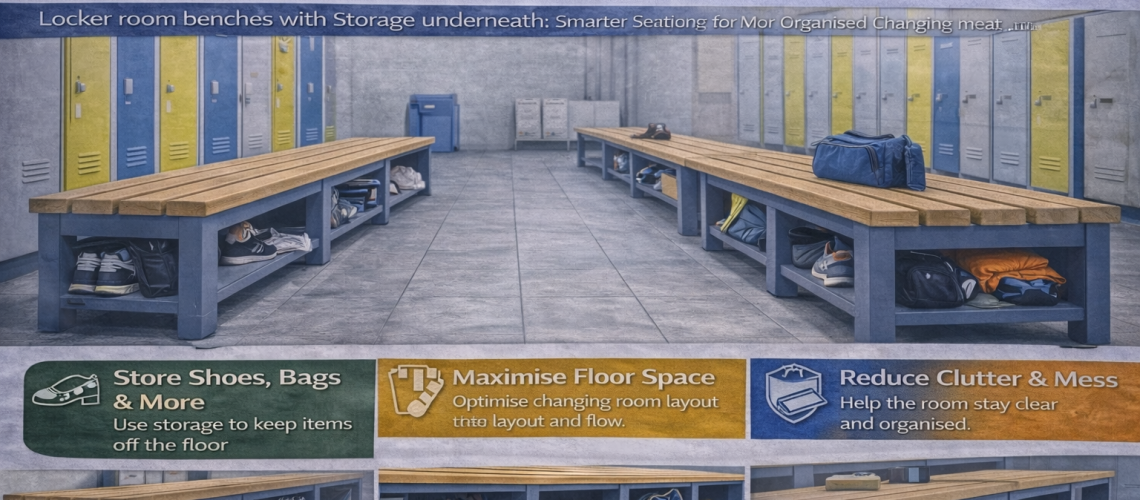
Locker room benches need to do more than provide a place to sit. In many changing rooms, users also need somewhere to place shoes, bags, towels, kit or workwear while they change. That is why benches with storage underneath are such a practical option. They combine seating with extra storage capacity, helping the room stay tidier and easier to use.
In schools, workplaces, gyms and leisure facilities, under-bench storage can make a real difference to how the space works. When belongings are kept off the floor and closer to the seating area, movement improves, clutter is reduced and the room often feels more organised.
This guide explains how locker room benches with storage underneath work, where they are most useful and what to consider before choosing them.
What are benches with storage underneath?
These benches include usable storage space below the seat, rather than leaving the area underneath completely open or blocked by a simple frame. The storage may take the form of open shelving, divided sections or practical clearance space for day-to-day items.
The purpose is straightforward. It gives users a place to sit while also providing nearby space for personal belongings, clothing, shoes or equipment.
Common items stored underneath include:
- shoes and boots
- sports bags and holdalls
- towels and clothing
- small items of equipment
- workplace kit kept close during changing
This type of bench is especially useful where floor space needs to work harder.
Why under-bench storage matters
Changing rooms can become cluttered quickly. Bags, shoes and loose items often end up on the floor if there is nowhere obvious to place them. That makes the room feel less tidy and can make it harder for users to move around safely.
Bench storage underneath helps by:
- keeping belongings closer to the user
- reducing clutter in walkways
- making better use of available space
- helping the room feel more organised
- supporting a tidier and more efficient changing area
- combining two functions into one unit
In many environments, this creates a better user experience without increasing the footprint of the room too much.
Where benches with under-storage work best
Under-bench storage can work across several sectors, but it is especially useful where users regularly arrive with items that need to be placed somewhere while changing.
Schools and colleges
Students often bring bags, shoes and PE kit into changing areas. Benches with storage underneath can help prevent these items being left in circulation routes.
Gyms and leisure facilities
Gym users may need space for shoes, towels, bottles or kit bags during short visits. Under-bench storage keeps these items close without leaving them spread across the floor.
Workplaces and staff changing areas
In workplaces, under-storage benches can support coats, shoes, bags and workwear accessories, especially where lockers are nearby but not the only storage element in the room.
Sports and team environments
Changing rooms used by teams or group activities often benefit from more structured storage close to the seating. Under-bench space can help manage that more effectively.
Space-saving benefits
The biggest advantage of this type of bench is space efficiency. Instead of treating the area beneath the bench as wasted space, it becomes part of the room’s storage system. This is especially valuable in compact changing rooms where every part of the layout needs to work hard.
Space-saving benefits include:
- better use of the bench footprint
- less reliance on additional loose storage
- fewer items left on open floor space
- more efficient room planning in smaller layouts
That makes under-bench storage attractive in both commercial and practical terms.
Open storage vs structured shelving
Not all under-bench storage works in the same way. Some benches simply leave open usable space beneath the seat, while others use shelves or compartments to create more structured storage.
Open under-storage is simple and flexible. It works well when users need quick access to bags or shoes and where the stored items may vary from day to day.
Shelved or divided storage can feel more organised and may suit environments where users store similar types of item, such as shoes, folded clothing or smaller kit.
The better option depends on:
- the size and shape of the items
- how structured the room needs to feel
- how easy the storage must be to clean
- whether users stay for short or longer periods
How under-bench storage affects organisation
Storage beneath seating can help guide user behaviour. When there is an obvious place for shoes or bags, people are more likely to use it. This reduces the chance of belongings being dropped in walkways or scattered around the changing room.
That can improve:
- the tidiness of the space
- user movement around benches and lockers
- overall room presentation
- day-to-day management of busy changing areas
Good organisation is one of the main reasons this bench type works so well in shared-use spaces.
Cleaning and hygiene considerations
Storage underneath a bench adds function, but it also creates extra areas that need to be cleaned and monitored. That means the design should still support hygiene and maintenance rather than making them harder.
Important considerations include:
- how easy it is to reach beneath the bench
- whether dirt or moisture can build up in hidden areas
- how stored items affect access for cleaning
- whether the material suits the cleaning routine of the room
Open under-storage is often easier to inspect quickly, while more enclosed or divided designs may need closer attention. In wet or hygiene-sensitive areas, this becomes especially important.
Wet areas vs dry areas
Under-bench storage can work in both wet and dry environments, but it needs to be planned carefully. In dry changing rooms, it is often a straightforward way to improve organisation. In wet environments, the design must still support easy cleaning and avoid creating awkward moisture traps.
In general:
- dry areas usually allow more flexibility in under-storage design
- wet areas need stronger attention to hygiene and cleaning access
- materials should always match the environment first
That means under-storage is not automatically unsuitable in wet areas, but it does need more careful specification.
Layout and spacing still matter
Under-bench storage works best when the surrounding layout is well planned. A storage bench placed in a cramped room can still cause problems if bags and shoes spill out into walkways or if the bench sits too close to lockers and walls.
A better layout should allow:
- room for users to sit and reach stored items easily
- clear movement paths around the seating
- access to nearby lockers, hooks or rails
- practical cleaning around and beneath the bench
Under-storage should support the room, not make it feel tighter.
When under-bench storage may not be ideal
This format is useful, but it is not always the best answer. In some environments, too much storage beneath the seat may encourage clutter or make cleaning more difficult than a simpler bench would. If users are likely to overfill the space or leave items spread around it, the benefit is reduced.
It may be less suitable when:
- the room is already very tight
- cleaning access is a top priority and the design restricts it
- items stored beneath are likely to create trip or clutter issues
- the environment is wet and the storage detail is not suited to moisture
As with any bench system, the design has to match real behaviour in the room.
Common mistakes to avoid
Several issues appear when under-bench storage is specified too casually.
- treating all under-storage as equally suitable for wet and dry areas
- choosing storage benches without considering cleaning access
- allowing bags and shoes to spill into circulation routes
- using structured storage when open flexible space would work better
- focusing on extra storage without checking the room layout still works
The strongest result usually comes from balancing storage benefits against hygiene, layout and user flow.
How to choose the right bench with storage underneath
Before deciding, ask:
- What items will users actually place beneath the bench?
- Will open or structured storage work better?
- Is the room dry, wet or hygiene-sensitive?
- Can the bench still be cleaned easily?
- Will stored items remain clear of walkways and access routes?
- Does the layout leave enough space for users to sit and move comfortably?
These questions help turn a useful idea into a better real-world specification.
Final thoughts on locker room benches with storage underneath
Locker room benches with storage underneath are a practical way to combine seating and organisation in one space-saving unit. They can reduce clutter, improve layout efficiency and make changing rooms feel more orderly for users.
The best results come when the storage format, materials and layout all match the environment. When planned properly, these benches can add real day-to-day value without making the room more difficult to clean or manage.
Explore our locker range, review locker lock options, and browse more guidance on the Total Locker Service blog.
“`
Discover more from Blog Total Locker Service
Subscribe to get the latest posts sent to your email.