How to Identify Your Locker Key Number (Complete UK Guide)
February 19, 2026
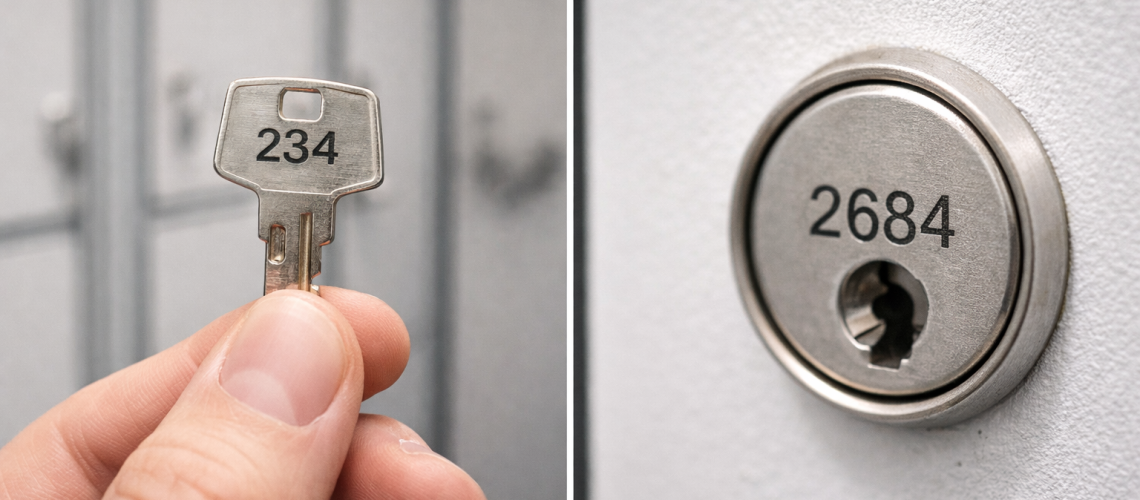
If you need a replacement key, the most important detail is the locker key number. Without it, suppliers cannot cut the correct key. Fortunately, most UK locker installations use cam locks with clearly stamped identification codes.
This guide explains where to find your locker key number, how cam lock numbering systems work, what to do if the number is missing, and whether you should replace the key or the entire lock.
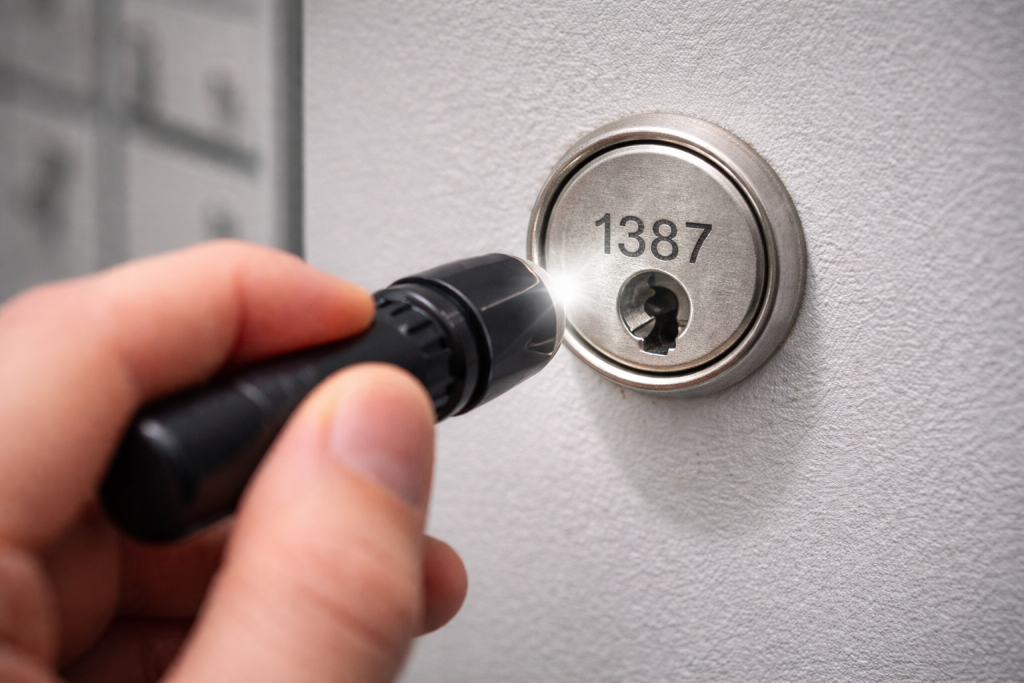
Where to Find Your Locker Key Number
In most cases, the locker key number is stamped in one of three places:
- On the original key (usually engraved or stamped).
- On the front face of the lock barrel.
- On the cam lock body inside the locker door.
The number is typically short, such as 001, 123, 4502 or similar. This code corresponds to the internal key cut pattern.
Understanding Cam Lock Numbering Systems
Most UK lockers use standard cam locks. These are circular locks fitted into metal doors and secured internally with a cam arm.
Cam lock numbering systems vary by manufacturer, but generally:
- Each lock has a unique code.
- The code corresponds to a specific key cut.
- Mastered systems allow override access with a master key.
If your lockers were installed in schools, gyms or workplaces, they are likely using mastered cam lock systems. This means you may be able to open the locker with a master key while waiting for a replacement.
What If the Locker Key Number Is Missing?
Sometimes the key number is worn away or not visible. If this happens, there are several options:
- Check internal facility records.
- Remove the lock to inspect the rear body.
- Contact the original installer.
- Replace the lock entirely if identification is impossible.
Removing the lock is often straightforward and can reveal stamped codes hidden on the rear face. However, if no code exists, ordering a replacement key is not possible. In that case, lock replacement becomes necessary.
Order Replacement Locker Keys Here
If you have identified the correct code, you can order replacement locker keys here. Provide the exact key number and confirm the lock type to ensure accurate cutting.
Replacement keys are normally the fastest and most cost-effective solution. Avoid forced entry, as this increases cost and may require full lock replacement.
Replacement Locker Keys vs Replacing the Entire Lock
When a key is lost, many facilities managers ask whether to replace the key or the entire lock. The answer depends on identification, security risk and cost considerations.
When Key Replacement Is Possible
- The locker key number is clearly visible.
- The lock is not damaged.
- Security risk is low.
- The master key remains secure.
In these situations, ordering replacement locker keys is significantly cheaper than changing the entire lock.
When Lock Replacement Is Necessary
- The key number cannot be identified.
- The master key is also lost.
- The lock has been forced or damaged.
- Confidential or sensitive materials were stored.
Replacing the lock involves removing the existing cam lock and fitting a new unit. In mastered systems, this may require reconfiguring master access.
Cost Modelling: Key vs Lock Replacement
Cost comparison is straightforward:
- Replacement key: Low cost, minimal disruption.
- Lock replacement: Higher cost plus labour time.
- Forced entry: Highest cost due to damage.
In schools and gyms where key loss is frequent, bulk ordering spare keys reduces repeated administrative cost.
Security Implications
If the lost key could be linked to sensitive storage, lock replacement may be advisable even if the key number is known. Security always outweighs convenience.
However, in standard gym or school settings with low-value storage, replacement keys are typically sufficient.
Reducing Future Key Loss
- Maintain clear locker allocation records.
- Hold spare keys centrally.
- Secure master keys separately.
- Consider digital systems in high-loss environments.
Structured management reduces reactive expense and improves operational efficiency.
Final Thoughts
Identifying your locker key number is the critical first step. In most cases, ordering replacement locker keys resolves the issue quickly and economically.
Only replace the entire lock when identification fails or security risk demands it. With proper key control procedures, locker key loss becomes manageable rather than disruptive.
Discover more from Blog Total Locker Service
Subscribe to get the latest posts sent to your email.