Coin-Operated Lockers for Barnsley Hospital
January 15, 2020
Total Locker Service supplied a standardised locker solution for Barnsley Hospital after the existing changing-room estate had become difficult to manage. The project replaced a mixture of locker types and lock systems with coordinated lockers using coin-operated access, stands and sloping tops.
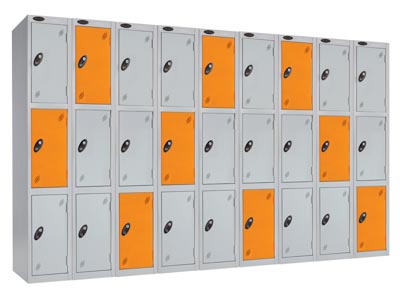
The Existing Locker Problem
Barnsley Hospital had accumulated lockers from several different suppliers over time. This had created an increasingly complicated locker estate with different cabinet sizes, lock types and key systems.
- Several different locker manufacturers and specifications.
- Multiple key and lock types.
- Difficulty obtaining the correct replacement keys.
- Inconsistent locker sizes and appearance.
- Mixed physical condition across the estate.
- No consistent coin-operated locker solution.
The result was unnecessary administrative work for the hospital. What had begun as individual locker purchases had gradually become a fragmented system that was harder to manage and support.
Barnsley Hospital Locker Requirements
The hospital wanted to replace the existing mixture with a more consistent locker specification that would be easier to operate, clean and maintain.
- A common locker range rather than several unrelated systems.
- Coin-operated access for visitor and patient lockers.
- Lockers raised from the floor to improve access for cleaning.
- Sloping tops to discourage storage above the lockers.
- Single-door lockers for selected changing-room areas.
- Two-door and three-door configurations for family rooms.
- A lock system that would reduce the problems associated with managing large numbers of user keys.
Why Coin-Operated Lockers Were Chosen
Coin-operated lockers were selected for areas used by patients and visitors because they reduced dependence on centrally issued user keys.
In an environment where users change frequently, issuing, recovering and replacing individual keys can create a substantial administrative burden. A suitable coin-operated system allows the user to secure the locker for the period of use without requiring the hospital to manage a permanent personal locker key for every visitor.
For broader guidance on choosing between keyed, coin, combination, PIN and RFID systems, see our Locker Access Control Systems UK guide.
Ojmar Coin Locks
The selected lockers used Ojmar dry-specification coin locks.
The lock specification used for the project could accept both the previous and current £1 coin designs without needing the locks to be reset between coin types.
The Ojmar lock cylinders also used removable cylinders with the key code identified on the cylinder. This made future service and replacement-key identification more straightforward than dealing with unidentified locks from several unrelated systems.
Standardising the Locker Range
The project used lockers from the System 1300 range, providing a common platform that could be configured in different compartment arrangements while retaining a coordinated appearance and specification.
The range was available in one to six compartments and in different widths and depths, allowing the hospital to use a common locker family across areas with different storage requirements.
Standardising the locker family also simplified future replacement and maintenance compared with continuing to add unrelated products to an already mixed estate.
Single-Door and Multi-Door Locker Configurations
Different areas of the hospital required different compartment arrangements.
- Single-door lockers: used where a larger individual storage compartment was required.
- Two-door lockers: used where more individual compartments were required within the same cabinet footprint.
- Three-door lockers: used in areas such as family rooms where smaller individual storage compartments were appropriate.
Using different compartment configurations from the same wider locker range allowed the specification to change by user requirement without recreating the original problem of unrelated locker systems.
Locker Stands for Easier Cleaning
The hospital wanted cleaning staff to be able to access the floor beneath the lockers.
The lockers were therefore specified on stands rather than being positioned directly at floor level. Raising the cabinets provided clearer access beneath the locker runs and made routine cleaning easier.
Locker stands can also help protect the lower part of the cabinet from direct contact with wet floors, cleaning equipment and debris, depending on the installation environment.
Sloping Tops to Prevent Storage Above Lockers
Sloping tops were specified because the hospital did not want staff or users storing bags, boxes or other items above the lockers.
A flat locker top can easily become an informal storage shelf. A sloping top removes most of that usable horizontal surface and can help keep the changing area tidier and easier to clean.
For more guidance on stands, plinths and sloping tops, see our locker specification guidance within the Locker Planning UK guide.
Using Sample Lockers Before Final Selection
Total Locker Service worked with the hospital to review different possible solutions before the final specification was agreed.
Sample lockers were sent to the hospital so the team could assess the available products, construction and operation in person before committing to the wider project.
For larger projects, evaluating a representative sample can reduce specification risk because staff can check dimensions, door operation, lock behaviour, finish and general suitability before the main order is placed.
The Locker Solution
| Hospital requirement | Locker solution |
|---|---|
| Too many different locker systems | Move towards a consistent locker range |
| Difficulty managing user keys | Coin-operated access for visitor and patient lockers |
| Difficult cleaning beneath lockers | Lockers mounted on stands |
| Items being stored above lockers | Sloping tops specified |
| Different room requirements | Single, two-door and three-door compartment configurations |
| Need to assess suitability before rollout | Sample lockers supplied for evaluation |
Benefits of Standardising a Locker Estate
The Barnsley Hospital project demonstrates one of the main problems that can develop when lockers are purchased independently over many years.
A mixed estate can create unnecessary variation in locks, keys, spare parts, dimensions and maintenance requirements.
- Fewer lock and key families to support.
- Easier identification of replacement parts.
- More consistent cabinet dimensions and appearance.
- Simpler future purchasing.
- Clearer maintenance procedures.
- Easier staff familiarisation.
- Better opportunity to standardise access methods.
For organisations managing a larger existing locker estate, see our Locker Estate Management UK guide.
Coin Locks vs Keyed Lockers
Coin locks are not automatically better than keyed locks. The correct system depends on who uses the lockers and how frequently users change.
| Requirement | Keyed lock | Coin lock |
|---|---|---|
| Regular assigned user | Often suitable | Usually unnecessary |
| Frequent changing users | Can create key administration | Can be well suited |
| Permanent user key | Required | Usually not required |
| Visitor or public use | Possible but administratively heavier | Common application |
| Central key replacement workload | Potentially higher | Usually lower for ordinary users |
Coin locks still require management access, servicing and appropriate spare-key arrangements. The advantage is that the ordinary user’s day-to-day access does not depend on the organisation issuing a permanent key.
Planning Lockers for Healthcare Environments
Healthcare locker projects can involve several different user groups, including permanent staff, visitors, patients, contractors, agency workers and family-room users.
The best specification may therefore combine different compartment sizes or access methods while keeping the underlying locker ranges and maintenance arrangements as consistent as practical.
For wider healthcare staff changing requirements, see our NHS & Healthcare Changing Room Planning UK guide.
Barnsley Hospital Locker Project Summary
- Sector: healthcare.
- Location: Barnsley Hospital.
- Problem: mixed locker estate with numerous lock and key systems.
- Goal: standardise the locker specification and reduce administration.
- Visitor and patient access: coin-operated locks.
- Lock manufacturer: Ojmar.
- Locker range: System 1300.
- Configurations: single-door plus multi-door lockers for selected areas.
- Base: locker stands.
- Top: sloping tops.
- Pre-order assessment: sample lockers supplied for evaluation.
Commercial Coin-Operated Lockers
Total Locker Service supplies lockers and replacement locker locks for healthcare, leisure, workplace, education and other commercial installations throughout the UK.
If your existing locker estate has become difficult to manage because of mixed lock types, key systems or cabinet specifications, we can help review suitable replacement and standardisation options.
Browse our commercial lockers, compare current products in our locker lock range, or use our Locker Access Control Systems UK guide to compare the main access methods.
Discover more from Blog Total Locker Service
Subscribe to get the latest posts sent to your email.
[…] Lockers Edinburgh National Galleries locker projects […]
[…] Locker Service has supplied 10 compartment garment lockers to Sony Computer Entertainment Europe Limited, the 10 compartment garment dispenser locker is part […]
[…] lockers supplied and installed by Total Locker […]