Common Locker Buying Mistakes (And How to Avoid Them)
February 18, 2026
Buying lockers may appear straightforward. However, many organisations discover problems only after installation. Poor durability, lock failures, corrosion and congestion issues often stem from specification errors made at the procurement stage.
This guide explains the most common mistakes made when buying lockers in the UK. It also outlines how to avoid them by focusing on material quality, locking systems, layout planning, environmental suitability and lifecycle cost modelling.
For a complete overview of locker types and applications, see our complete lockers guide.
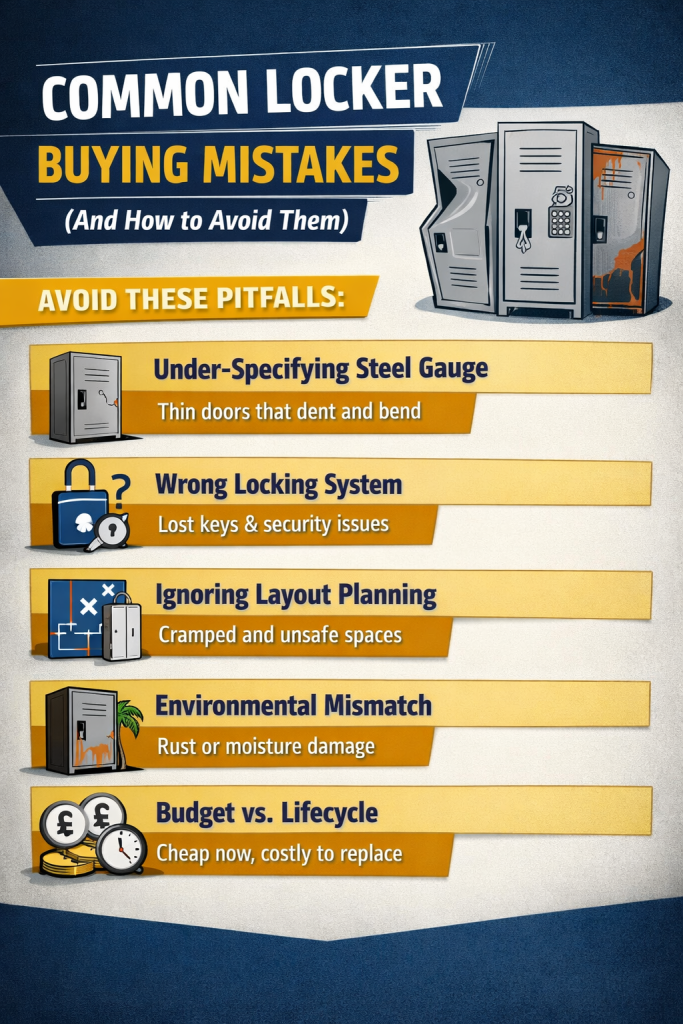
1. Under-Specifying Steel Gauge
One of the most common mistakes when buying lockers is selecting thin-gauge steel to reduce upfront cost. Light-gauge imports often look similar to heavy-duty units in product images. However, structural performance differs significantly.
Thin steel panels are more prone to:
- Door bending
- Frame distortion
- Hinge stress failure
- Surface denting
In schools, factories and high-traffic workplaces, heavier gauge steel provides improved durability and longer lifespan. Over a 10–15 year period, heavier construction often proves more economical.
2. Choosing the Wrong Locking System
Lock choice directly affects administration workload, security and long-term cost. Many buyers select the cheapest cam lock without considering usage patterns.
Consider:
- Will keys be frequently lost?
- Is high staff turnover expected?
- Is shared use required?
- Is hybrid working in place?
In high-loss environments, digital or smart systems may reduce key replacement cost. In short-term public use environments, coin locks may be more suitable. The wrong locking system creates ongoing friction.
3. Ignoring Locker Layout Planning
Capacity is often prioritised over layout. However, overcrowded locker banks create congestion and safety risks.
Common layout errors include:
- Aisles narrower than 900mm
- Blocking fire escape routes
- Poor supervision sightlines in schools
- Insufficient space for benches
Effective locker layout planning should account for peak usage, accessibility requirements and fire regulations. Installing more lockers than a space can safely support often creates long-term operational problems.
4. Environmental Mismatch
Another frequent mistake when buying lockers is failing to consider environmental exposure. Material selection must align with the setting.
- Dry office: steel performs well.
- High-traffic school: heavy-gauge or laminate preferred.
- Wet leisure centre: plastic recommended.
- Industrial environment: ventilated and reinforced construction required.
Installing standard steel lockers poolside often leads to corrosion within a few years. The initial saving becomes a replacement cost.
5. Focusing on Budget Instead of Lifecycle
Perhaps the most significant mistake when buying lockers is evaluating only the upfront purchase price.
Lifecycle cost should include:
- Expected lifespan
- Maintenance costs
- Lock replacement
- Administrative burden
- Replacement cycle
A locker costing 25% more initially may last twice as long. Over a 10-year period, this often reduces total cost.
6. Overlooking Compliance Requirements
Lockers in workplaces may fall under Workplace Welfare Regulations. In schools and leisure facilities, safeguarding and safety obligations apply.
Buyers should assess:
- Clean and dirty separation requirements
- Accessibility standards
- Fire escape
Discover more from Blog Total Locker Service
Subscribe to get the latest posts sent to your email.