Staff Changing Room Lockers: Planning Clean, Practical Storage Areas
April 1, 2026
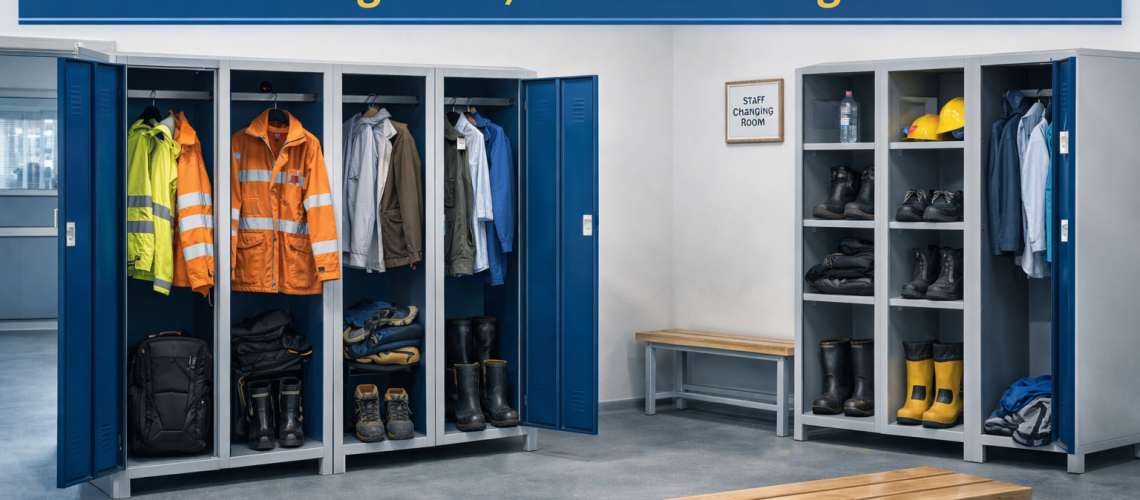
Staff changing room lockers do more than provide storage. They shape how the room works at the start and end of the day, affect how easily staff can move through the space and influence whether the area feels clean, organised and practical. A well-planned changing room supports routine. A poor one creates congestion, clutter and frustration.
That is why changing room lockers should never be chosen in isolation. The locker size, the layout, the benches, the aisle widths and the flow through the room all need to work together. In many workplaces, the changing room is one of the busiest staff areas on site, especially where uniforms, PPE, outerwear or footwear changes are part of the daily routine.
This guide explains how to plan staff changing room lockers and workplace changing room lockers in a way that supports practical daily use. For the main workplace lockers guide, visit the hub page. For broader room-planning ideas, see our guide to locker room layout. If you are reviewing product options, visit our workplace lockers page for staff lockers and commercial staff storage.
Why changing room locker planning matters
A workplace changing room is not just a place to store belongings. It is a transition space between arriving and starting work, and then again between finishing work and leaving site. That means the room has to support movement, clothing changes, storage, seating and cleaning all at once.
If the lockers are the wrong size, staff may not have room for coats, bags, uniforms or footwear. When the aisles are too narrow, users start blocking each other during busy periods. When there is nowhere to sit, changing footwear becomes awkward. Once these problems appear, the whole room can feel harder to manage even if the lockers themselves are well made.
That is why changing-room planning should start with the daily routine rather than with a simple row of products.
Which workplaces need staff changing room lockers?
Changing room lockers are especially important in workplaces where staff arrive in their own clothes and change before entering an operational area. They are also useful where teams need to store outerwear, uniforms, PPE, boots or work-specific items in a controlled way.
- warehouses and logistics sites
- factories and production environments
- engineering and maintenance workplaces
- facilities and cleaning teams
- food-related workplaces
- mixed-use industrial sites
- workplaces with welfare blocks and changing areas
Some office-led workplaces may also need changing room storage, especially where staff cycle to work, use showers or change into specific uniform items. However, the strongest need usually appears in operational settings where the changing process is part of the working day.
Start with the staff routine, not the locker brochure
The most reliable way to plan a changing room is to look at what staff actually do. Ask what they arrive wearing, what they need to change into, what they need to store during the shift and what happens at the busiest times of day.
For some teams, that means hanging a coat, storing a bag and changing footwear. For others, it means handling uniforms, PPE, boots, workwear and personal items in the same visit. These differences affect the type of locker, the space around it and the overall size of the room needed to make the routine work properly.
This is one reason why a proper staff locker planning guide should always reflect workflow, not just dimensions.
Choosing the right locker type for a changing room
The right locker type depends on what the changing room needs to handle. A small personal locker may work in an office support area, but it is often too limited in a workplace where staff change clothing or store protective items.
Full-height lockers
Full-height lockers are often a practical option in changing rooms because they provide better hanging space for coats, uniforms and workwear. They also allow more room for bags and daily belongings.
Split-compartment lockers
Split-compartment layouts can help where staff need to separate personal items from workwear, or clean items from used ones. These are especially useful where changing routines are more structured.
Two-door and space-saving formats
Some changing areas need to fit more users into a limited footprint. In those cases, two-door or more compact layouts may help, provided the storage capacity still matches what staff actually carry and change into.
Lockers with lower storage for footwear
Where staff regularly change shoes or boots, the locker should make that easy. Lower storage space becomes more important in those environments because footwear can otherwise take over the whole compartment or end up left on the floor.
For broader planning around sizes and formats, see our guide to workplace locker sizes and layouts.
Bench seating is part of the changing room plan
Bench seating is not an optional extra in many changing rooms. It plays a practical role in how staff use the space. Where footwear changes, workwear routines or bags are involved, people often need somewhere to sit, place items temporarily or prepare before moving into the next area.
If benches are not included where they are needed, staff may end up sitting on locker plinths, leaving items on the floor or blocking walkways while they change. That makes the room feel less organised and can create avoidable trip points or bottlenecks.
The bench layout needs to work with the lockers rather than against them. If the bench is too close to the doors, access becomes awkward. If it is too far away, it may not support the changing process properly. Good planning looks at lockers and seating as one combined system.
Flow matters more than people expect
The busiest moment in a changing room often reveals whether the layout works. A room that feels fine when empty can become uncomfortable very quickly when several staff try to access lockers, change footwear, move around benches and leave the space at the same time.
That is why layout planning should focus on flow as well as footprint. Staff need to move into the room, access their locker, change comfortably and leave again without the space turning into a queue point. Door swing, aisle width and bench placement all affect that.
It helps to think about the sequence of movement. Where do people enter? Where do they stop first? Do they need to sit? Are lockers opened all at once at shift change? Answering those questions often highlights layout issues long before installation.
Plan for peak times, not quiet moments
Many changing rooms are used in waves. The room may be quiet for long periods and then suddenly busy when a shift starts or finishes. Planning should reflect that peak demand rather than the average number of people inside at any one time.
If too many lockers are fitted into a room without thinking about peak use, the result is often narrow aisles, clashing doors and a more stressful routine for staff. A slightly less dense installation can sometimes work far better in practice because it gives the room enough breathing space to function properly.
This is where workplace locker layouts and lock options connect directly to the quality of the staff experience. Good storage is not only about capacity. It is also about how the room feels when it is actually being used.
Clean, dirty and personal storage zones
Some changing rooms need more than one type of storage behaviour. Staff may need to keep personal items away from workwear, or clean garments separate from used items. In those situations, the layout and locker choice should make the separation obvious and easy to follow.
That can be achieved through split lockers, separate locker banks or a clearly structured room layout. The important point is that staff should not have to improvise. If the room makes the process awkward, personal items and work items are more likely to become mixed or left in the wrong place.
For a more detailed look at this aspect, see our guide to PPE and uniform lockers and how to separate clean and dirty storage.
Hygiene and cleaning access should be built in
Changing rooms can become harder to keep clean if the layout is too tight or if footwear, clothing and bags end up in circulation areas. That is why cleaning access should be considered from the start rather than left to facilities teams later.
Lockers should be arranged so the floor around them can be cleaned properly. The room should also allow enough space for staff to use the storage without turning aisles into temporary dumping areas. In practice, that often means accepting that a room needs proper circulation space rather than trying to fit the maximum possible number of lockers into it.
Better hygiene does not only come from materials. It also comes from a layout that people can actually use without spilling belongings into the wider room.
Which lock options suit staff changing room lockers?
Changing room lockers are often assigned to the same user over time, especially in warehouses, factories and operational staff areas. In those settings, key locks or mechanical combinations can work well because they offer simple daily access with manageable control.
The best choice depends on the size of the workforce, how often access problems occur and how much admin the employer wants to handle. Where staff need quick access at shift times, the lock type should support that routine rather than slow it down.
For a more detailed comparison, see our guide to locker lock types and the best lock options for workplace lockers.
Common mistakes in staff changing room planning
- choosing lockers before understanding the staff routine
- using small personal lockers where uniforms, boots or PPE are involved
- forgetting bench seating
- placing benches too close to locker doors
- fitting too many lockers into the room
- ignoring door swing and aisle width
- planning around average use instead of peak times
- treating cleaning access as an afterthought
Most of these problems can be avoided by viewing the changing room as a working environment rather than as a simple storage wall.
How to choose the right changing room locker setup
The best method is to start with the real process. Look at how staff arrive, what they need to remove, what they need to put on, what they store during the shift and how many people use the room at the same time. Then build the room around that sequence.
If the workplace needs hanging space, footwear storage, bench seating and clear separation between personal and work items, those features should be planned in from the beginning. It is usually much easier to design around the routine than to retrofit solutions once the room starts causing problems.
When the planning stage is complete and you are ready to review products, visit our workplace lockers page for workplace and staff storage options.
Conclusion
Staff changing room lockers need to support more than basic storage. They help shape how the room flows, how clean it stays and how easily staff can manage daily clothing changes. The best setups are practical, spacious enough for real use and planned around the routine rather than around a product list.
A good changing room combines suitable locker sizes, sensible bench seating, clear movement routes and enough space for peak-time use. To explore the wider cluster, return to the workplace lockers guide. Broader room-planning advice is covered in our guide to locker room layout. Product-led next steps can be found on our commercial staff storage page.
Frequently asked questions
What are staff changing room lockers used for?
They are used to store coats, bags, uniforms, footwear, PPE and personal belongings in workplace changing areas where staff need practical daily storage.
Do changing room lockers need bench seating nearby?
In many workplaces, yes. Bench seating helps staff change footwear, handle bags and use the room more comfortably and efficiently.
What matters most in a workplace changing room layout?
The key factors are locker size, aisle width, door clearance, bench placement, user flow and enough space for busy periods.
Should changing room lockers be assigned or shared?
Assigned lockers are often more practical in operational workplaces where staff attend regularly and follow the same routine each day.
What is the biggest mistake in changing room planning?
A common mistake is fitting as many lockers as possible into the room without leaving enough space for benches, movement and peak-time use.
Discover more from Blog Total Locker Service
Subscribe to get the latest posts sent to your email.