Staff Locker Policies for UK Workplaces: Access, Searches and Key Control
April 1, 2026
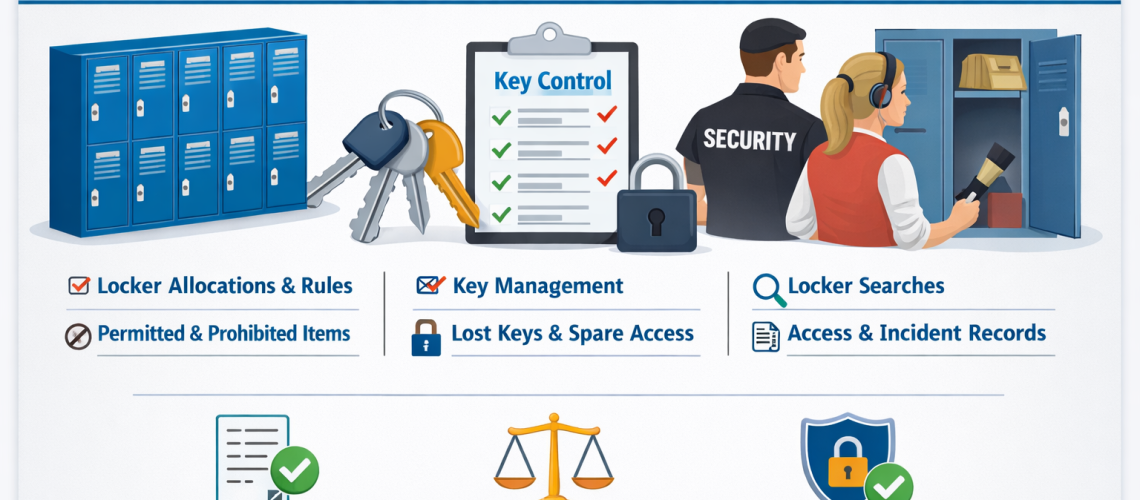
A staff locker policy helps UK employers manage workplace lockers consistently. It should explain who can use lockers, how they are allocated, what employees may store, how keys or credentials are controlled, when management may need access and what happens when somebody leaves.
A clear policy reduces uncertainty for employees, facilities teams, HR and managers. It also creates a defined process for routine issues such as lost keys as well as more sensitive situations involving management access or workplace searches.
This guide explains the practical contents of a staff locker policy UK workplaces can adapt to their own operations. For the wider specification of workplace storage, see our Workplace Lockers UK guide. For physical locker products, browse our workplace lockers.
This is practical facilities guidance rather than legal advice. Employers should check their employment contracts, staff handbook, HR procedures, data-protection obligations and professional legal or HR advice where appropriate before adopting a final policy.
Quick answer: what should a staff locker policy include?
A workplace locker policy should define the complete lifecycle of locker use, from initial allocation to return or reassignment.
- who is entitled to use a locker;
- whether lockers are assigned, shared or temporary;
- what may and may not be stored;
- how keys, codes or credentials are issued;
- what happens if access is lost;
- who may authorise management access;
- how locker searches are authorised and conducted;
- how leavers and abandoned lockers are handled;
- how unclaimed contents are managed;
- whether access events are recorded; and
- how the policy connects with wider HR, security and privacy procedures.
Why a workplace locker policy matters
Staff lockers sit at the point where facilities management, security and employee relations meet. Employees may use them for coats, bags, personal belongings, uniforms, footwear, PPE and work equipment.
Without a defined policy, small operational questions can quickly become inconsistent:
- Who decides which employee gets which locker?
- Can staff swap lockers?
- Who holds spare or master keys?
- What happens when somebody loses a key?
- Can management open an occupied locker?
- How should a suspected prohibited item be handled?
- What happens to belongings left by a former employee?
A written process gives employees clearer expectations and gives managers a consistent route for dealing with those situations.
Define who the locker policy applies to
The policy should begin by defining its scope. A workplace may provide lockers to permanent employees only, or the system may also serve agency workers, contractors, visitors, apprentices or temporary staff.
Different user groups may need different arrangements. A permanent employee might retain one assigned locker for several years, while a contractor may need a locker only for the duration of a project.
Where temporary access is common, see our Temporary Locker Access Systems UK guide.
Set clear locker allocation rules
The policy should state whether lockers are permanently assigned, shared between users, allocated by shift or available temporarily.
It should also explain:
- who authorises an allocation;
- whether employees may change lockers;
- whether locker sharing is permitted;
- how long an allocation lasts;
- when an unused locker can be reclaimed; and
- how the allocation is recorded.
For the detailed choice between assigned, shared, temporary and shift-based systems, see our Locker Allocation Systems UK guide.
Explain what employees may store
A practical staff locker policy should explain what the locker is intended for rather than leaving acceptable use entirely undefined.
Depending on the workplace, permitted items may include:
- coats and personal clothing;
- bags and everyday possessions;
- uniforms and workwear;
- footwear;
- PPE; and
- authorised work equipment.
The policy can also identify items that should not be stored where relevant, such as hazardous substances, prohibited items, unapproved electrical equipment, perishable food left for extended periods or materials that create a hygiene or safety problem.
The restrictions should reflect the actual workplace. A warehouse changing room, healthcare facility and hybrid office will not necessarily need identical rules.
Include key, code and credential control
The policy should explain how employees receive access to their lockers and what responsibility they have for keys, codes, cards or other credentials.
For physical keys, define:
- how keys are issued;
- whether issue is recorded;
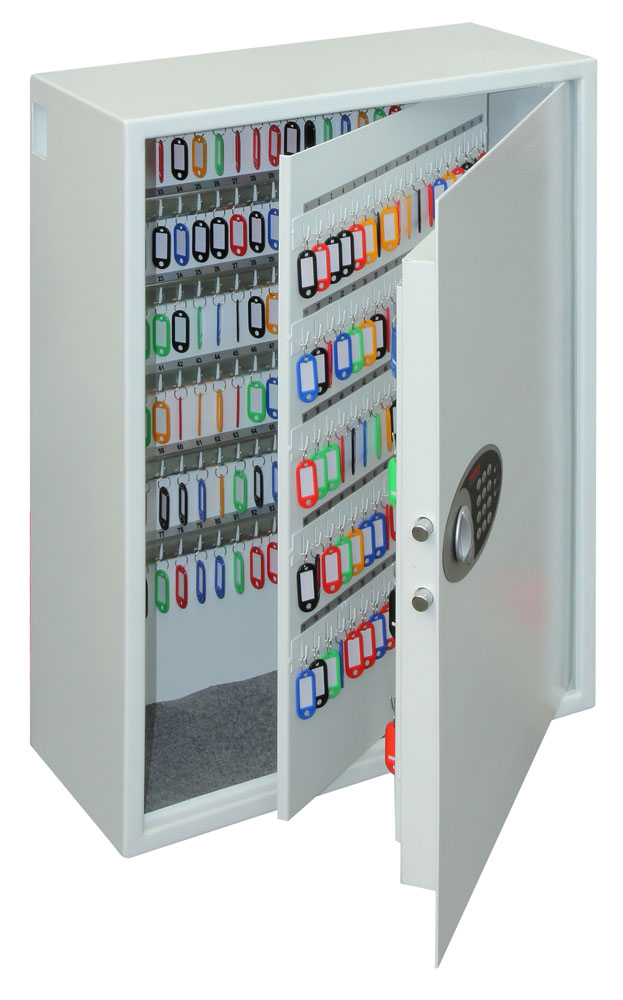
- where spare keys are controlled;
- who may hold master keys;
- what staff should do when a key is lost; and
- when keys must be returned.
For a complete physical-key workflow, see our Workplace Key Management guide. For the wider framework covering user keys, master keys and other credential types, use our Locker Key Management Systems UK guide.
Define who can override locker access
Terms such as “management access” are too vague if several departments or management levels operate on the same site.
The policy should define which roles may:
- issue spare keys;
- use a master key;
- reset a combination or PIN;
- open an occupied locker;
- revoke electronic access; and
- authorise emergency access.
For detailed role and override planning, see our Locker Access Permissions & Governance UK guide.
Separate routine access from locker searches
Opening a locker because an employee has lost a key is different from searching a locker because of suspected misconduct, theft or prohibited items.
The policy should distinguish these situations clearly. Routine facilities access might be needed to repair a lock, recover an abandoned locker or restore access to the authorised user. A search has a different purpose and should follow the organisation’s HR and investigation procedures.
How should workplace locker searches be handled?
GOV.UK guidance says employers should have a written policy on workplace searches and that searches should respect privacy and normally be carried out with a witness present.
A staff locker policy should therefore avoid vague wording such as “management may search any locker at any time”. Instead, it should explain:
- the circumstances in which a search may be considered;
- who may authorise it;
- who conducts it;
- whether the employee is present where appropriate;
- whether a witness is required;
- how personal belongings are handled;
- how the search is documented; and
- how any subsequent disciplinary or investigation process is handled.
Employers should check their contractual wording and HR procedures before carrying out searches. Current government guidance is available at GOV.UK: Being monitored at work – workers’ rights.
Avoid treating locker searches and personal searches as the same thing
A locker search and a search of an employee’s person or personal bag are not operationally identical. A locker policy should therefore avoid collapsing every form of workplace search into one short clause.
Where an organisation maintains broader employee-search procedures, the locker policy can refer to those rather than trying to reproduce the entire HR process.
Use proportionate management access
Possible reasons for authorised locker access can include:
- restoring access after a lost key or failed lock;
- repairing or replacing locker hardware;
- recovering a locker after an employee leaves;
- dealing with abandoned contents;
- responding to an urgent safety or welfare concern; or
- an authorised workplace investigation.
The reason, authority and process should be appropriate to the circumstances rather than assuming every event requires the same level of intervention.
Build the locker policy into wider workplace procedures
A staff locker policy works best when it connects with the organisation’s existing processes rather than sitting alone as a facilities document.
Relevant policies may include:
- employee handbook rules;
- disciplinary and investigation procedures;
- onboarding and offboarding;
- key and access-control policies;
- data-protection and monitoring policies;
- security procedures; and
- health and safety arrangements.
For the physical-security side of the subject, see our Workplace Locker Security guide.
Leavers and locker offboarding
Employee departures should trigger a defined locker process just as they may trigger return of access cards, equipment or other company property.
The process might include:
- asking the employee to empty the locker;
- recovering the issued key or credential;
- checking the locker condition;
- updating the allocation record;
- revoking electronic access where applicable;
- dealing with belongings left behind; and
- returning the locker to available stock.
For ongoing assignment and reassignment workflows, see our Locker Management Systems UK guide.
Abandoned lockers and unclaimed belongings
The policy should explain what happens when somebody leaves belongings in a locker after their allocation ends.
A practical procedure can define:
- who may open the locker;
- how the contents are recorded;
- where retained belongings are stored;
- how the former user is contacted where appropriate;
- how long items are retained; and
- what process applies before disposal.
The organisation should establish its own lawful process rather than inventing a disposal period only after a locker becomes a problem.
Lost keys, forgotten codes and failed locker access
Most locker-access incidents are routine facilities issues rather than disciplinary matters. Staff should know exactly who to contact if a key is lost, a PIN is forgotten or a lock stops working.
The policy can explain:
- how identity and locker allocation are confirmed;
- whether a spare key or management override can be used;
- how replacement keys are requested;
- who may reset a code or credential;
- how damaged locks are reported; and
- whether the incident needs to be recorded.
For workplace key issue, return and lost-key procedures, see our Workplace Key Management guide. If a replacement locker key is required and the code is known, use our replacement locker key service.
Should management access be logged?
A simple access record can be useful when an occupied locker is opened by management, a master key is issued or an administrator resets a credential.
A record might include:
- date and time;
- locker number;
- reason for access;
- person authorising access;
- person carrying it out;
- whether the employee was present; and
- the outcome.
For the wider governance of override permissions, see Locker Access Permissions & Governance UK.
Electronic lockers can create additional data-protection issues
A simple mechanical locker may generate little or no personal access data. Electronically managed systems can be different because they may record user identities, RFID credentials, booking information, access times and administrator activity.
Where identifiable access information is collected, organisations should establish why it is needed, who can see it, how long it is retained and how it is protected.
The ICO says workplace monitoring involving personal information must be lawful, fair and transparent, and employers should use the least intrusive method that achieves the purpose.
For detailed digital-access data handling, see our Locker Access Compliance UK guide. Employers can also consult the ICO guidance on monitoring workers.
Be especially careful with CCTV around changing rooms
Locker security and CCTV are related subjects, but cameras around changing facilities require particular care because users have a greater expectation of privacy.
ICO guidance gives the example of thefts from staff changing rooms and explains that filming workers inside the changing room would be unfair. In its example, monitoring the entrance outside the changing room is considered instead.
Any CCTV proposal should therefore be assessed through the organisation’s wider monitoring and data-protection process rather than added casually as part of a locker policy.
Communicate the locker policy to staff
A policy is ineffective if employees do not know it exists.
Depending on the organisation, the rules can be communicated through:
- staff induction;
- the employee handbook;
- an intranet policy page;
- locker-allocation documentation;
- key or credential issue forms; and
- brief notices covering essential day-to-day rules.
Managers and facilities staff should also understand the policy so that employees receive consistent answers regardless of who handles the issue.
Review the policy when the locker system changes
A policy written for permanently assigned keyed lockers may no longer work if the organisation later introduces shared lockers, RFID access, hot lockers or hybrid working.
Review the policy when there are significant changes to:
- workforce numbers;
- assigned versus shared use;
- locker access technology;
- temporary or contractor use;
- site security arrangements;
- data collection or monitoring; or
- the organisation’s wider HR procedures.
If the operating model itself is changing, use our Locker Allocation Systems UK guide and Locker Access Control Systems UK guide before rewriting the policy around new technology.
A practical staff locker policy structure
| Policy section | What it should define |
|---|---|
| Purpose | Why lockers are provided and what the policy controls |
| Scope | Which employees, contractors or other users are covered |
| Allocation | Assigned, shared, temporary or shift-based use |
| Acceptable use | What may and may not be stored |
| Access | Key, code, RFID or credential issue |
| Lost access | Replacement, reset and support process |
| Management override | Who may authorise access and why |
| Searches | Authority, process, privacy and record keeping |
| Leavers | Return, clearance and reassignment |
| Unclaimed property | Recording, retention and disposal process |
| Records | What access or incidents are logged |
| Related policies | HR, disciplinary, security and data-protection procedures |
Common staff locker policy mistakes
- Relying on unwritten custom: different managers may apply different rules.
- Using vague search wording: phrases such as “management may inspect at any time” do not explain the process.
- Failing to define allocation: staff need to know whether lockers are permanent, shared or temporary.
- Ignoring spare and master keys: management access needs defined control.
- Combining locker and personal searches: these should not be treated as identical procedures.
- Ignoring leavers: locker clearance should form part of offboarding.
- Having no process for abandoned belongings: decide how property will be recorded and handled before the issue arises.
- Collecting electronic access data without a purpose: access records should have a defined operational reason.
- Failing to update the policy: shared or electronic locker systems may need different rules from older assigned-key systems.
Staff locker policy checklist
- Who is entitled to a locker?
- Are lockers assigned, shared or temporary?
- Can employees swap lockers?
- What may and may not be stored?
- How are keys or credentials issued?
- Who controls spare and master access?
- What happens when access is lost?
- When can management open an occupied locker?
- Who can authorise a search?
- How are searches documented?
- What happens when an employee leaves?
- How are unclaimed belongings handled?
- Are electronic access records collected?
- How long are relevant records retained?
- Where can employees find the policy?
Staff locker policy FAQs
Why does a workplace need a staff locker policy?
A written locker policy helps employers manage allocation, acceptable use, access, lost keys, management override, searches, leavers and abandoned belongings consistently.
Should locker searches be covered in a workplace policy?
Yes. GOV.UK guidance says employers should have a written search policy. The policy should explain who may authorise a search, when it may be considered and how privacy, witnesses and record keeping are handled.
What should a locker key policy include?
It should define how keys are issued and returned, where spare and master keys are controlled, what happens when a key is lost and who may authorise management access.
Can management open an employee locker?
The circumstances and process should be defined in the employer’s contracts, policies and HR procedures. Routine facilities access, emergency access and workplace searches should not automatically be treated as the same situation.
What happens to a locker when an employee leaves?
The offboarding process should normally include clearing the locker, recovering the key or credential, updating the allocation and dealing with any belongings left behind under the employer’s agreed procedure.
Do electronic locker access records create data-protection obligations?
They can. If a locker system records identifiable user credentials, access activity or administrator actions, the organisation should consider why the information is collected, who can access it, how it is protected and how long it is retained.
Make the locker policy part of the complete workplace system
A useful staff locker policy is practical rather than unnecessarily complicated. It should tell employees how lockers are allocated and used, explain what happens when normal access fails and give managers a controlled process for override, searches, leavers and abandoned contents.
The policy should also match the locker system actually installed. Assigned keyed lockers, shared day-use lockers and electronically managed systems have different administrative requirements.
For complete workplace locker planning, continue with our Workplace Lockers UK guide. For allocation rules see Locker Allocation Systems UK, for access authority use Locker Access Permissions & Governance UK, and for physical products browse our workplace lockers.
Discover more from Blog Total Locker Service
Subscribe to get the latest posts sent to your email.