How Many Workplace Lockers Do You Need? Planning Capacity for Offices and Staff Areas
April 1, 2026
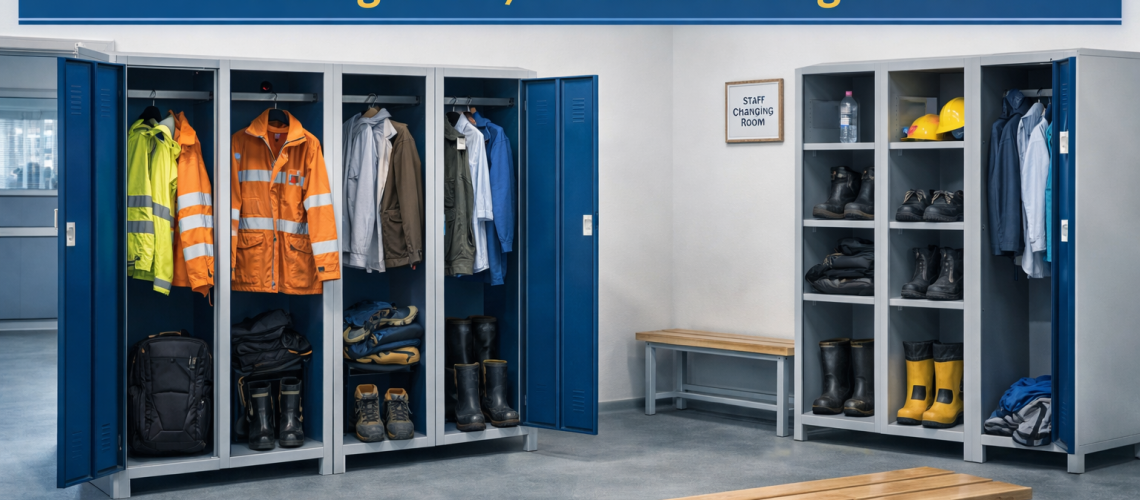
Choosing the right number of workplace lockers is just as important as choosing the right style, size or lock type. Too few lockers can create frustration, clutter and daily competition for storage. Too many can waste valuable floor space and push the project budget higher than it needs to be.
That is why workplace locker planning should start with capacity rather than with a simple product list. The best answer depends on who is using the area, what they need to store, whether the lockers are assigned or shared and how the room works at busy times.
This guide explains how to calculate staff locker capacity for offices, staff rooms, warehouses and changing areas in a more practical way. For the main workplace lockers guide, visit the hub page. If you are comparing locker sizes and room layouts, see workplace locker sizes and layouts for staff areas. When you are ready to review products, visit our workplace lockers page for staff lockers and commercial staff storage.
Why locker numbers matter
Locker planning can go wrong even when the product itself is suitable. A workplace may choose strong lockers with the right lock options and still end up with a poor result if the quantity does not match real use. Staff then start leaving coats on chairs, bags under desks or workwear in the wrong places because the storage provision is not keeping up with demand.
Over-provision can be a problem too. If too many lockers are squeezed into the room, circulation space may be reduced and the area can feel more crowded than it needs to. In an office, that may make the fit-out feel heavier and less refined. In a welfare area or changing room, it can lead to narrow aisles and awkward peak-time use.
The aim is not to maximise locker numbers. The aim is to reach the right balance between user demand, room function and efficient use of space.
Start with the type of workplace
The first step is to define the environment. Offices, warehouses, factories and staff changing rooms often need different locker ratios because the pattern of use is different in each one.
Office storage may be used on a flexible basis, especially where hybrid working reduces daily attendance. Warehouse and factory lockers are more often assigned to the same user because staff attend regularly and may store uniforms, boots or workwear. Changing room lockers usually need to match a set routine and may therefore require one unit per user or one unit per regular shift worker.
This is why a proper staff locker planning guide starts with workplace behaviour rather than with a fixed formula.
Assigned lockers versus shared lockers
The biggest factor in locker quantity is whether the storage is assigned or shared.
Assigned lockers
Assigned lockers are usually given to one employee on a continuing basis. This model is common in warehouses, factories, operational staff areas and many traditional workplaces. If lockers are assigned, the total number often needs to be close to the number of regular users, especially where staff keep belongings or workwear on site between shifts.
Shared or day-use lockers
Shared lockers are used by different people at different times. They are common in hybrid offices and flexible workplaces where not every employee is on site every day. In these settings, the correct locker number depends on actual attendance patterns rather than total headcount.
If shared-use storage is planned properly, the total number of lockers can be lower than the number of employees. However, that only works if attendance is understood clearly. Guessing can leave the workplace short of storage on busy days.
What do staff need to store?
Locker quantity cannot be separated from locker size. If each user needs a large compartment for coats, boots or equipment, fewer lockers may fit into the same room. If staff only need compact day-use storage for a bag and personal items, the same area may support a higher number of users.
That means the capacity question should always be asked alongside the storage question. Consider whether staff need room for:
- coats and jackets
- bags and backpacks
- laptops and chargers
- lunch items
- uniforms or workwear
- boots or footwear
- PPE or small work equipment
The more complex the storage need, the more carefully capacity has to be planned. A room full of very small lockers may look efficient on paper and still fail completely in daily use.
How to estimate locker numbers in an office
Office locker planning usually starts with attendance, not headcount. In a traditional office where everyone attends every day and needs personal storage, the total may be close to one locker per employee. In a hybrid office, the number is often lower because not everyone is present at the same time.
A practical way to think about it is to look at peak attendance across the working week. If the busiest days regularly bring in 60% of the workforce, the locker provision should reflect that peak rather than the quietest day or the full headcount alone. Some extra capacity may still be sensible to cover visitors, growth or occasional overlap.
That does not mean every hybrid office should reduce lockers aggressively. Some staff may still need fixed personal storage, especially where they bring in larger items or attend on a stable pattern. The right answer depends on the office model, not just on the word “hybrid”.
For more on this environment, see how to choose workplace lockers for a new office fit-out.
How to estimate locker numbers in warehouses and factories
Warehouses and factories usually need a more direct capacity model because staff are often assigned their own lockers. If employees attend regularly, store workwear or keep equipment on site, the number of lockers normally needs to match the number of regular users or the number of staff per shift pattern.
In some workplaces, one locker per employee is the clearest answer. In others, where different shifts use the same storage area and do not overlap, capacity may be based on the largest active shift rather than on the whole payroll. The key is to understand whether lockers are tied to the individual or to the active users of the room at one time.
Where uniforms, PPE or boots are part of the routine, capacity planning should also allow for larger locker formats and more movement space around the installation. A room with the right number of lockers can still underperform if the layout becomes too dense to use properly.
For the wider environment comparison, see workplace lockers for offices, factories and warehouses.
Changing rooms need planning for peak use
Changing rooms introduce another layer of pressure because the room is often busy at specific times rather than evenly used throughout the day. Capacity therefore needs to reflect not only how many users need lockers, but how many of them will be in the room together during shift change.
Even if the locker number is correct, the room can still feel overcrowded if benches, aisles and door clearances have been squeezed too tightly. In practical terms, changing-room planning is about both user numbers and usable space. A slightly lower locker count with better flow can work far better than a maximum-density layout that becomes difficult to use.
For this type of space, visit staff changing room lockers and our guide to locker room layout.
A simple locker capacity method
A practical workplace method usually looks like this:
- Identify the user group.
- Decide whether lockers are assigned or shared.
- Measure peak attendance or peak active users.
- Define what each user needs to store.
- Choose the locker size and format that matches that storage need.
- Check how many units fit while still leaving enough room for movement and access.
- Add a sensible margin for growth, visitors or operational flexibility where needed.
This method keeps the planning grounded in real behaviour instead of relying on a generic ratio that may not fit the workplace.
Do not forget future growth
Workplaces change. Headcount can rise, teams can shift patterns and a hybrid office can become more office-based again over time. That is why capacity planning should not only reflect today’s exact numbers. Where possible, it helps to leave some flexibility for moderate growth or changes in how the space is used.
This does not mean oversupplying the room. It means avoiding a plan that is already at its limit on day one. In some offices, a small reserve of shared lockers may be enough. In operational settings, it may mean ensuring the layout could support additional units later without redesigning the whole room.
How layout affects capacity
Capacity is not only about how many lockers can fit against a wall. The room still needs to work once people start using it. A good layout leaves enough space for doors to open, for people to pass each other and for staff to use the room without constant friction.
In offices, that means keeping storage accessible without making shared areas feel cluttered. In welfare spaces and changing rooms, it means protecting circulation, bench use and peak-time flow. Any locker number that damages room function is the wrong number, even if it looks efficient in a plan view.
For more on this side of the topic, see workplace locker sizes and layouts.
Common mistakes in locker capacity planning
- basing the number on total headcount without checking attendance patterns
- assuming shared lockers will work without studying peak demand
- ignoring what staff actually need to store
- choosing very small compartments to increase numbers on paper
- forgetting growth, visitors or future operational changes
- fitting too many lockers into the room and damaging flow
- treating capacity and layout as separate decisions
Most of these issues come from focusing on a product count rather than on how the space performs in real use.
How to choose the right workplace locker capacity
The best answer comes from combining three things: user numbers, user behaviour and room function. Begin with the active users of the space rather than the broadest possible headcount. Then look at what those users need to store and whether the lockers are assigned or shared. Finally, test the room layout to make sure the chosen quantity still allows the area to work properly.
Office storage may be based on peak attendance and shared use. Warehouse and factory lockers are more likely to follow regular user numbers or shift patterns. Changing rooms need enough capacity for both the users and the movement around them. Once those factors are clear, the right locker number becomes much easier to define.
When the planning stage is complete and you are ready to compare products, visit our workplace lockers page for workplace and staff storage options.
Conclusion
There is no single answer to how many workplace lockers a business needs. The correct number depends on the type of workplace, the storage routine, the locker size, the attendance pattern and the way the room is meant to function. That is why the best plans are based on real use rather than on generic ratios.
A good capacity plan supports staff without wasting space. It gives offices enough shared storage for daily attendance, provides warehouses and factories with dependable personal provision where needed and keeps changing rooms practical at peak times. For the wider cluster, return to the workplace lockers guide. To review size and room planning, visit workplace locker sizes and layouts. Product-led next steps can be found on our commercial staff storage page.
Frequently asked questions
How many workplace lockers should an office have?
That depends on peak attendance, whether the lockers are shared or assigned and what staff need to store. Hybrid offices often need fewer lockers than total headcount, but the number should still reflect the busiest days.
Do warehouses need one locker per employee?
Often yes, especially where lockers are assigned and staff store workwear or personal items on site. Some workplaces may plan around shift patterns instead if user groups do not overlap.
Can shared lockers reduce the number needed?
Yes, but only if real attendance patterns support that model. Shared storage works best where not every user needs a locker at the same time.
Should locker capacity be planned with layout?
Yes. The room still needs enough circulation space, door clearance and practical access once the lockers are installed.
What is the biggest mistake in locker capacity planning?
A common mistake is using total headcount as the only measure without checking how the workplace really operates, what staff store and how busy the room becomes at peak times.
Discover more from Blog Total Locker Service
Subscribe to get the latest posts sent to your email.