Workplace Locker Sizes and Layouts for Staff Areas
April 1, 2026
Workplace locker planning is not only about choosing a product range. Size and layout have a direct effect on how well the storage works in practice. A locker that looks suitable on paper can quickly become awkward if it is too small for the items staff actually carry, or if the room layout makes access slow and frustrating.
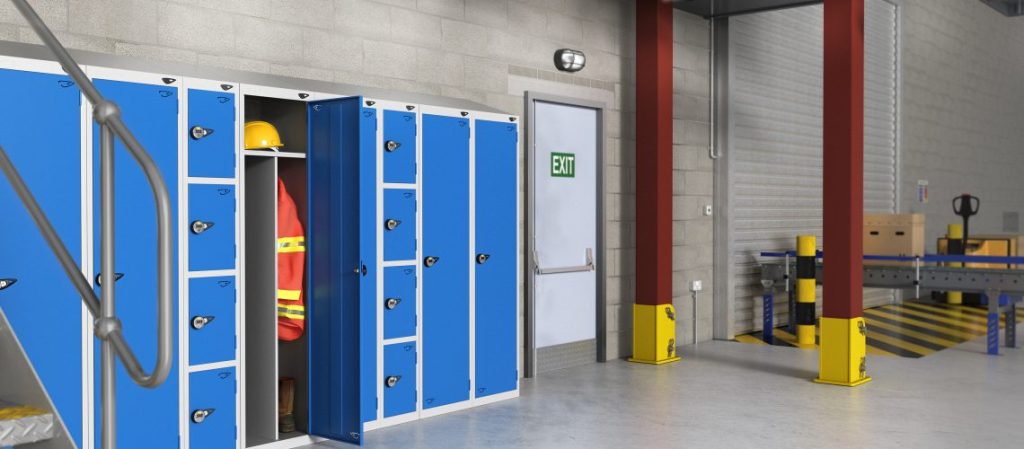
That is why workplace locker sizes should always be considered alongside the layout of the surrounding area. Office settings often need tidy personal storage that fits naturally into a shared environment. Factory staff may require more room for uniforms, boots and workwear. In warehouses and staff welfare areas, the main challenge is often balancing practical storage with limited floor space and peak-time access.
This guide explains how to think about workplace locker sizes, staff locker dimensions and office locker layout in a practical way. For the broader workplace lockers guide, visit the main hub. If you are comparing products rather than planning the room, see our workplace lockers page for staff lockers and commercial staff storage. For wider room-planning ideas, also see our guide to locker room layout.
Why locker size matters more than many buyers expect
Locker size affects daily use, not just storage capacity. If a compartment is too small, staff may struggle to fit in coats, bags, footwear or work items. That can lead to overcrowded lockers, doors that do not shut properly, belongings being left outside the unit or complaints that the installation does not work for real users.
At the same time, oversized lockers are not always the answer. Larger units reduce the number of compartments that can fit into the room. That may waste valuable floor space or lower the total number of staff who can be accommodated. The right approach is to match the locker size to the type of workplace and to the items staff genuinely need to store.
In other words, good planning means choosing the right size rather than simply choosing the biggest or smallest option available.
Start with what staff actually need to store
The best starting point is not the locker catalogue. It is the user. Before choosing dimensions or door formats, it helps to define what people are likely to put inside the locker.
- Office staff may need space for a laptop bag, coat, lunch and personal items.
- Warehouse staff may need room for outerwear, food, drinks and a larger bag.
- Factory staff may need lockers for uniforms, boots, PPE or workwear separation.
- Changing-room users may need enough internal height for clothing and enough floor clearance for shoes or boots.
As soon as the contents change, the correct locker size often changes with them. This is why a compact office locker cannot simply be copied into a factory changing room, and why a large industrial locker may be unnecessary in a hybrid office.
If you are still at the early planning stage, our staff locker planning guide explains how storage needs, lock options and workplace type all fit together.
Common workplace locker formats
There is no single correct format for every workplace. However, most staff storage schemes are built around a few common approaches. The choice depends on how much space each user needs and how many users the room has to serve.
Single-door lockers
Single-door lockers give one user the full internal height of the compartment. They are useful where staff need to hang clothing, store larger bags or keep bulkier work items inside. These are often a practical choice for changing rooms, warehouses and some factory environments.
Two-door lockers
Two-door lockers split the vertical space between two users. They can work well where the items being stored are smaller and where the room needs to accommodate more people without expanding the footprint too much.
Multi-door lockers
Multi-door formats increase user numbers further and are often used in offices or staff areas where the main purpose is compact personal storage. These can be effective in hybrid workplaces, but they need to be sized carefully so they do not become too restrictive for everyday use.
Z lockers and mixed-capacity formats
Some workplaces want a compromise between full-height clothing storage and efficient use of wall space. Z lockers and similar formats can help because they provide more hanging capacity than a small compartment while still increasing the number of users compared with a full single-door bank.
Clean and dirty split storage
Where staff use uniforms or PPE, locker size may need to support separation between personal clothing and workwear. This is less about one set of dimensions and more about choosing a format that supports the correct routine. In these cases, the locker layout and the policy around it become just as important as the unit itself.
How office locker layout differs from warehouse and factory planning
Office locker layout often focuses on neat integration with the wider workspace. The lockers may sit near a reception point, a breakout area or a bank of hot desks. As a result, the design needs to support easy access without making the room feel crowded or visually heavy.
In warehouses and factories, the priorities are usually more operational. Lockers may sit in welfare blocks or changing areas where many staff arrive at the same time. That puts more emphasis on door clearance, aisle width, movement flow and the ability to use the room quickly at busy periods.
That difference changes how layouts should be judged. A compact arrangement might work perfectly well in a low-traffic office but feel cramped in a warehouse break area during shift change. Likewise, a layout designed for boots, benches and workwear might use too much valuable space in a modern office fit-out.
Measure the room as well as the lockers
One of the most common mistakes in workplace storage planning is to measure only the available wall length. That is not enough. The room has to work once the lockers are installed and in daily use.
Practical planning should consider:
- door opening clearance
- aisle width in front of locker banks
- access for benches if staff need to sit or change footwear
- cleaning access around and beneath the lockers
- how many people use the room at peak times
- routes in and out of the area
- whether bags, coats or clothing will be handled in the same space
These points are especially important in staff changing rooms and welfare areas. The space needs to support real movement, not just a tidy furniture plan. Our guide to locker room layout looks at broader flow and room design issues, while this article stays focused on workplace locker sizing and staff-area planning.
Think about peak use, not average use
Some spaces appear adequate when viewed at quiet times, but fail during the busiest part of the day. This often happens in staff welfare areas, factory changing rooms and warehouse entrances where many employees arrive or leave together.
A good layout should therefore be planned around peak use. Ask how many people will open lockers at the same time, whether they are carrying bags, whether they need to remove coats or footwear and how long they stay in the area. These factors affect whether the room feels efficient or congested.
Office environments are usually less intense in this respect, but even there, the same principle applies. A shared locker bank near the main arrival point should still allow people to store items without causing bottlenecks in the morning.
Assigned lockers and shared-use layouts
Layout planning is also influenced by whether the lockers are assigned permanently or used on a shared basis. Shared-use schemes are common in offices, especially where hybrid working reduces the number of staff on site each day. In those settings, the room may need fewer lockers overall, which can free up floor space or allow for a more generous layout.
Assigned locker setups are more common in warehouses, factories and traditional staff environments where employees attend regularly and store the same items each day. These installations often need more total capacity, which makes efficient layout planning even more important.
The locker size, the number of users and the access method all work together. That is why how to choose workplace lockers should never be treated as a question about dimensions alone.
How benches and seating affect staff locker layouts
In some staff areas, the lockers are only one part of the setup. Seating, boot changing space and waiting areas may also be needed. Once benches are added, the available footprint changes quickly, so the locker layout needs to be adjusted accordingly.
This matters most in changing rooms and factory or warehouse welfare spaces. Staff may need to sit while changing footwear or storing work items. If the benches are too close to the locker doors, the space becomes awkward. If the aisles are too narrow, people end up blocking each other.
That is why a good staff-area design looks at the whole room rather than treating the lockers as stand-alone units. In practical terms, the question is not just how many lockers can fit. It is whether the area still works properly once people are using it.
Common sizing and layout mistakes
- Choosing lockers before defining what staff need to store
- Using small office-style compartments for bulky workwear or boots
- Ignoring door swing and aisle width
- Fitting the maximum number of lockers without thinking about movement
- Forgetting to leave room for benches or seating where needed
- Assuming all staff groups need the same locker size
- Planning to average use instead of peak use
- Leaving no cleaning access around the installation
Most of these issues can be avoided by treating locker planning as part of the room layout rather than as a final purchasing decision.
How to choose the right locker size for the workplace
The most reliable method is to work backwards from the environment and the user. Define the workplace type, list the items to be stored, decide whether the lockers are assigned or shared, then test how the room will function during real use.
For offices, that often means compact yet practical personal storage with a tidy overall layout. Warehouses, the aim is usually durable storage with enough room for outerwear, bags and daily items. Locker sizing in factory environments may need to support uniforms, footwear, PPE and changing-room traffic.
Once those needs are clear, the right combination of locker size and layout becomes far easier to identify. After the planning stage, you can move to the commercial side and review suitable workplace lockers options with more confidence.
A simple staff locker planning checklist
- Define who will use the lockers.
- List the items they need to store each day.
- Decide whether the lockers are assigned or shared.
- Choose a door format that matches those needs.
- Measure the full room, not just the wall space.
- Check door openings, aisle widths and movement routes.
- Add bench space if staff need to sit or change footwear.
- Review the layout against peak-time use.
- Keep cleaning and maintenance in mind from the start.
Conclusion
Good workplace locker planning depends on two linked decisions: the right locker size and the right room layout. One without the other rarely produces the best result. A well-sized locker in a poor layout still creates frustration, while a generous room can still fail if the compartments do not suit the users.
Office storage, warehouse welfare areas and factory changing rooms all have different pressures. That is why staff locker dimensions and workplace locker layouts and lock options need to be considered in context rather than copied from one environment to another. For the wider topic structure, return to the workplace lockers guide. For broader room-planning ideas, see locker room layout. When you are ready to compare products, visit our commercial staff storage page.
Frequently asked questions
What size should workplace lockers be?
The right size depends on what staff need to store. Office users may only need room for bags and coats, while warehouse and factory staff may need space for outerwear, footwear, uniforms or PPE.
How many lockers fit in a staff room?
That depends on wall length, door clearance, aisle space, benches and how many people need to use the room at peak times. The correct answer comes from room planning rather than from locker width alone.
Are office locker layouts different from warehouse layouts?
Yes. Office locker layouts usually focus on tidy integration with the workspace, while warehouse layouts need to support more practical, high-traffic use in staff welfare areas.
Should staff lockers be assigned or shared?
Shared lockers often suit hybrid offices, while assigned lockers are more common in warehouses, factories and regular staff environments where users store the same items each day.
What is the biggest mistake in locker layout planning?
A common mistake is focusing only on how many lockers fit on a wall and ignoring how the room works once doors open, people move through it and staff start using the space at busy times.
Discover more from Blog Total Locker Service
Subscribe to get the latest posts sent to your email.