Wall Mounted vs Freestanding Benches: Which Changing Room Bench Type Is Best?
April 13, 2026
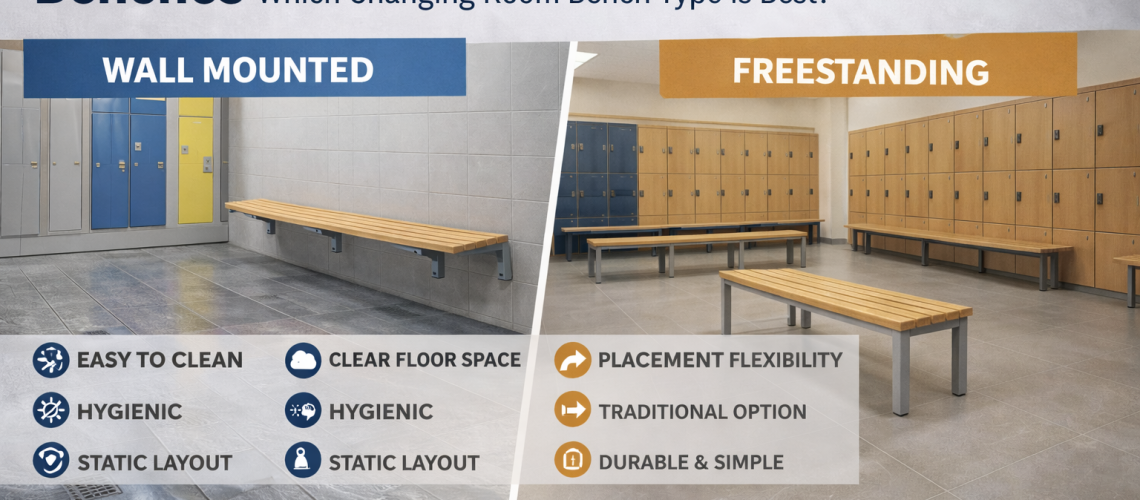
Changing room benches are available in several formats, but one of the most important choices is whether to use wall mounted benches or freestanding benches. Both options can work well. The right one depends on the environment, cleaning requirements, layout and how the space is used each day.
This is not only a design decision. It affects hygiene, maintenance, flexibility and how easily people move through the area. A bench that is ideal in one setting may be less practical in another.
This guide compares wall mounted and freestanding benches so you can choose the best option for your workplace, school, gym or changing room.
Why bench type matters
Bench format affects more than appearance. It changes how the floor is cleaned, how the room feels, how much flexibility the layout has and how the bench performs over time. That means the decision should be based on practical use rather than personal preference alone.
- affects cleaning access beneath and around the bench
- influences how flexible the layout can be
- changes the visual openness of the space
- supports different levels of hygiene control
- affects installation planning and long-term maintenance
Choosing correctly helps the whole changing area work better.
What are wall mounted benches?
Wall mounted benches are fixed directly to the wall rather than standing on legs. This leaves the floor area beneath clear, creating a more open look and making it easier to clean underneath the seating.
They are commonly used in:
- wet area changing rooms
- swimming pool and leisure facilities
- healthcare and hygiene-sensitive environments
- locker rooms where clear floor access is a priority
Wall mounted benches are often chosen where hygiene and easy cleaning are more important than layout flexibility.
What are freestanding benches?
Freestanding benches sit directly on the floor and support themselves with legs or a fixed frame. They are one of the most common changing room seating options because they are straightforward, durable and easy to position.
They are commonly used in:
- school changing rooms
- workplace locker areas
- gyms and sports facilities
- general dry changing environments
Freestanding benches are often preferred where flexibility, simple installation and traditional layout planning are important.
Advantages of wall mounted benches
Wall mounted benches offer a number of practical benefits, especially in environments where hygiene is a priority.
- clear floor space makes cleaning easier
- helps reduce dirt traps beneath the bench
- supports a cleaner and more open visual layout
- well suited to wet and hygiene-sensitive environments
- can improve access for cleaning equipment
In spaces where regular washdown cleaning or moisture control matters, this type of bench can be especially effective.
Advantages of freestanding benches
Freestanding benches also offer clear advantages. Their biggest strength is flexibility. They can be positioned where needed and, in some cases, moved if layouts change later.
- easy to install without wall fixing
- suits a wide range of room layouts
- offers more flexibility for future changes
- common and familiar across many environments
- available in a wide range of sizes and styles
For dry changing rooms and general-use spaces, freestanding benches are often a very practical choice.
Cleaning and hygiene: which performs better?
Wall mounted benches usually have the advantage when cleaning access is the main concern. With no legs or frame touching the floor beneath the seat, there are fewer obstacles for cleaning staff to work around.
Freestanding benches can still be hygienic and easy to maintain, but they need more attention around the legs, supports and the floor area underneath. Well-managed dry environments, that may not be a problem. In wet or hygiene-critical spaces, it can become more important.
In general:
- wall mounted benches usually make deep cleaning easier
- freestanding benches may need more floor-level attention
- both options still depend on good spacing and cleaning routines
Layout flexibility and room planning
Freestanding benches are usually stronger when layout flexibility matters. They can often be placed centrally, aligned with locker runs or used in spaces where wall positioning is limited. That makes them useful in larger open changing rooms and multi-use areas.
Wall mounted benches are more fixed by nature. Once installed, they define how the room works. That can be positive when the layout is stable and carefully planned, but it offers less freedom if needs change later.
Choose freestanding benches when:
- the layout may change in future
- the space is large and open
- bench position needs more flexibility
- wall fixing is not ideal or practical
Choose wall mounted benches when:
- cleaning access is a priority
- the layout is fixed long term
- the environment is wet or hygiene-sensitive
- clear floor space is important to the design
Wet areas vs dry areas
The environment plays a major role in deciding between these two bench types. In wet areas, wall mounted benches often have an advantage because they support easier cleaning and help reduce moisture-related dirt build-up beneath the seat.
In dry areas, freestanding benches are often more common because they are simple, durable and work well in schools, workplaces and general changing rooms. That does not mean wall mounted benches are unsuitable in dry spaces, only that they are often more beneficial where cleaning and hygiene pressures are higher.
Installation considerations
Wall mounted benches need secure fixing into a suitable wall structure. That means installation planning matters more. The wall must be capable of supporting the bench safely, and the fixing method must suit the construction of the room.
Freestanding benches are generally easier to install because they do not rely on wall strength. They arrive as self-supporting units, which can simplify planning in some environments.
This means:
- wall mounted benches need more structural consideration
- freestanding benches are often simpler to deploy
- both should still be chosen with room layout and user flow in mind
Appearance and user experience
Wall mounted benches can create a more minimal, clean-lined appearance. They often help the room feel lighter and less cluttered. Freestanding benches can create a more traditional locker room look and may feel more substantial in larger open spaces.
User experience depends less on style alone and more on how well the bench type supports the room. If the area feels cramped, hard to clean or awkward to use, the visual style matters less. Practical performance should come first.
Common mistakes to avoid
Several problems appear when wall mounted and freestanding benches are chosen without enough thought about the environment.
- choosing freestanding benches in wet areas without considering cleaning demands
- specifying wall mounted benches where the wall structure is unsuitable
- focusing on appearance without considering maintenance
- ignoring how user traffic moves around the seating
- forgetting that bench type should support the wider layout
The best choice is usually the one that supports the environment, the users and the cleaning routine together.
How to choose between wall mounted and freestanding benches
Ask a few practical questions before deciding:
- Is the space wet, humid or hygiene-sensitive?
- How important is easy floor cleaning beneath the bench?
- Does the layout need to remain flexible?
- Is the wall structure suitable for secure mounting?
- Will the room benefit more from open floor space or layout adaptability?
Once those questions are answered, the right option is usually much easier to identify.
Final thoughts on wall mounted vs freestanding benches
Both wall mounted and freestanding benches have clear strengths. Wall mounted benches are often the better choice for wet areas, hygiene-focused settings and spaces where cleaning access matters most. Freestanding benches are often stronger in dry areas, larger open rooms and places where layout flexibility is important.
The best result comes from matching the bench type to the real demands of the room rather than choosing by habit. When the seating suits the environment, the whole changing area tends to work better.
Explore our locker range, review locker lock options, and browse more guidance on the Total Locker Service blog.
“`
Discover more from Blog Total Locker Service
Subscribe to get the latest posts sent to your email.