Locker Locks UK: Choosing Key, Combination, Coin, RFID & Smart Locker Locks
April 9, 2026
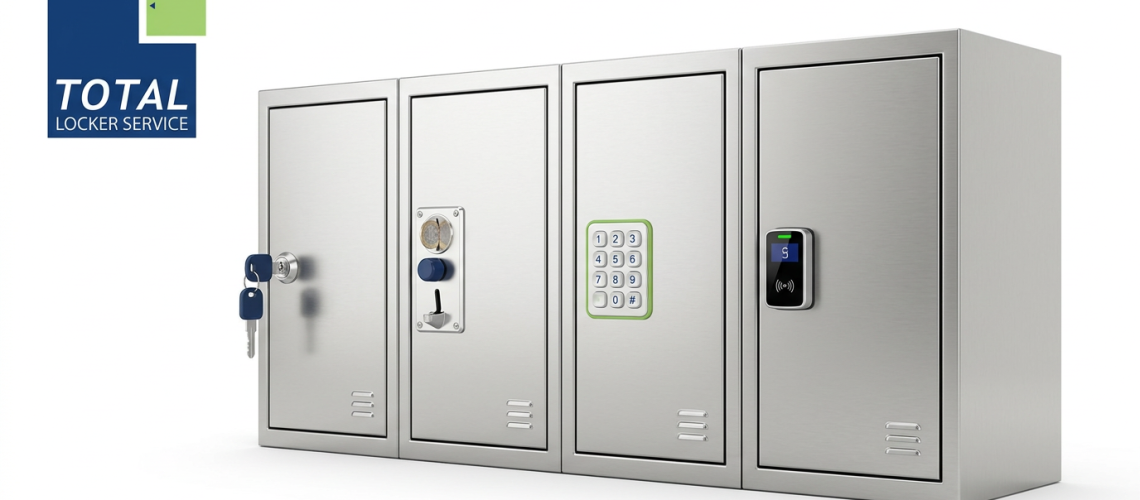
Choosing the right locker lock affects security, usability, maintenance and the amount of administration required to keep a locker installation working. The best locker lock is not necessarily the most advanced option. It is the one that suits the users, the environment and the way the lockers are actually allocated.
UK commercial lockers can use keyed cam locks, padlock fittings, coin or token locks, mechanical combination locks, electronic PIN locks, RFID systems and more advanced smart access. Each system has different advantages, limitations and management requirements.
This guide compares the main locker lock types used in schools, workplaces, factories, warehouses, gyms, leisure centres, universities, healthcare facilities and commercial changing rooms. It also covers assigned versus shared use, security, master and override access, maintenance, replacement, retrofit compatibility and whole-life cost.
If you already know which product you require, browse our locker locks. If an existing keyed lock still works and only the key is missing, use our replacement locker key service before replacing the lock.
Quick Locker Lock Selection Guide
| Locker use | Good starting options | Main consideration |
|---|---|---|
| Permanent assigned locker | Keyed or private-use combination | Simple access for one regular user |
| Shared staff locker | Public-use combination, PIN, RFID or managed access | Changing users |
| School locker | Keyed, combination or padlock fitting | Durability and manageable administration |
| Gym or leisure locker | Coin, combination, RFID or electronic | High turnover and temporary use |
| Hybrid workplace | Combination, RFID or smart access | Variable attendance and reassignment |
| Industrial staff locker | Keyed, padlock or robust mechanical combination | Heavy use and straightforward operation |
| User-managed security | Padlock fitting | User supplies the padlock |
| Cashless leisure facility | Combination, RFID or electronic | Avoid coin handling |
This table is a starting point. Door compatibility, environmental conditions, authorised management access and maintenance should still be checked before specifying a lock.
A locker lock should match user behaviour and management capability, not simply the locker door.
Questions to Ask Before Choosing Locker Locks
- Are the lockers permanently assigned or shared?
- Who will use them?
- How frequently do users change?
- Will one person keep the locker for months or only a few hours?
- What will be stored inside?
- How valuable or sensitive are the contents?
- Is the environment dry, wet, humid, dusty or industrial?
- Do users already carry cards, fobs or wristbands?
- Is physical key management acceptable?
- How much administration can the site realistically support?
- Who requires authorised override access?
- How quickly must faults be resolved?
- Who will replace electronic-lock batteries?
- Will software introduce additional administration?
- Could lockers change from assigned to shared use later?
- Are the locks being fitted to new or existing lockers?
Why Locker Lock Choice Matters
Security is only one part of locker lock selection. The locking system also affects everyday usability, maintenance and staff workload.
- how quickly users can access lockers;
- lost-key administration;
- forgotten-code enquiries;
- replacement-key costs;
- battery maintenance;
- staff override procedures;
- locker availability;
- user confidence;
- facilities workload;
- and long-term replacement costs.
A sophisticated electronic lock that users struggle to operate can create more problems than a simple mechanical system correctly matched to the application.
The Main Types of Locker Locks
- keyed cam locks;
- padlock fittings and hasps;
- coin and token locker locks;
- mechanical combination locks;
- electronic PIN and keypad locks;
- RFID locker locks;
- and smart or centrally managed locker access.
Keyed Locker Locks
Keyed cam locks remain one of the simplest and most widely used locker locking systems. Turning the user key normally rotates a cam or related mechanism behind the locker door so it engages with the frame.
They are particularly suitable where one person retains the same locker for a relatively long period.
Keyed to differ
Each compatible locker lock operates from its own individual user key. This is commonly used for permanently assigned lockers.
Keyed alike
A group of locks operates from the same key. This should only be specified where the same person genuinely requires access to the complete group.
Master keyed
Users retain individual keys while an authorised master key opens a defined group of compatible locks.
Advantages of keyed locker locks
- simple and familiar operation;
- no batteries;
- no software;
- well suited to assigned users;
- replacement keys may be available from the correct key number;
- and individual locks can often be replaced without replacing the locker.
The main drawback is key administration. Larger installations need reliable procedures covering issue, return, lost keys, replacement keys and authorised master-key access.
For the detailed subject, see our Keyed Locker Locks UK guide.
Padlock Fittings and Hasp Locks
A padlock fitting transfers everyday lock ownership to the locker user. The locker provides the hasp or swivel fitting and the user supplies a compatible padlock.
Advantages
- No individual locker key needs to be issued.
- No batteries or software are required.
- Users can supply their own padlocks.
- The locker fitting itself is mechanically simple.
Considerations
- Padlock quality varies.
- Users may forget combinations or lose padlock keys.
- Abandoned padlocks require a removal procedure.
- Management access may require the padlock to be removed.
- The shackle needs to suit the locker fitting.
Coin and Token Locker Locks
Coin and token locks are primarily designed for temporary use and remain common in gyms, swimming pools, leisure centres and public changing facilities.
Coin return
The user’s coin is returned when the locker is reopened.
Coin retain
The coin is retained after use and can form part of a charging or revenue system.
Token operation
A compatible site-issued token is used instead of ordinary currency.
Coin systems can support self-service and high locker turnover but introduce additional servicing, jam-clearing and management-key requirements. Retain systems also require an appropriate cash-management process.
See our Coin Operated Locker Locks UK guide.
Mechanical Combination Locker Locks
Mechanical combination locks replace the normal user key with a numerical code without requiring batteries or electronic infrastructure.
Depending on the model, they may operate in private-use mode for one regular user or public-use mode where successive users select temporary codes.
Advantages
- No normal user key.
- No battery replacement.
- Can suit assigned or shared use depending on the model.
- Can reduce lost-key administration.
- Selected models can be retrofitted to suitable existing lockers.
The site still needs procedures for forgotten codes, code finding or resets and authorised management override.
See our Locker Combination Locks UK guide.
Electronic PIN and Keypad Locker Locks
Electronic keypad locks provide keyless access using a PIN or code. Depending on the product, they can support permanent users, temporary users or both.
- private-use operation;
- public-use operation;
- administrator codes;
- management override;
- temporary access;
- and low-battery warnings on suitable models.
Advantages
- No normal user key.
- Useful where users change frequently.
- Can support shared lockers.
- User access can often be changed without replacing physical keys.
Considerations
- Batteries require maintenance.
- Users may forget codes.
- Administrator procedures need to be documented.
- The rear lock body may need greater clearance than a simple cam lock.
- Compatibility must be confirmed before retrofit.
See our Electronic Locker Locks UK guide.
RFID Locker Locks
RFID locker locks allow compatible cards, fobs, wristbands or other contactless credentials to operate the locker.
They can be particularly useful where users already carry a suitable credential, such as:
- staff cards;
- student cards;
- membership cards;
- key fobs;
- or leisure wristbands.
Do not assume two systems are compatible simply because both are described as RFID. The actual credential technology and proposed locker lock must be checked before specification.
For detailed planning, see our RFID Locker Locks UK guide.
Smart Locker Access Systems
A smart locker system goes beyond simply replacing a physical key with an electronic credential. It connects the locker hardware with software and management processes.
Depending on the platform, features can include:
- dynamic locker allocation;
- bookable lockers;
- temporary access;
- remote administration;
- credential revocation;
- occupancy information;
- usage reporting;
- audit information;
- and integration with wider workplace systems.
This additional complexity is worthwhile only where the functionality solves a genuine operational problem.
See our Smart Locker Systems UK guide.
Mechanical vs Electronic Locker Locks
| Factor | Mechanical | Electronic |
|---|---|---|
| Power | Normally none | Battery or electrical power |
| Initial complexity | Lower | Higher |
| User access | Key, padlock or mechanical code | PIN, RFID, mobile or managed credential |
| Shared-use flexibility | Available on suitable locks | Often strong |
| Administration | Keys, codes or padlocks | Codes, credentials, batteries and possibly software |
| Best use | Simple and robust requirements | Flexible or managed access |
For a detailed comparison, see our Mechanical vs Electronic Locker Locks UK guide.
Assigned vs Shared Locker Locks
Whether lockers are permanently assigned or repeatedly shared is one of the most important decisions in lock selection.
| Operating model | Typical suitable lock types |
|---|---|
| Permanent assigned user | Keyed, private-use combination or private-use electronic |
| Shared day use | Public-use combination, PIN, RFID or managed access |
| Temporary visitor | Coin, combination, PIN or RFID |
| User supplies own security | Padlock fitting |
A lock may fit the locker physically but still be operationally wrong if its operating mode does not match the way the locker is allocated.
See our Shared-Use vs Assigned Locker Locks UK guide.
Locker Lock Security Levels
The strength of the lock should be considered alongside the strength of the locker door, hinges, frame and surrounding installation. Fitting a stronger lock to a badly damaged or lightweight door does not automatically create high-security storage.
Consider:
- value of the contents;
- locker construction;
- door strength;
- hinges and fixing;
- cam or latch engagement;
- location and supervision;
- management override;
- user behaviour;
- and the consequences of unauthorised access.
Higher-value or unusually sensitive contents may require storage specifically designed for that risk rather than simply fitting a heavier lock to an ordinary personal-effects locker.
For the wider subject, see our Locker Security Guide UK.
Choosing Locker Locks by Environment
| Environment | Main consideration |
|---|---|
| Dry office or classroom | User pattern, management requirements and routine maintenance |
| Wet or humid changing room | Corrosion resistance and manufacturer suitability |
| Swimming pool | Explicit wet-area suitability and appropriate materials |
| Factory or warehouse | Dust, gloves, dirt, heavy use and rapid maintenance |
| Outdoor or semi-exposed area | Weather exposure and environmental specification |
| Healthcare staff area | Cleaning, shift patterns and reliable authorised access |
Do not assume every mechanical lock is automatically suitable for wet conditions or that every electronic lock is unsuitable. Check the actual manufacturer’s product specification.
Best Locker Locks for Schools
School lockers normally require straightforward operation, durability and an administrative process that does not consume unnecessary staff time.
- Plan for large numbers of daily users.
- Plan for lost keys or forgotten codes.
- Confirm replacement-key availability.
- Provide controlled staff access.
- Standardise lock types where practical.
- Keep suitable spares for common faults.
Keyed locks can work well for permanently assigned pupil lockers where key management is controlled. Mechanical combination locks can reduce reliance on physical keys where staff have an effective reset procedure.
Best Locker Locks for Workplaces
Workplaces may combine permanent staff, hybrid workers, visitors, contractors and shift employees within the same locker estate.
- Permanent staff lockers can suit keyed or private-use combination locks.
- Shared hybrid lockers can suit combination, PIN, RFID or managed access.
- Sites already using compatible staff cards may benefit from RFID.
- Small workplaces may be better served by simpler systems requiring less technical administration.
- Factories and warehouses may favour robust mechanical solutions where gloves, dirt or heavy daily use are expected.
Best Locker Locks for Gyms and Leisure Centres
Gym and leisure lockers normally serve many different users for relatively short periods.
- Choose genuine public-use operation where required.
- Account for high locker turnover.
- Consider wet or humid conditions.
- Decide whether coin or cashless operation is preferred.
- Provide secure management override.
- Consider user familiarity and reception workload.
Coin, public-use combination, RFID and suitable electronic systems can all work. The correct choice depends on how customers obtain, use and release lockers.
Best Locker Locks for Factories and Warehouses
Industrial sites often place greater emphasis on durability, straightforward operation and rapid fault resolution.
- Do users wear gloves?
- Is the area dusty or dirty?
- Do lockers contain PPE or workwear?
- Are there concentrated shift-change periods?
- Do lost keys regularly delay staff?
- Can replacement parts be obtained quickly?
A simple keyed or mechanical combination system may provide better service than a more complicated electronic system where it meets the operational requirement reliably.
Locker Lock Management and Override
Removing physical user keys does not remove administration. Every locker lock technology creates some form of management requirement.
| Lock system | Main administration |
|---|---|
| Keyed | Key issue, return, replacement and master keys |
| Padlock | Abandoned and inaccessible padlocks |
| Coin or token | Coins, tokens, jams and service access |
| Combination | Codes, resets and override |
| Electronic PIN | Codes, administrator access and batteries |
| RFID | Credential issue, loss and revocation |
| Smart | Users, permissions, software and support |
Decide who owns the locker system day to day. Depending on the organisation, responsibility may sit with facilities, reception, estates, IT or local managers.
Master Keys and Administrator Credentials
Management access should be defined before installation.
- master key;
- sub-master key;
- override key;
- reset tool;
- administrator PIN;
- RFID management credential;
- or software permissions.
Restrict these credentials, store them securely and document who is authorised to use them.
For mechanical master-key systems, see our Master Key Locker Systems UK guide.
Common Locker Lock Problems
- lost or unreturned keys;
- forgotten combinations;
- worn or incorrectly positioned cams;
- damaged latches;
- incorrect lock choice for the environment;
- flat electronic-lock batteries;
- incorrect public or private-use configuration;
- poorly controlled master access;
- door misalignment;
- damaged locker doors;
- and incompatible replacement components.
Investigate the actual fault before assuming that changing the lock technology will solve the problem.
See our Locker Lock Problems UK guide.
Locker Lock Parts and Replacement
Where the locker body and door remain serviceable, replacing individual lock components can often extend the useful life of the installation.
- replacement user keys;
- master and override keys;
- lock barrels;
- cams;
- complete locks;
- hasp fittings;
- electronic-lock batteries;
- and suitable conversion components.
If the existing lock is unknown, start with the Locker Lock Identification Guide UK.
For direct replacement, use our Locker Lock Replacement Guide UK.
Replace Like for Like or Upgrade?
Replace like for like when
- the existing operating method still works well;
- only isolated locks have failed;
- users are comfortable with the system;
- replacement parts remain available;
- and current key or access arrangements should remain unchanged.
Consider upgrading when
- lost keys create excessive administration;
- the current lock is obsolete;
- lockers are changing from assigned to shared use;
- coin operation is no longer wanted;
- many locks require repair;
- users already have suitable electronic credentials;
- or the site has accumulated too many incompatible lock systems.
For physical conversions, see the Locker Lock Upgrade Guide UK.
Check Retrofit Compatibility Before Ordering
Locker locks are not universal. Check the actual locker door before ordering replacements or upgrades.
- door material;
- door thickness;
- existing lock cut-out;
- fixing positions;
- lock-body dimensions;
- cam length and offset;
- cam rotation;
- door handing where relevant;
- rear clearance;
- latch position;
- battery access;
- and the condition of the door and frame.
A lock can appear suitable from the front but still be incompatible behind the locker door.
Locker Lock Whole-Life Cost
Do not compare locker locks using purchase price alone. Different systems create different ongoing costs.
| Cost area | Examples |
|---|---|
| Initial hardware | Lock, fixings, cams and installation |
| User administration | Keys, codes, cards, fobs or wristbands |
| Management access | Master keys, reset tools and administrator credentials |
| Routine maintenance | Batteries, cleaning, adjustment and servicing |
| Failure management | Replacement locks, keys and engineer time |
| Software | Licensing or support where relevant |
| Reconfiguration | Changing assigned lockers to shared use or vice versa |
A simple mechanical lock may be cheaper overall where requirements are straightforward. A more expensive managed system may provide better value where it removes substantial manual administration or improves utilisation.
Locker Lock Selection Checklist
- Assigned or shared use?
- Who are the users?
- Dry, wet or industrial environment?
- What security level is appropriate?
- Keys, codes, coins or electronic credentials?
- Does the site need master or administrator override?
- How will lost access be resolved?
- Who maintains batteries?
- Can the site support software if required?
- Does the lock physically fit the locker?
- Is the correct cam or latch available?
- Can replacement parts be obtained?
- Does the system remain practical over its working life?
Related Locker Lock Guides
- Locker Locks – current lock products.
- Keyed Locker Locks UK – keyed cam locks and key management.
- Locker Combination Locks UK – mechanical code locks.
- Coin Operated Locker Locks UK – return and retain systems.
- Electronic Locker Locks UK – PIN and digital access.
- RFID Locker Locks UK – cards, fobs and wristbands.
- Smart Locker Systems UK – software and managed access.
- Shared-Use vs Assigned Locker Locks UK – public and private operating modes.
- Mechanical vs Electronic Locker Locks UK – technology comparison.
- Locker Lock Identification Guide UK – identify an existing lock.
- Locker Lock Replacement Guide UK – direct replacement.
- Locker Lock Upgrade Guide UK – retrofit and conversion.
Locker Locks FAQs
What are the main types of locker locks?
Common locker lock types include keyed cam locks, padlock fittings, coin or token locks, mechanical combination locks, electronic PIN locks, RFID locks and smart managed access systems.
What locker lock is best for an assigned locker?
Keyed cam locks and private-use combination locks are common choices where one regular user retains the same locker. Assigned electronic access can also be appropriate where keyless operation is required.
What locker lock is best for shared lockers?
Public-use combination locks, coin locks, electronic PIN locks and RFID systems are commonly suitable where different users need temporary access to the same lockers.
Can locker locks be replaced?
Many locker locks can be replaced while retaining the existing locker. Compatibility depends on the door material, thickness, lock cut-out, fixing arrangement, cam or latch and available clearance.
Can keyed lockers be upgraded to combination or electronic locks?
Often, yes. The proposed replacement must be compatible with the locker door preparation, thickness, fixing positions and locking mechanism. Some conversions require an adaptor or conversion component.
Are electronic locker locks more secure than key locks?
Not automatically. Security depends on the complete locker, lock construction, installation, management procedures and stored contents. Electronic systems can provide stronger access management but also introduce batteries, credentials and administration.
Are locker locks suitable for wet areas?
Suitability depends on the specific product. Swimming pools and wet changing rooms require locks and locker materials explicitly suitable for the expected moisture, humidity and corrosion exposure.
Do RFID locker locks work with existing staff cards?
Sometimes, but compatibility must be confirmed. RFID technologies, frequencies, formats and security methods vary, so an existing card should not be assumed to work with a proposed locker lock.
Do locker combination locks need batteries?
Mechanical combination locks do not normally require batteries. Electronic keypad or digital combination locks generally require a power source, commonly batteries.
Should I replace a lost locker key or the whole lock?
If the lock remains serviceable and the correct key code can be identified, a replacement key may be sufficient. Replace the lock where it is damaged, obsolete, incompatible with current requirements or security has been compromised.
Choose the Locker Lock That Solves the Operational Problem
Locker lock selection should begin with the users and operating model rather than with the technology. A basic keyed lock can be an excellent solution for a permanently assigned staff locker, while a gym or hybrid workplace may gain more from shared-use combination, RFID or electronic access.
Once the operating requirement is clear, check security, environment, management access, maintenance, compatibility and whole-life cost. Where existing lockers remain structurally sound, replacement or upgraded locks can often extend their useful life without replacing the complete locker installation.
Browse our locker lock range, or call 01284 749211 or email sales@totallocker.co.uk for help identifying or selecting a suitable locker lock.
Discover more from Blog Total Locker Service
Subscribe to get the latest posts sent to your email.