How to Replace and Care for Engraved Tags
April 9, 2026
How to Maintain and Replace Engraved Products
Engraved tags are designed to last, but no identification system remains perfect forever. Over time, workplaces change. Lockers are added or replaced. Keys go missing. Rooms are renamed. Storage layouts are updated. Even the most durable engraved tags will eventually need cleaning, updating or replacing.
A well-maintained engraved tag system stays clear, consistent and reliable. A neglected one gradually becomes harder to use. Numbers fade into the background. Mismatched replacements appear. Old labels remain in place long after they are relevant. The structure that once worked starts to break down.
In workplaces that rely on lockers, key cabinets, cupboards, storage systems and asset identification, maintenance is not just about keeping tags clean. It is about protecting the integrity of the whole identification system.
Why maintenance matters
Engraved tags form part of a wider system. When that system becomes inconsistent, the value of the tags is reduced.
- missing or damaged tags
- inconsistent numbering formats
- unclear or outdated wording
- mismatched replacements
- confusion in locker or key systems
- slower day-to-day operation
- increased errors in allocation or reporting
Regular maintenance keeps the system usable and prevents small issues from building into larger problems.
What causes engraved tags to degrade
Engraved tags are durable, but they are not immune to wear. Different environments affect them in different ways.
- frequent handling, especially key tags
- cleaning products and moisture
- surface damage or impact
- adhesive failure over time
- exposure to dirt, grease or dust
- general ageing in high-use environments
The level of wear depends on how and where the tags are used. A key tag handled daily will wear faster than a cupboard label in a low-traffic area.
Signs that tags need attention
A good system should be checked occasionally for signs of decline. Issues are often easy to spot once you look for them.
- tags that are missing or loose
- numbers or text that are harder to read
- faded contrast
- damaged edges or surfaces
- inconsistent formats across similar tags
- outdated names or references
- temporary labels replacing engraved ones
If several of these appear in one area, it usually indicates the system needs a structured update rather than isolated fixes.
Cleaning engraved tags
In many cases, readability improves simply by cleaning the tags. Dirt and residue reduce contrast and make text harder to read.
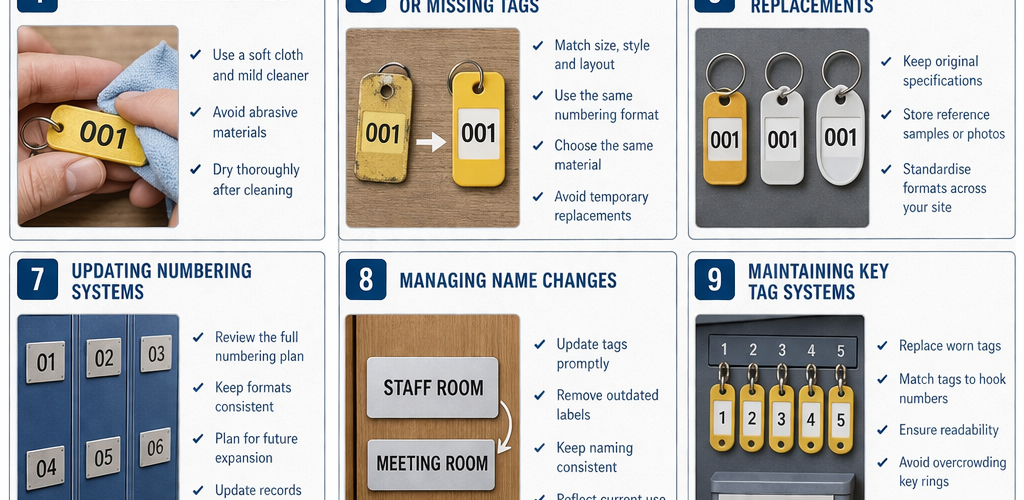
- use gentle cleaning methods
- choose products suitable for the material
- apply the same approach across all tags
A simple wipe-down often restores clarity, especially for plastic engraved tags. In healthcare or leisure settings, this may already form part of routine cleaning.
Replacing damaged or missing tags
When tags are damaged or missing, replacement should be handled carefully. Quick fixes can create inconsistency if they do not match the original system.
- match the original size and format
- follow the same numbering or naming structure
- use the same material where possible
- keep layout and style consistent
- avoid temporary labels as long-term solutions
Avoiding mismatched replacements
Mixing different styles of tags within one system creates confusion. This usually happens when replacements are ordered without reference to the original design.
- keep a record of the original specification
- store reference images or samples
- document numbering formats and prefixes
- standardise sizes and layouts
- use the same supplier where possible
Updating numbering systems
Change often drives updates. Locker banks expand. Departments shift. Buildings evolve. When this happens, numbering systems may need to be reviewed.
- review the full system rather than one section
- avoid mixing formats such as 01 and 1
- plan sequences before ordering
- allow for future expansion
- update documentation alongside tags
Managing changes in naming
Names change over time as spaces are repurposed or reorganised. Updating engraved tags promptly keeps the system accurate.
- replace outdated labels quickly
- keep naming consistent
- review whether naming still makes sense
Maintaining key tag systems
Key tags are among the most heavily used engraved items. They require more frequent checks due to daily handling.
- replace worn or broken tags
- keep numbering aligned with cabinet hooks
- ensure readability remains high
- avoid overcrowded key rings
- remove duplicates or unused tags
Maintaining locker numbering
Locker tags need less handling but still require regular checks to remain effective.
- replace damaged plates
- keep numbering sequential
- ensure secure fixing
- update numbering when layouts change
- maintain consistent placement
Reviewing the system as a whole
Maintenance extends beyond individual tags. Periodic reviews highlight weaknesses before they become major issues.
- check consistency across all tags
- confirm numbering and naming structures
- identify high-replacement areas
- review suitability for current use
- align with records and plans
When to refresh the entire system
Sometimes, a full refresh is more effective than ongoing patch repairs.
- multiple numbering formats present
- widespread wear or damage
- outdated naming across the site
- frequent user confusion
- poor alignment with records
Planning for easier maintenance
Systems designed properly from the start are easier to maintain over time.
- use consistent formats
- choose standard sizes
- keep wording simple
- document structures clearly
- plan for expansion
- order spare tags in advance
Avoiding temporary fixes becoming permanent
Temporary labels often solve short-term problems but should not remain in place.
- replace handwritten labels quickly
- maintain consistent appearance
- prevent confusion over time
Keeping the system usable for new staff
Clear identification helps new users understand systems without additional guidance. This is especially important in shared or high-turnover environments.
Good maintenance protects the original investment
A well-maintained engraved tag system lasts longer and works more effectively. It reduces reordering, supports organisation and improves presentation.
A well-maintained system stays clear and consistent
Effective systems do not stay clear by chance. They remain reliable because they are maintained, reviewed and updated when needed. Small actions such as cleaning, replacing and updating tags protect the whole structure.
For workplaces using lockers, keys, cupboards and storage systems, maintaining engraved tags is one of the simplest ways to keep organisation clear, consistent and easy to manage over time.
Discover more from Blog Total Locker Service
Subscribe to get the latest posts sent to your email.