Locker Room Sizes and Space Planning Explained: Designing Efficient Changing Areas
April 13, 2026
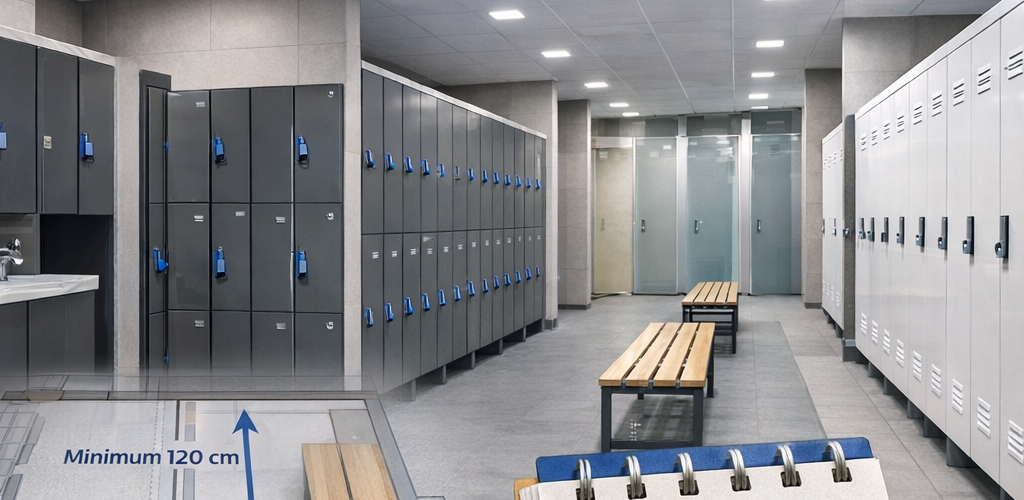
Locker room design starts with space. The size of the room and how that space is used will determine how well the area functions day to day. Poor space planning leads to congestion, difficult cleaning and frustrated users. Good planning creates a layout that feels organised, efficient and easy to use.
This guide explains how to approach locker room sizing and space planning. It covers layout principles, spacing considerations and how to balance lockers, benches and movement areas within the available footprint.
For a full overview of layout strategy, see our locker room design UK guide.
Why space planning matters
The way a locker room is laid out affects everything. It influences how people move through the space, how easily they can access lockers and how comfortable the environment feels at busy times.
- supports smooth user flow
- reduces congestion and bottlenecks
- improves access to lockers and seating
- makes cleaning and maintenance easier
- creates a more organised and professional space
Even a well-equipped locker room can underperform if the space is not planned properly.
Start with the available space
The first step is understanding the physical dimensions of the room. This includes not only floor area, but also ceiling height, door positions and any fixed features such as columns or service points.
Key considerations include:
- total floor area
- shape of the room
- entry and exit points
- fixed obstacles or structural elements
- access routes that must remain clear
These factors define what is realistically possible within the space.
Balancing lockers, benches and circulation space
A well-designed locker room balances three main elements: lockers, seating and circulation space. Focusing too heavily on one of these can create problems elsewhere.
For example:
- too many lockers reduce movement space
- too much seating can limit storage capacity
- poor circulation planning leads to congestion
The goal is to create a layout where all three elements work together.
To understand locker numbers in more detail, see our locker capacity planning guide.
Allowing for clear walkways
Walkways are one of the most important parts of space planning. Users need to move through the room easily, even during peak times. Narrow or obstructed routes quickly lead to frustration and reduce usability.
Good practice includes:
- keeping main walkways clear of obstacles
- allowing enough space for users to pass comfortably
- ensuring locker doors can open without blocking movement
- avoiding tight pinch points near entrances or exits
Clear movement routes improve both safety and user experience.
Spacing around lockers
Lockers need enough surrounding space to be used properly. Users should be able to open doors, access belongings and step back without interfering with others.
Consider:
- door opening clearance
- space for users standing in front of lockers
- distance between opposing locker banks
- proximity to benches and seating areas
Without enough space, even well-designed lockers become difficult to use.
Bench placement and spacing
Benches should be positioned so that users can sit, change and access lockers comfortably. Poor placement can block walkways or create congestion around seating areas.
Bench layouts should:
- allow space for users to sit and stand
- avoid blocking locker access
- support natural movement through the room
- leave room for cleaning beneath and around seating
For more detail, see our changing room bench guide.
Planning for peak usage
Locker rooms often experience peak periods where many users are present at the same time. This is common in schools, workplaces with shift changes and gyms during busy hours.
Space planning should account for:
- peak user numbers rather than average use
- simultaneous locker access
- crowding around benches and entrances
- storage needs during busy periods
Designing for peak use helps prevent overcrowding.
Different environments require different layouts
Space planning varies depending on the type of locker room.
Schools and colleges
These spaces often need to accommodate large groups at the same time. Layouts should prioritise movement and supervision.
Workplaces
Staff changing rooms need to balance locker capacity with seating and storage for personal items and workwear.
Gyms and leisure facilities
These environments often have varied usage patterns, with users arriving and leaving throughout the day. Layouts should support quick access and turnover.
Industrial environments
Industrial changing rooms may require more space for PPE, workwear and heavier-duty seating arrangements.
Storage and additional features
Additional storage features such as hooks, rails and shelving can improve organisation but also affect space planning. These should be integrated carefully so they do not reduce movement space.
See our locker room storage guide for more detail.
Common space planning mistakes
Several issues frequently appear when locker rooms are designed without proper planning.
- overfilling the space with lockers
- leaving insufficient walkway space
- placing benches too close to lockers
- ignoring peak usage patterns
- failing to consider cleaning access
These problems can significantly reduce the effectiveness of the space.
A simple space planning checklist
Before finalising your layout, check:
- Is there enough space for peak user numbers?
- Are walkways clear and accessible?
- Can lockers be used without obstruction?
- Is there enough seating for users?
- Does the layout support cleaning and maintenance?
- Are storage features integrated without cluttering the space?
This checklist helps ensure the space works in practice as well as on paper.
Final thoughts on locker room sizes and space planning
Effective locker room design is about balance. The right mix of lockers, benches and circulation space creates a layout that is practical, comfortable and easy to manage.
By planning carefully and considering how the space will actually be used, you can create a locker room that performs well both now and in the future.
“`
Discover more from Blog Total Locker Service
Subscribe to get the latest posts sent to your email.