What Materials Are Best for Lockers? Steel vs Laminate vs Plastic
April 11, 2026
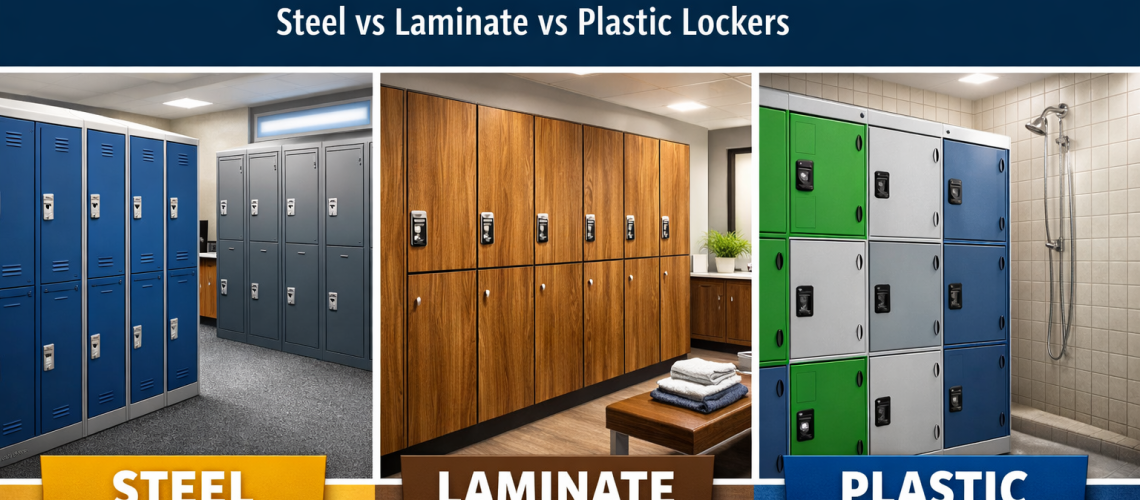
Locker material affects far more than appearance. It shapes durability, hygiene, maintenance needs, cost, and long-term performance. In offices, schools, leisure centres, healthcare settings and industrial workplaces, the right locker material can help a space stay tidy, secure and easier to manage.
Three of the most common locker materials are steel, laminate and plastic. Each one has strengths. Each one also suits a different environment. Choosing well means looking beyond colour and price alone. You need to think about how the lockers will be used, how often they will be cleaned, how much moisture is present, and what level of wear they are likely to face.
This guide explains the differences between steel, laminate and plastic lockers, so you can decide which material is best for your site.
Why locker material matters
Lockers are not all exposed to the same conditions. A dry office corridor places different demands on storage than a busy changing room, a school cloakroom or a poolside facility. That is why material choice matters from the start.
The right material can help you:
- extend locker lifespan
- reduce maintenance and repair needs
- improve hygiene and cleaning standards
- match the look of the surrounding environment
- manage moisture, impact and daily wear more effectively
- avoid paying for features your site does not really need
A poor material choice can create the opposite result. Doors may chip, surfaces may mark too easily, moisture may cause problems, and the lockers may look tired long before the rest of the room does.
Steel lockers: the practical all-rounder
Steel lockers remain one of the most common choices across the UK. They are widely used because they are strong, practical and available in a huge range of sizes and door configurations. For many dry internal environments, steel offers a reliable balance of function and value.
In schools, workplaces, warehouses and staff rooms, steel lockers are often the default choice. They suit areas where users need secure day-to-day storage without the higher cost of premium finishes or specialist wet-area materials.
Advantages of steel lockers
- strong and robust for everyday use
- good value for many standard applications
- available in many sizes, colours and compartment layouts
- easy to integrate with a wide choice of lock options
- suitable for schools, offices, staff areas and light industrial environments
Points to consider with steel lockers
Although steel is versatile, it is not ideal for every location. In wet or highly humid areas, material protection becomes more important. If water is constantly present, a different locker type may perform better over time. Steel can also show scratches or dents in harder-use settings, especially where users are rough with doors or where trolleys, benches or equipment are moved close to the locker fronts.
That does not mean steel is a weak option. Far from it. It simply means steel works best when matched to the right environment and maintained properly.
Steel lockers are often best for:
- offices and hybrid workplaces
- schools, colleges and universities
- staff rooms and back-of-house areas
- general workplace changing areas
- budget-conscious projects that still need strength and security
Laminate lockers: a more premium finish
Laminate lockers are often chosen where appearance matters as much as function. They offer a more refined finish and can help a locker installation feel better integrated into a modern interior. This makes them popular in offices, hospitality settings, high-end leisure facilities and design-led education spaces.
The visual advantage of laminate is clear. It can create a more furniture-like look, which is useful when lockers are placed in reception-adjacent areas, breakout spaces or smart changing environments where presentation counts.
Advantages of laminate lockers
- smart, premium appearance
- wide choice of finishes and colours
- well suited to modern interior schemes
- good option where aesthetics influence buying decisions
- useful for front-of-house or higher-end staff environments
Points to consider with laminate lockers
Laminate is not selected purely for style, but style is a major part of its appeal. Because of that, it is often chosen for spaces where the lockers need to complement the surrounding fit-out. In very harsh environments, however, you need to review whether the finish is the best match for repeated impact, constant moisture or rough handling.
Cost can also be higher than standard steel options, especially where the finish is part of a more bespoke interior scheme. For some sites, that extra spend is justified. For others, a simpler material may deliver better practical value.
Laminate lockers are often best for:
- high-spec offices
- staff areas in premium workplaces
- hospitality and visitor-facing environments
- design-led leisure centres and gyms
- projects where the locker installation must support a polished interior look
Plastic lockers: strong choice for wet and demanding areas
Plastic lockers are especially useful where moisture, heavy cleaning or harsher conditions are part of daily life. They are regularly specified for swimming pools, leisure centres, washdown areas, food production environments and outdoor-adjacent spaces.
Where water is common, plastic often becomes the strongest long-term option. It is also helpful in areas where hygiene routines are strict and surfaces need frequent cleaning. That makes it attractive for sites that cannot risk material performance declining because of damp or repeated wipe-downs.
Advantages of plastic lockers
- well suited to wet and humid environments
- easy to clean and maintain
- useful in demanding leisure and washdown settings
- good option for poolside or shower-adjacent areas
- practical for hygiene-focused and moisture-prone locations
Points to consider with plastic lockers
Plastic lockers can be the right answer in tough environments, but they may not always deliver the appearance some office or corporate projects want. In a premium boardroom-adjacent office fit-out, for example, laminate may look more appropriate. In a standard dry corridor, steel may be the more cost-effective route.
That is why plastic should not be treated as automatically better. It is better in the right setting. The real task is matching the material to the environment rather than choosing by habit.
Plastic lockers are often best for:
- swimming pools and leisure centres
- shower and changing room areas
- food production and washdown settings
- humid or splash-prone environments
- sites where easy cleaning is a top priority
Steel vs laminate vs plastic: how to compare them
When comparing locker materials, it helps to focus on the practical questions your site actually needs to answer.
1. What is the environment like?
A dry office, a secondary school corridor and a wet leisure changing room each create very different demands. Steel works well in many dry general-use settings. Laminate suits interior-led spaces where appearance matters. Plastic is often strongest in wet or hygiene-focused areas.
2. How important is appearance?
If the lockers sit in a visible workplace or customer-facing area, finish matters. Laminate usually offers the most design-led look. Steel can still look clean and professional. Plastic is usually chosen more for performance than for premium appearance.
3. How much wear will the lockers take?
Busy schools, staff changing rooms and leisure sites can all be hard on lockers. Think about impact, frequency of use and the way users treat the space. Material should be selected around real behaviour, not ideal behaviour.
4. How often will they be cleaned?
Some environments need frequent wipe-downs and strict hygiene routines. Others only need standard housekeeping. If cleaning intensity is high, choose a material that supports it without becoming a maintenance issue.
5. What is the budget really buying?
Lower upfront cost does not always mean better value. A locker that suits the environment properly may last longer, look better over time and reduce replacement needs. On the other hand, there is no reason to overspend on a premium finish if the location does not need it.
Which locker material is best for each type of site?
Although every project is different, the following rule of thumb is useful.
- Steel lockers: best for general-purpose dry environments such as schools, offices, staff rooms and many workplaces.
- Laminate lockers: best for premium interiors, modern office schemes and spaces where appearance and finish carry more weight.
- Plastic lockers: best for wet, humid, washdown or hygiene-led areas such as swimming pools, leisure facilities and demanding changing rooms.
That comparison is a starting point, not a shortcut. Layout, lock choice, ventilation, compartment size and user behaviour still matter. Material is one of the biggest decisions, but it works best when planned as part of the full locker setup.
Common mistakes when choosing locker materials
Some locker problems start with the wrong material being selected too early. A few mistakes come up again and again.
- Choosing based on price alone without checking the site conditions
- Picking a premium finish for a hard-use environment where practicality matters more
- Using a standard dry-area locker in a wet or humid location
- Ignoring how visible the lockers will be in the overall interior design
- Focusing on the cabinet and forgetting the impact of locks, numbering and maintenance access
A better result comes from stepping back and asking what the site really needs over the next few years, not just what looks acceptable on installation day.
Final thoughts: choosing the right locker material
There is no single best locker material for every site. Steel, laminate and plastic all have clear strengths. The best choice depends on the environment, the level of wear, the cleaning routine, the desired finish and the budget available.
A practical all-rounder for dry internal settings is often steel, making it a strong starting point.
For projects that require a more refined, design-led finish, laminate can provide a better fit.
In wet, humid or hygiene-focused areas, plastic usually delivers the strongest long-term performance.
By matching the material to the real demands of the space, you give your locker installation a much better chance of staying secure, tidy and fit for purpose over time.
If you are planning a locker project, explore our locker range, compare different locker lock options, and review our locker advice articles for more guidance on layouts, materials and long-term maintenance.
If you want, I can produce the SEO pack next: slug, Yoast title, meta description, focus keyphrase, alt text, and the image prompt for this post.
Discover more from Blog Total Locker Service
Subscribe to get the latest posts sent to your email.