Locker Layout and Spacing: How to Design Efficient, Easy-to-Clean Locker Areas
April 11, 2026
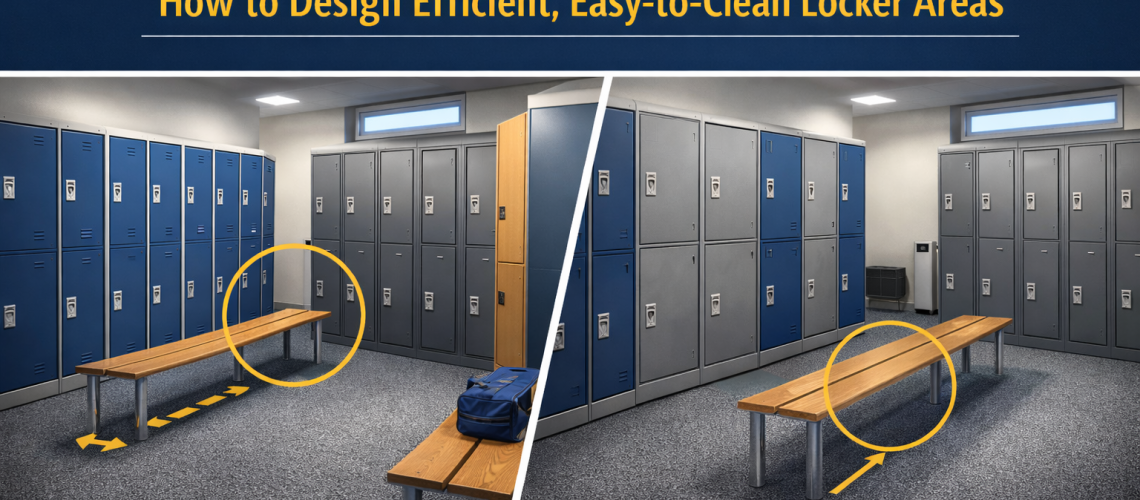
Locker choice matters, but locker layout matters just as much. A well-made locker can still underperform if the surrounding area is cramped, awkward to clean or frustrating to use. In schools, workplaces, gyms, leisure centres and changing rooms, layout affects how the whole space functions day after day.
Good locker spacing helps users move comfortably, supports cleaning routines, reduces accidental damage and makes the area feel more organised. Poor spacing does the opposite. Doors clash, walkways feel tight, benches get in the way and dirt builds up in places that are hard to reach.
This guide explains why locker layout matters, what to think about when planning spacing, and how to create locker areas that are efficient, practical and easier to maintain.
Why locker layout matters
Lockers do not work in isolation. They sit within a wider environment that includes walkways, doors, benches, cleaning access, user traffic and surrounding walls. If that environment is poorly planned, everyday use becomes harder than it needs to be.
A good layout helps:
- users access lockers more comfortably
- cleaners reach the floor and surrounding surfaces more easily
- doors open without clashing into people or nearby furniture
- the area feel less crowded at busy times
- locker banks stay in better condition over time
- the space support better hygiene and maintenance standards
Layout planning is not just about fitting in as many lockers as possible. It is about making the space work properly once people start using it.
What happens when locker spacing is too tight?
When locker areas are squeezed too tightly, small frustrations quickly turn into bigger operational problems. Users struggle to move around each other. Bags end up in walkways. Doors knock into benches or nearby lockers. Cleaning becomes harder, and the whole room starts to feel less controlled.
Common signs of poor spacing include:
- narrow aisles that create bottlenecks
- locker doors opening into circulation routes
- benches packed too close to locker fronts
- areas behind or beneath lockers that are difficult to clean
- users brushing past one another at peak times
- scuffed doors and edges caused by repeated contact
A crowded layout may look efficient on paper, but it often performs badly in real life.
Start with how the space will actually be used
The best layout starts with user behaviour. Before deciding where lockers should go, it helps to understand how people will move through the area and what else needs to happen around them.
Think about questions such as:
- Will users arrive in waves or more steadily through the day?
- Will they be carrying bags, coats, helmets or sports kit?
- Are the lockers assigned or shared?
- Will users need benches nearby to change shoes or clothing?
- Does the area need to support wet shoes, cleaning equipment or trolley access?
- How many people are likely to use the space at the busiest time?
A school changing room, an office locker zone and a leisure facility all place different demands on layout. The right plan depends on the environment, not just the locker dimensions.
Why aisles and circulation space matter
Aisle width has a major effect on how easy a locker area is to use. Users need enough room to stand at their locker, open the door, handle their belongings and move away without constantly obstructing others.
That becomes even more important in places where people arrive at the same time, such as:
- school PE changing areas
- staff changing rooms before shift changes
- gym and leisure lockers during peak periods
- office locker areas around start and finish times
If aisles are too narrow, the whole space becomes less efficient. People wait longer, circulation slows down and accidental contact increases. A better layout gives users room to open doors and organise their items without blocking the route for everyone else.
Bench placement can improve or ruin the layout
Benches are useful in many locker areas, but they need to be positioned carefully. Put them too far away and they become inconvenient. Place them too close and they interfere with door opening, walking routes and cleaning access.
Good bench placement should:
- support the way users change or organise belongings
- avoid blocking locker doors
- leave enough circulation space around seated and standing users
- allow cleaners to reach the surrounding floor area
- work with the shape of the room rather than against it
Benches should support the locker area, not dominate it.
Cleaning access should be planned from the start
Easy cleaning is one of the clearest signs of a well-planned locker layout. When the floor behind, beneath or around lockers is difficult to reach, dirt and moisture can build up over time. That affects hygiene, appearance and long-term maintenance.
A cleaner layout usually includes:
- practical access to the floor around locker banks
- enough room to clean near walls and corners
- bench positions that do not trap dirt behind them
- clear walking routes that reduce clutter build-up
- a design that does not create awkward dead spaces
If a cleaner cannot reach the floor behind or beneath the lockers easily, dirt will gather there. When benches are packed too closely to the doors, marks and wear will build up faster. If the aisle is too narrow, the whole area becomes harder to keep tidy because users are constantly brushing past one another.
Layout affects locker lifespan too
Spacing and positioning do more than shape convenience. They can also affect how well lockers hold up over time. Poor layouts increase the chance of knocks, scuffs and repeated strain on doors, ends and surrounding fittings.
Damage often happens when:
- users have to force their way through narrow spaces
- bags and equipment drag along locker fronts
- doors open into benches, walls or other doors
- crowding leads to rougher day-to-day handling
- cleaning equipment cannot reach the area properly
Giving the space enough room helps protect the installation as well as improving usability.
Different environments need different layout priorities
There is no single layout that works for every site. The way lockers are arranged should reflect the type of environment and the way people use it.
Schools and colleges
Education sites often need clear, durable layouts that cope with busy movement at fixed times of day. Corridors and changing rooms should feel easy to navigate, with enough room for students to access lockers without creating congestion.
Offices and hybrid workplaces
Office locker areas usually benefit from clean lines, tidy circulation and a layout that works well near entrances, breakout zones or end-of-trip facilities. These spaces may need to balance appearance with practical use during start and finish peaks.
Gyms and leisure centres
Changing rooms in leisure settings often need more room for benches, bags and short-stay turnover. Cleaning access and moisture management matter more here, so cramped layouts can create problems quickly.
Workplaces and industrial settings
Staff changing areas may need to accommodate uniforms, PPE, footwear and heavier personal kit. Layout should support shift-change peaks, practical cleaning and enough circulation for users carrying bulkier items.
Single-sided vs double-sided locker arrangements
The room shape often determines whether lockers should sit along a wall or form central banks. Both options can work, but each changes how the space flows.
Single-sided arrangements can suit narrower rooms or perimeter layouts where lockers line the walls and keep the centre of the room open.
Double-sided central banks may make better use of larger spaces, but only if enough aisle room remains on both sides. A central bank that is too close to walls, benches or doorways can quickly make the room feel cramped.
The best option depends on the room proportions and the way users need to move through it.
How layout links to ventilation and airflow
Locker layout also affects ventilation. Even where lockers include airflow features, the wider room still needs space for air to circulate properly. If locker banks are packed too tightly into enclosed corners, the area may feel more stagnant and harder to keep fresh.
That means spacing decisions can influence:
- how fresh the room feels overall
- how easily dampness clears from busy changing areas
- how well the locker installation supports hygiene
- how practical the space feels at peak times
Layout and airflow should be planned together, not separately.
Common locker layout mistakes to avoid
Several layout problems appear again and again in poorly planned locker areas.
- trying to fit in too many lockers at the expense of circulation space
- placing benches too close to locker fronts
- ignoring how doors open and how users stand at the locker
- creating corners and gaps that are hard to clean
- failing to plan for peak-time usage rather than average usage
- forgetting that bags, coats and kit take up space too
A stronger layout usually comes from stepping back and planning the room as a user space rather than as a simple storage grid.
Questions to ask before finalising a locker layout
Before confirming the layout, it helps to ask:
- How many people will use the area at the busiest time?
- What will they be carrying or storing?
- Do benches need to be included?
- Can doors open fully without conflict?
- Can cleaners reach the floor and surrounding surfaces easily?
- Will the room still feel usable once the lockers are full and people are moving around them?
- Does the layout support airflow, visibility and easy management?
These questions help prevent costly layout mistakes before installation begins.
Final thoughts on locker layout and spacing
Locker layout is a practical design decision that affects cleanliness, comfort, durability and day-to-day ease of use. A well-spaced locker area is easier to clean, easier to manage and more pleasant for users. A poorly planned one may feel cramped from the moment it opens.
Whether you are planning lockers for a school, office, gym or workplace changing room, spacing should be treated as part of the main specification, not a last-minute adjustment. The best result comes from balancing storage capacity with circulation, access and maintenance needs.
To explore more practical guidance, browse our locker range, compare different locker lock options, and read more advice on the Total Locker Service blog.
If you want the next step, I’d do the Yoast SEO pack for this post next.
Discover more from Blog Total Locker Service
Subscribe to get the latest posts sent to your email.