Heavy Duty Benches for Workplaces and Industry: Choosing Seating That Stands Up to Tough Environments
April 13, 2026
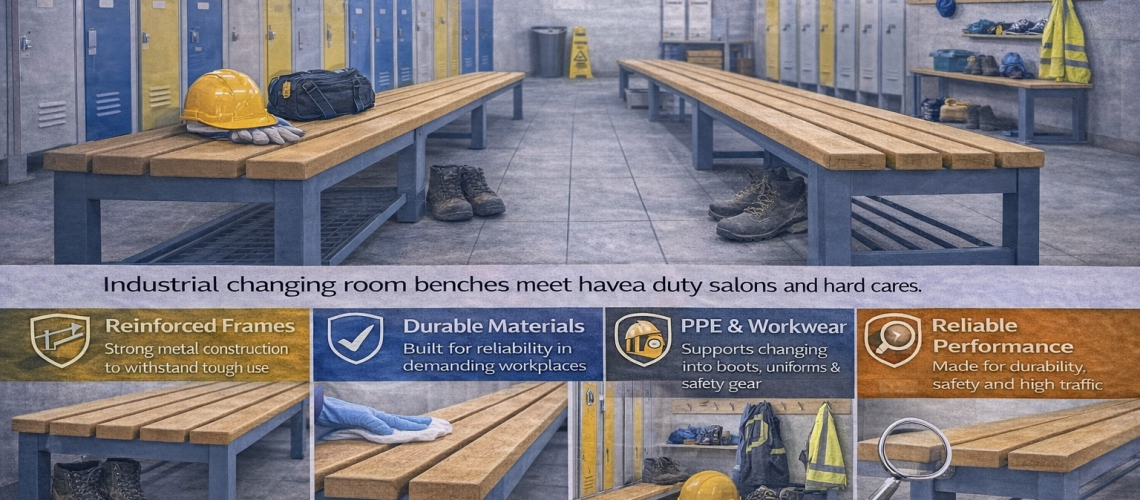
Not every changing room bench is designed for the same level of use. In workplaces, factories, warehouses and industrial staff areas, seating often needs to cope with heavier traffic, tougher conditions and more demanding daily routines. That is where heavy duty benches come in.
These benches are built for environments where durability matters more. Staff may be changing into uniforms, storing PPE nearby, carrying tools or equipment, and moving through the space in workwear and safety footwear. In this kind of setting, bench seating must be strong, stable and practical over the long term.
This guide explains what makes a bench heavy duty, where these benches work best and how to choose the right specification for workplace and industrial environments.
What is a heavy duty bench?
A heavy duty bench is designed to withstand tougher use than a standard bench in a light-duty changing room. The focus is on strength, structural stability, durability and suitability for demanding environments. These benches are made to cope with frequent use, heavier loads and harsher day-to-day conditions.
They are often used in:
- industrial workplaces
- factories and production sites
- warehouses and logistics centres
- engineering and trade environments
- staff welfare and PPE changing areas
- operational sites with high footfall
In these settings, a standard light-duty bench may not deliver the level of reliability needed over time.
Why heavy duty seating matters in industrial environments
Industrial and workplace changing areas often place more pressure on seating than office or school environments. Users may sit while changing heavy boots, sorting workwear or putting on PPE. Bags, tools and clothing may be placed on or around the bench. Traffic can also be more concentrated at shift changes, which increases wear on both the seating and the wider layout.
Heavy duty benches help by:
- coping better with regular heavy use
- providing stronger structural support
- remaining more stable over time
- supporting changing routines in demanding workplaces
- reducing the chance of early wear and damage
- offering better long-term value in high-use settings
When the environment is demanding, stronger seating is often the more practical investment.
Where heavy duty benches are most useful
Heavy duty benches are not needed everywhere, but they are particularly useful in environments where user behaviour, clothing or equipment place more pressure on the seating.
Factories and manufacturing sites
Staff changing rooms in production environments often need robust seating that can handle uniforms, safety footwear and repeated shift-based use.
Warehouses and logistics operations
Warehouse staff may need benches in welfare rooms, locker areas and PPE zones where bags, boots and high-visibility clothing are part of daily routines.
Engineering and trade settings
Changing areas in engineering, maintenance and operational spaces often require stronger bench systems because users may be handling heavier garments and equipment.
Public sector and service environments
Heavy duty benches can also suit environments such as transport depots, utilities and other operational workplaces where staff welfare facilities need to stand up to repeated use.
What makes a bench heavy duty?
The difference is not only in appearance. A heavy duty bench is defined by the quality and strength of its construction. Several factors usually contribute to this.
- stronger frame construction
- robust support legs or wall fixings
- durable seat materials suited to the environment
- designs intended for repeated daily loading
- better long-term resistance to wear and impact
It is the overall build quality and suitability for the environment that make the real difference, not simply a thicker-looking frame.
Materials for heavy duty benches
Material choice still matters in heavy duty seating. A bench may be structurally strong, but it also needs a surface that suits the conditions of the room. In industrial workplaces, the best solution often combines durable seat materials with a strong metal frame.
Common options include:
- wood slat tops for dry workplace environments where a traditional and durable finish is suitable
- plastic or polymer tops for wetter or hygiene-sensitive settings where easier cleaning is important
- heavy duty metal frames for structural strength and long-term performance
The correct material mix depends on whether the room is dry, wet, hygiene-focused or exposed to heavier operational wear.
Heavy duty benches for PPE and workwear areas
Many industrial changing rooms are linked to PPE use. Staff may need to change footwear, store workwear nearby or organise personal clothing separately from site clothing. In these situations, the bench often works as part of a wider welfare and changing system rather than as a simple seat on its own.
Heavy duty benches are useful here because they can support:
- changing in and out of work boots
- handling bulky uniforms or protective clothing
- staff movement during shift changes
- adjacent use with hooks, rails or lockers
- more demanding daily routines
Where workwear changes are part of the site routine, bench specification becomes more important.
Freestanding vs wall mounted heavy duty benches
Heavy duty benches may be freestanding or wall mounted, depending on the environment and how the room is planned.
Freestanding heavy duty benches are often preferred in industrial settings because they provide strong support, familiar layout planning and flexible use in larger open changing areas.
Wall mounted heavy duty benches can work well where cleaning access is especially important, but they need secure fixing into a suitable structure and careful planning around load and installation.
The best option depends on whether flexibility, structural simplicity or easier floor cleaning matters most.
Layout and spacing still matter
A heavy duty bench still needs the right layout around it. Stronger seating does not fix poor room planning. If benches are placed too close to lockers, walls or walkways, the space can still become awkward, unsafe or difficult to clean.
Industrial changing areas should still allow:
- clear movement during peak use
- enough room for staff changing footwear and clothing
- access to lockers, hooks or rails nearby
- practical cleaning around and beneath the seating
- space for bags, boots and workwear without blocking routes
Bench strength and room layout should always be planned together.
Cleaning and maintenance in industrial settings
Industrial welfare areas may be dry, damp or simply dirtier because of the nature of the work. That means heavy duty benches should also be chosen with cleaning and maintenance in mind. A bench that is strong but awkward to clean may still create problems over time.
Useful features often include:
- materials suited to the cleaning routine
- durable finishes that hold up under regular use
- designs that do not trap unnecessary dirt
- easy inspection of the frame and support structure
- good access beneath and around the bench
Maintenance should be straightforward enough to support long-term use in a busy facility.
Common mistakes to avoid
Several problems come up when workplace and industrial benches are specified too lightly.
- choosing light-duty benches for high-use staff areas
- focusing only on initial cost rather than long-term durability
- ignoring the role of PPE, boots and workwear in how the bench will be used
- using unsuitable materials for wet or hygiene-focused conditions
- forgetting that cleaning access and layout still matter
- assuming all changing rooms place the same demands on seating
The right specification usually comes from understanding the real working environment rather than choosing by appearance alone.
How to choose the right heavy duty bench
Before specifying a heavy duty bench, it helps to ask:
- How demanding is the environment?
- Will users be changing into boots, uniforms or PPE?
- Is the room dry, damp or wet?
- Does the seating need to cope with shift-change peaks?
- Would hooks, rails or under-storage improve the setup?
- Can the bench be cleaned and maintained easily?
These questions help turn a general “heavy duty” request into a more practical and useful specification.
Final thoughts on heavy duty benches for workplaces and industry
Heavy duty benches are designed for environments where seating must do more. In factories, warehouses, industrial sites and demanding staff welfare areas, stronger benches can deliver better durability, better stability and better long-term value.
The best result comes from matching the bench to the real pressures of the environment. When strength, materials, layout and maintenance are all considered together, the seating becomes a more reliable part of the wider changing room or welfare setup.
Explore our locker range, review locker lock options, and browse more guidance on the Total Locker Service blog.
“`
Discover more from Blog Total Locker Service
Subscribe to get the latest posts sent to your email.