Common Mistakes to Avoid When Ordering Engraved Tags and Nameplates
April 8, 2026
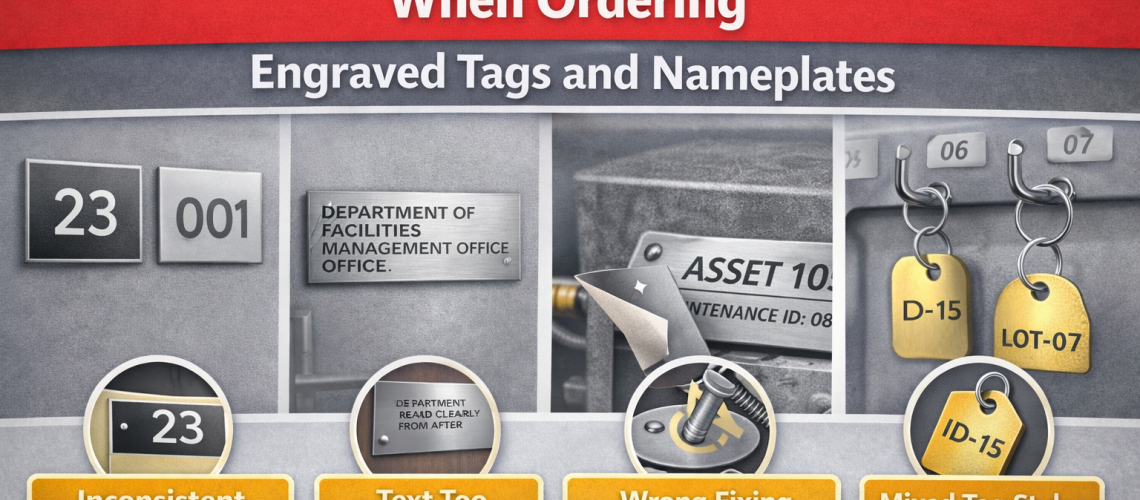
Ordering engraved tags and nameplates can seem straightforward. You choose the size, add the wording, select the material and place the order. In practice, a few small mistakes at the planning stage can lead to problems later. Text may be too small to read. The fixing method may not suit the surface. Numbering might become inconsistent. Sometimes, the finished tags look fine on their own but do not work well as part of a wider site system.
Thinking beyond the individual plate helps avoid these issues. Engraved products are usually part of a wider identification system used across lockers, doors, cabinets, key systems, storage bays and equipment. Poor planning can make that system harder to manage and more expensive to correct.
Ordering without a clear identification plan
One of the most common mistakes is placing orders before the identification system has been planned properly. Focusing only on the product itself can lead to inconsistencies later.
- locker numbering
- room nameplates
- cabinet labels
- key identification systems
- asset and equipment tags
A clear structure makes the system easier to manage and expand over time.
Choosing wording that is too long
Trying to include too much information on a small plate can reduce clarity. Long text forces smaller font sizes, making the plate harder to read.
Simple wording usually works best. A locker plate may only need a number, while a room sign may only need a name.
Not checking the reading distance
Some plates are read up close, while others need to be visible from several metres away. Choosing the wrong size can make identification difficult.
- who needs to read it
- how far away they will be
- lighting conditions
- speed of recognition required
Ignoring the surface the plate will be fixed to
The surface affects both installation and performance. A smooth locker door behaves differently from textured equipment or damp environments.
- surface type
- indoor or outdoor use
- moisture levels
- cleaning routines
- fixing compatibility
Picking the wrong material for the environment
Plastic and metal both have advantages, but the environment should guide the choice. A quiet office setting places different demands on a plate compared to an industrial site.
Using inconsistent numbering or naming
Inconsistency makes systems harder to understand and manage. Small differences in numbering, wording or format can build up over time.
- mixed numbering formats
- varying abbreviations
- inconsistent layouts
- different sizing or styles
Not leaving room for future additions
Planning only for current requirements can create problems later. Expanding a system without a clear structure can lead to confusion or rework.
- allow space in numbering systems
- group by area or department
- plan for future growth
Forgetting about fixing requirements
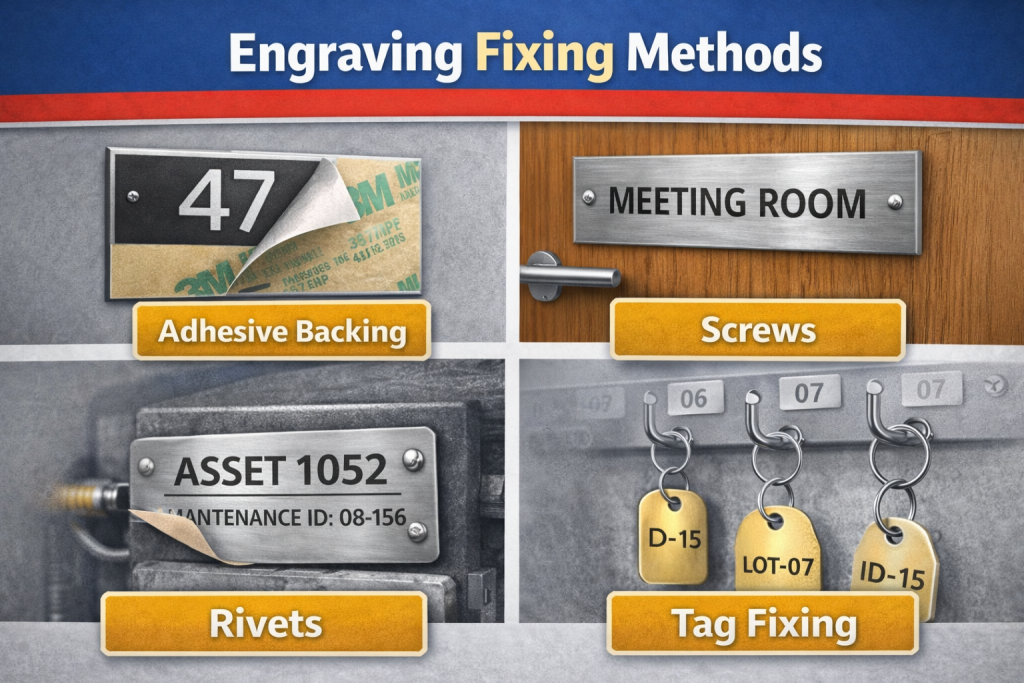
The fixing method plays a major role in how well a plate performs. Choosing it too late can lead to installation problems.
- adhesive backing
- screw fixing
- rivet fixing
- hanging fittings
Approving text without checking it carefully
Errors in spelling, numbering or formatting are often permanent once engraved. Careful checking is essential before production.
- spelling
- number sequences
- code accuracy
- consistency
Overlooking legibility and contrast
Even correct information can be hard to read if the layout is too busy or the contrast is poor. Clear, simple designs usually perform best.
Ordering each item as a one-off
Repeated one-off orders can lead to variation over time. Grouped orders help maintain consistency across a site.
Focusing only on appearance
Appearance matters, but function is just as important. A plate must be readable, durable and suited to its environment.
Not thinking about who will use the system
Designing with the end user in mind improves clarity and usability. Different users may need different types of information.
- staff
- visitors
- contractors
- maintenance teams
Treating engraved identification as an afterthought
Leaving identification until the end of a project can lead to compromises. Planning it early results in better consistency and performance.
How to order more effectively
- define what needs to be identified
- consider where plates will be used
- choose clear wording
- select appropriate sizes
- match materials to the environment
- choose suitable fixing methods
- plan for future expansion
Getting better results from engraved tags and nameplates
Engraved tags and nameplates support organisation and improve clarity across workplaces. Careful planning helps ensure they remain effective, consistent and professional over time.
A considered approach at the ordering stage leads to better long-term results and fewer issues later.
Discover more from Blog Total Locker Service
Subscribe to get the latest posts sent to your email.