The Complete Guide to Engraved Tags, Nameplates and Workplace Identification (UK)
April 9, 2026
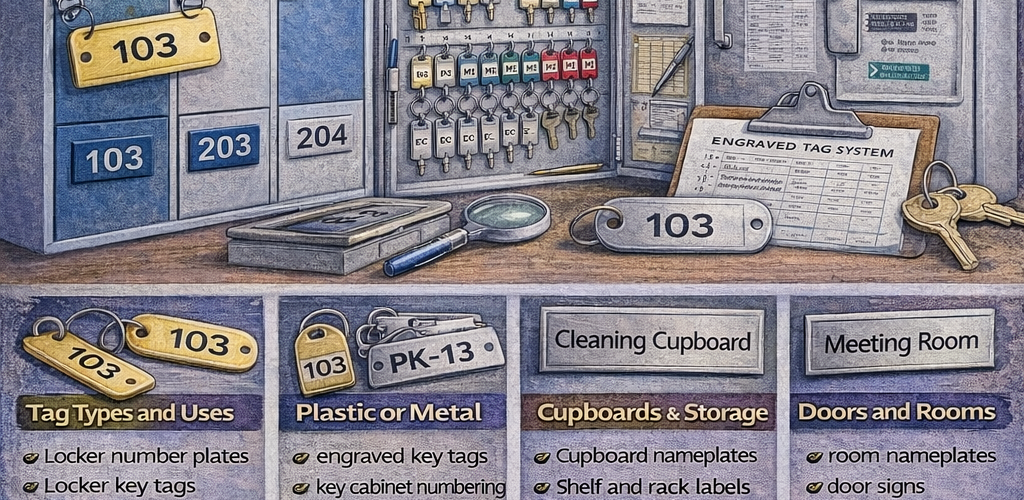
Engraved tags and nameplates are small products, but they make a big difference to how a workplace functions. They help people find the right locker, the right key, the right room, the right cupboard and the right piece of equipment. They also help businesses stay organised as sites grow, teams change and storage systems become more complex.
When identification is unclear, everyday tasks slow down. Staff waste time checking the wrong locker. Keys are returned to the wrong hook. Equipment is harder to track. Storage areas become less consistent. The workplace starts to rely on memory instead of structure. That is when small identification issues turn into larger operational problems.
A good engraved identification system solves those problems in a durable and professional way. It supports day-to-day organisation, helps users move around a site with less confusion and creates a clearer framework for lockers, keys, cupboards, cabinets, rooms, storage areas and assets.
At Total Locker Service, we supply engraved products for schools, offices, gyms, warehouses, healthcare settings and many other environments across the UK. This guide brings together the key principles behind engraved tags, nameplates and workplace identification systems, including materials, fixing methods, design, numbering, ordering and long-term planning.
If you are reviewing locker numbering, key management, cabinet labelling or wider workplace identification, this page is designed to act as the main reference point.
What are engraved tags and nameplates?
Engraved tags and nameplates are identification products with text, numbers or codes cut into the surface so that the information remains visible over time. They are commonly made from plastic laminate or metal and are used where clear, durable labelling is needed.
They can be fixed to a surface, such as a locker door or cupboard, or they can hang from an item, such as a key or mobile asset.
Common examples include:
- locker number plates
- engraved key fobs
- cupboard and cabinet labels
- room nameplates
- equipment and asset plates
- storage bay markers
- shelving and rack identifiers
Unlike temporary labels, handwritten notes or printed stickers, engraved products are intended to remain readable for longer-term use. That makes them particularly useful in workplaces where consistency and durability matter.
Why workplace identification matters
Identification is easy to overlook when a site is being planned or upgraded. However, once lockers, keys, rooms and storage areas are in daily use, the quality of the identification system quickly becomes important.
Clear workplace identification helps with:
- faster wayfinding
- better storage organisation
- easier locker and key allocation
- improved maintenance reporting
- more reliable asset control
- stronger presentation across a site
- simpler onboarding for new staff
- easier expansion in future
In practical terms, it means people spend less time guessing and more time getting on with the task.
It also helps businesses move away from informal systems. Instead of relying on memory, verbal instructions or local habits, identification becomes part of a repeatable structure that works even when users change.
Where engraved tags and nameplates are used
Engraved products are used across a wide range of workplace settings. The exact application varies, but the purpose is usually the same: to identify something clearly and consistently.
Lockers
Lockers are one of the most common uses for engraved tags. Number plates help users find the correct locker quickly and help staff allocate, record and maintain lockers more effectively.
Typical environments include:
- schools and colleges
- offices
- gyms and leisure centres
- healthcare staff changing areas
- warehouses and industrial welfare areas
Key cabinets and key systems
Engraved key tags are widely used in key cabinets to identify rooms, cupboards, gates, access points and storage areas. A good key tag system improves speed, control and return accuracy.
Cupboards and cabinets
Cupboard labels and cabinet nameplates help staff understand where items belong and what each storage area is for. This is especially useful in shared workplaces, healthcare sites and facilities environments.
Doors and rooms
Engraved room signs and door nameplates support wayfinding and presentation. They can identify meeting rooms, plant rooms, stores, staff rooms, offices and controlled areas.
Equipment and assets
Asset tags and equipment plates provide a durable way to identify machinery, maintenance items, mobile assets and fixed workplace equipment.
Shelving, bays and storage systems
Warehouses and stores often use engraved labels to identify shelves, bays, racks and storage positions, making it easier to find stock or equipment quickly.
The main types of engraved products
Not all engraved products are the same. The best option depends on what is being identified, how it will be used and what environment it will be in.
Engraved locker tags
These are usually fixed plates with a number or short code. Their main purpose is quick recognition.
Engraved key tags
These are usually hanging tags attached to keys by rings or loops. They need to be compact, readable and easy to handle.
Engraved nameplates
These are often used on doors, cupboards, cabinets and equipment. They may include names, room titles, functions or short identifiers.
Engraved asset tags
These are usually used for equipment and maintenance references. They may need a more robust finish depending on the setting.
Engraved hanging tags
These are used where the tag moves with the item, such as keys, removable tools or portable equipment.
Engraved fixed plates
These are attached directly to a surface such as a locker door, cabinet front, wall, machine or shelf.
Plastic or metal: which material is best?
One of the most common questions is whether plastic or metal is the better choice. The answer depends on the job.
Plastic engraved tags
Plastic engraved tags are often made from layered engraving laminate. When engraved, the top surface reveals a contrasting core colour, creating clear and readable text.
Plastic is often the best choice for:
- locker numbers
- key tags
- cupboard labels
- general workplace identification
- larger quantity projects
- indoor environments
Benefits include:
- lightweight handling
- strong contrast
- cost-effectiveness
- ease of standardisation
- suitability for large runs
Metal engraved tags
Metal tags offer a more solid and sometimes more robust feel. They are often used where a heavier-duty or more premium appearance is required.
Metal is often a good option for:
- industrial equipment
- machinery labels
- higher-spec fixed plates
- tougher environments
- some premium room signage
Benefits include:
- stronger physical feel
- suitability for harsher environments
- robust appearance
- durable fixed-use applications
Choosing properly
Material should be chosen based on:
- environment
- handling frequency
- fixing method
- appearance requirements
- scale of the project
- budget
For most locker systems and key cabinets, plastic is often the most practical choice. For heavier-duty equipment or selected premium plates, metal may be more suitable.
Choosing the right fixing method
The way an engraved product is attached matters almost as much as the material.
Common fixing options include:
- self-adhesive backing
- screw fixing
- rivet fixing
- holes for rings
- slots for hooks or ties
- plain tags for separate attachment
Adhesive fixing
Adhesive-backed tags are often suitable for smooth indoor surfaces such as locker doors, cupboards and internal cabinets. They provide a neat finish and are quick to apply.
Screw fixing
Screw fixing is often used for more permanent plates on doors, walls, machinery or heavier-duty cabinets.
Rivet fixing
Rivet fixing is often used on equipment or industrial surfaces where tamper resistance and permanence matter.
Hanging attachment
Key tags and mobile identification tags usually need holes or slots for split rings, chains or loops.
Choosing the right method
The correct fixing depends on:
- the surface
- whether the item is fixed or mobile
- expected wear
- moisture or cleaning conditions
- whether the tag may need replacing later
A strong tag with the wrong fixing method is still the wrong product.
How to design engraved tags for readability
A tag only works if people can read it easily. Readability should always take priority over decoration.
Keep wording short
Shorter wording allows larger, clearer text. Most workplace tags work better when they include only essential information.
Prioritise the key identifier
The most important information should stand out first.
For example:
- locker numbers should be the largest element
- room names should be more prominent than subtext
- key references should be clear at a glance
Choose size based on distance
A cupboard label read close up can be smaller than a room sign viewed from across a corridor. The design needs to match how the tag will actually be used.
Use clear text styles
Straightforward, clean lettering is best. Decorative text styles usually reduce clarity.
Avoid overcrowding
Too many lines, tight spacing and cluttered layouts make tags harder to read. Good spacing improves both appearance and usability.
Use strong contrast
Contrast between text and background helps users recognise information quickly, especially in busy or lower-light environments.
Keep formatting consistent
A consistent structure across all tags makes the whole site easier to understand and easier to maintain.
Numbering, naming and layout systems
A good engraved identification system is not just about one tag. It is about the wider structure behind the tags.
Numbering systems
Numbering is often the simplest and most effective way to identify lockers, keys, bays and other repeated items.
Common structures include:
- 1, 2, 3
- 01, 02, 03
- 001, 002, 003
- A01, A02, A03
- WH-01, WH-02
The best structure depends on:
- system size
- whether expansion is likely
- how many locations are involved
- whether areas need prefixes
Naming systems
Names are useful when users need immediate context, such as:
- Meeting Room
- Cleaning Store
- First Aid Cupboard
- Plant Room
Names should stay short and consistent.
Layout structure
Layout includes:
- text size
- alignment
- spacing
- tag shape
- placement on the surface
If numbering, naming and layout are planned together, the final system is easier to use and easier to expand.
Best practice for lockers
Locker identification works best when it is:
- simple
- consistent
- easy to scan
- easy to expand
- easy to report for maintenance
Best practice usually includes:
- large numbers
- consistent formatting
- uniform placement
- a numbering plan agreed before ordering
- enough flexibility for future lockers
Straightforward numbering such as 01 to 40 or 001 to 120 is usually easier to manage than more complex naming.
Prefixes can be useful where there are multiple locker rooms or zones.
Best practice for key cabinets
Key cabinets need a clear relationship between:
- hook numbers
- tag wording
- cabinet chart
- control records
Best practice usually includes:
- short codes or short names
- clear grouping by area or function
- consistent numbering structure
- tags that suit cabinet spacing
- high contrast for quick selection
- tag references that match cabinet records exactly
A good key tag system improves selection speed, return accuracy and accountability.
Best practice for cupboards, rooms and storage areas
Cupboards, rooms and storage areas usually benefit from clear names rather than complex codes, although a short code may still be useful for management systems.
Best practice often includes:
- short functional wording
- consistent naming style
- strong readability
- fixed plates matched to the environment
- a structure that makes sense across the building
Examples include:
- Staff Room
- Cleaning Cupboard
- Secure Store
- Medical Supplies
- IT Storage
Choosing by industry
Different sectors place different demands on engraved tags and nameplates.
Schools
Schools often need:
- locker numbering
- classroom storage labels
- key tags
- cupboard labels
Priorities are usually:
- clarity
- durability
- cost-effectiveness
- ease of replacement
Gyms and leisure centres
Gyms often need:
- locker numbers
- key tags
- staff-only cupboard labels
- back-of-house room identifiers
Priorities are usually:
- clear visibility
- regular-use durability
- suitability for changing areas
- tidy presentation
Warehouses and industrial sites
Warehouses often need:
- bay labels
- shelf identifiers
- equipment plates
- key tags
- storage references
Priorities are usually:
- visibility
- logical zoning
- robust fixing
- clearer operational structure
Healthcare settings
Healthcare environments often need:
- cupboard labels
- cabinet labels
- key tags
- locker numbers
- room nameplates
Priorities are usually:
- accuracy
- consistency
- clean presentation
- compatibility with regular cleaning
- structured storage identification
How to order engraved tags properly
Ordering tends to go smoothly when the right information is supplied early.
Information usually needed:
- what the tag is for
- quantity
- size or approximate size
- shape or format
- wording or numbering
- material
- fixing method
- environment
- whether it needs to match an existing set
For numbered sets
It helps to specify:
- start and end numbers
- leading zeros if needed
- prefixes or suffixes
- any skipped numbers
- whether the numbering matches an existing system
For named tags
Provide a clear list in a clean format and check spelling carefully before production.
Common mistakes to avoid
Many identification problems come from small avoidable errors.
- ordering without a wider numbering plan
- using wording that is too long
- choosing a tag that is too small
- forgetting to specify fixing details
- mixing numbering styles
- failing to plan for future expansion
- using inconsistent abbreviations
- ordering replacements that do not match the existing system
- focusing on appearance more than clarity
Planning for replacement and future growth
A good identification system should still work when the site changes.
That may mean:
- adding more lockers
- extending a key cabinet
- renaming rooms
- replacing damaged tags
- fitting new cupboards or storage areas
- expanding into new zones or departments
A scalable structure helps make future additions easier.
Good planning includes:
- leaving room in numbering
- using repeatable naming styles
- keeping tag sizes and formats consistent
- recording the structure used
- matching new orders to the existing standard
Why engraved identification outperforms temporary labelling
Temporary labels can be useful during short-term changes, but they are usually less effective for long-term workplace identification.
Compared with stickers, paper labels or handwritten notes, engraved products usually offer:
- longer lifespan
- stronger presentation
- better consistency
- clearer readability over time
- improved resistance to wear
- a more permanent system
That makes them a sensible investment for businesses that want a workplace system that remains clear and manageable.
Building a complete workplace identification system
The strongest results come when engraved products are not treated as isolated items. A better approach is to view them as part of one connected workplace identification system.
That means linking together:
- lockers
- key cabinets
- cupboards
- rooms
- storage areas
- equipment
- maintenance references
When that system is planned properly, staff spend less time searching, correcting and explaining. The workplace becomes easier to use because the structure is visible.
Internal cluster map for this topic
This pillar page sits at the centre of the engraved tags and workplace identification cluster. Supporting topics include:
- Custom Engraved Key Fobs: Types, Sizes and Uses for Hotels, Gyms and Workplaces
- Laser Engraved Metal vs Plastic Tags: Which Is Better for Your Application?
- How to Use Engraved Tags for Workplace Organisation and Asset Identification
- Engraved Nameplates for Lockers, Doors and Equipment: Where They Work Best
- How to Choose the Right Fixing Method for Engraved Tags and Nameplates
- Common Mistakes to Avoid When Ordering Engraved Tags and Nameplates
- Plastic or Metal Engraved Tags: Which Material Is Best for the Job?
- How to Plan an Engraved Tag System for Workplaces (Numbering, Naming and Layout)
- How to Order Engraved Tags: Sizes, Formats and What Information You Need to Provide
- Engraved Tags by Industry: Best Options for Schools, Gyms, Warehouses and Healthcare
- How to Design Engraved Tags for Maximum Readability and Clarity
- Engraved Tags for Lockers: Best Practices for Numbering and Identification
- Engraved Key Tags: Best Systems for Key Cabinets and Asset Control
This structure helps build a full topic cluster around engraved tags, engraved nameplates and workplace identification in the UK.
Final thoughts
Engraved tags and nameplates are often treated as finishing details, but they are much more important than that. They reinforce the structure of a workplace. In daily use, they help people find, identify, return and manage items correctly. This makes lockers easier to allocate, keys easier to control, cupboards easier to organise and storage systems easier to scale.
The best results come from treating identification as a system rather than a collection of one-off labels. That means planning numbering, naming, materials, fixing methods and layout together. It also means choosing products that fit the real demands of the environment, whether that is a school locker bank, a gym changing room, a warehouse shelf system or a healthcare cupboard layout.
For UK workplaces that want clearer organisation, better presentation and stronger day-to-day usability, engraved tags and nameplates remain one of the simplest and most effective tools available.
Discover more from Blog Total Locker Service
Subscribe to get the latest posts sent to your email.