Commercial Locker Costs UK: What Affects Locker Prices?
September 22, 2026
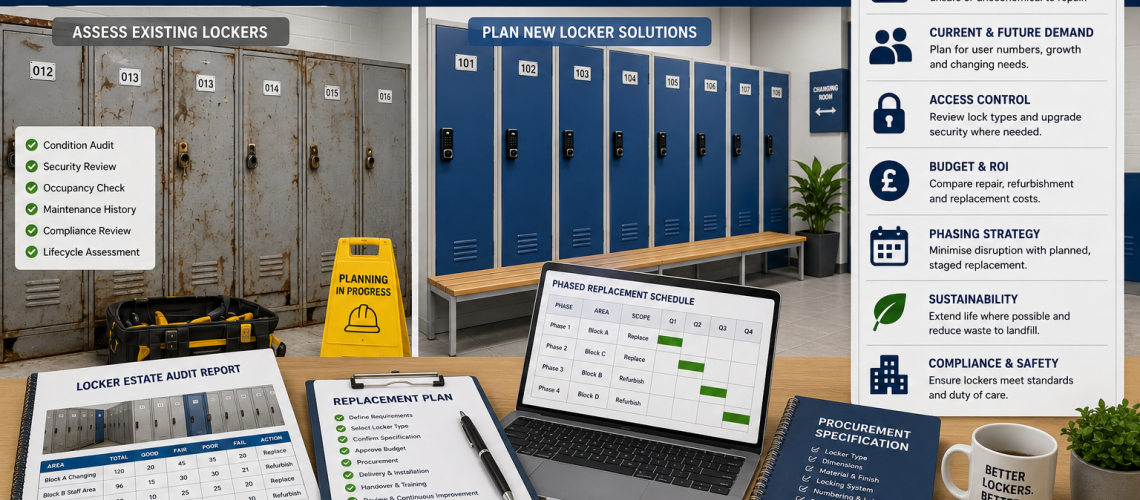
The cost of a commercial locker project depends on much more than the price of an individual locker cabinet. Size, compartment configuration, material, quantity, lock type, accessories, delivery, installation and the amount of customisation can all change the final quotation.
That means there is no single useful answer to the question “How much does a commercial locker cost in the UK?” without first defining what the locker needs to do.
A small multi-tier locker with a simple key lock is a very different product from a full-height laminate-door locker, wet-area plastic locker, heated locker, charging locker or made-to-order PPE system. Comparing prices without comparing the specification can therefore be misleading.
This guide explains the main factors that affect commercial locker prices in the UK, what should be included when comparing quotations and how to avoid choosing a locker system on purchase price alone. It is intended for buyers who have moved beyond the first stage of choosing lockers and now need to understand how specification decisions change the final project cost.
If you are still deciding which type of locker is suitable, begin with the How to Choose Lockers UK Buying and Selection Guide and the Locker Materials Explained guide. Once the basic locker type, material and storage requirement are understood, this commercial cost guide can be used to compare the price implications of configuration, locks, accessories, delivery, installation and whole-life ownership.
If you already know the type of locker you require, browse the commercial locker range. If you have a project specification, quantities, photographs or room plans, you can also request a commercial locker quotation.
Where Commercial Locker Cost Fits in the Buying Process
Locker cost is easiest to assess after the basic requirement has been defined. A useful buying sequence is:
- Choose the locker type and intended use. Start with the main locker buying guide.
- Choose a suitable material. Compare steel, laminate and plastic options in Locker Materials Explained.
- Understand what changes the project price. Use this guide to compare cabinet configuration, lock choice, quantity, accessories, delivery, installation and long-term ownership costs.
- Choose the required appearance. Use the Locker Colours and Finishes UK guide where door colours, carcase finishes, laminate options or matching existing lockers matter.
- Define the installation details. Use the Locker Stands, Plinths and Sloping Tops guide to decide how the finished locker bank should meet the floor, cleaning and top-of-locker requirements.
This sequence helps prevent price comparisons from being made before the product requirement is clear. The objective is not to find the lowest headline unit price, but to compare lockers that are genuinely suitable for the same job.
Quick Answer: What Affects the Cost of Commercial Lockers?
The main factors affecting commercial locker cost are:
- locker size;
- number and size of compartments;
- single-tier or multi-tier configuration;
- locker material;
- construction quality;
- quantity ordered;
- locking system;
- stands, plinths and sloping tops;
- internal shelves, hooks and rails;
- numbering and identification;
- colour and finish;
- delivery location and site access;
- installation requirements;
- made-to-order modifications;
- electrical, charging, heating or specialist equipment;
- future replacement parts and servicing;
- and expected working life.
The cheapest locker quotation is not necessarily the lowest-cost locker system. Compare like-for-like specifications and consider the complete project and lifecycle cost.
Why Commercial Locker Prices Vary So Much
Commercial lockers are not one standard product. Even lockers that appear similar in a photograph can differ substantially in dimensions, construction, door material, internal fittings, lock type and intended environment.
One quotation may be for a basic steel cabinet with a standard key lock. Another may include laminate doors, electronic access, stands, numbering, delivery to a restricted site and full installation.
Looking only at the total quotation value therefore tells you very little unless the underlying specification is the same.
| Cost area | What can change the price? | Why it matters |
|---|---|---|
| Locker cabinet | Size, construction and compartment layout | Determines the core product specification |
| Material | Steel, laminate, plastic or specialist construction | Changes suitability, appearance and durability |
| Locks | Key, hasp, combination, coin, digital or RFID | Can alter both purchase and operating cost |
| Accessories | Stands, plinths, sloping tops, shelves and identification | Adds functionality and affects installation |
| Quantity | Number of cabinets or compartments | Affects product, transport and project economics |
| Delivery | Location, vehicle access and unloading requirements | Can materially change project cost |
| Installation | Quantity, fixing, layout and site conditions | May be a significant separate project component |
| Customisation | Non-standard dimensions, fittings or specialist functions | Can require design and manufacturing work |
| Lifecycle | Maintenance, parts, keys, locks and expected service life | Determines long-term rather than initial cost |
1. Locker Size Affects Price
The physical size of a locker affects the amount of material required to manufacture it, but external dimensions are only one part of the calculation.
A full-height locker, compact personal-effects locker, deep PPE locker and large equipment locker may all have different construction requirements.
Before comparing prices, determine what users actually need to store. Buying the smallest locker because it has the lowest unit cost can be expensive if users cannot fit normal bags, clothing, boots or equipment inside it.
For detailed guidance on compartment dimensions, widths, depths and configurations, use the Locker Sizes and Dimensions Guide.
2. Single-Tier and Multi-Tier Lockers Have Different Cost Structures
Locker pricing should not be compared only by cabinet.
A single-tier cabinet may provide storage for one user, while a two-tier, four-tier or six-tier cabinet can provide storage for several users within a similar footprint.
This creates two useful cost measures:
- cost per cabinet; and
- cost per usable user compartment.
Neither figure should be used alone. Increasing the number of compartments can reduce the amount of storage available to each user.
A six-tier locker may appear efficient when measured by cost per compartment, but it is poor value if staff need to store coats, bags, workwear or PPE that will not fit inside those compartments.
Choose the configuration around real storage requirements first, then compare the cost of products that actually meet that requirement.
3. The Number of Lockers Required Changes the Project Cost
Quantity is an obvious cost driver, but organisations often confuse the number of locker cabinets with the number of people who need storage.
For example, one four-door locker cabinet may provide four user compartments. A project for 200 users does not therefore automatically require 200 physical cabinets.
The required quantity depends on:
- number of users;
- whether lockers are individually assigned;
- whether lockers are shared or day-use;
- shift patterns;
- peak simultaneous demand;
- compartment configuration;
- spare capacity;
- future growth;
- and whether different user groups require different locker types.
If quantity rather than price is the main uncertainty, use the How Many Lockers Do You Need? Capacity Planning Guide before requesting prices.
4. Locker Material Can Have a Major Effect on Price
Steel, laminate and plastic lockers should not be compared as though they are interchangeable products.
Steel lockers
Steel lockers are widely used in schools, workplaces, factories, warehouses and general commercial environments. They are available in many configurations and often provide a practical starting point for dry indoor locations.
See the current metal locker ranges for examples.
Laminate lockers
Laminate doors or more decorative constructions can be selected where appearance, finish or resistance to day-to-day wear is important. The specification may cost more than a straightforward steel locker, but price should be considered alongside the intended environment and required finish.
Plastic lockers
Plastic lockers are often selected for damp, wet or corrosive environments where material suitability is more important than achieving the lowest initial purchase price.
Examples are available in the plastic and weather-resistant locker range.
For the detailed material comparison, see Locker Materials Explained: Steel, Laminate and Plastic Lockers.
5. Lock Choice Can Change Both Purchase and Operating Cost
The locking system can make a significant difference to the cost of a locker project.
Common options include:
- key-operated locks;
- padlock or hasp fittings;
- mechanical combination locks;
- coin-operated locks;
- electronic keypad locks;
- RFID locks;
- and centrally managed smart access systems.
The correct comparison is not simply “which lock is cheapest?”
A locking system can also create ongoing costs through:
- replacement keys;
- lost credentials;
- master keys;
- batteries;
- resetting codes;
- replacement lock bodies;
- software;
- administration;
- and maintenance.
The separate Locker Lock Cost UK guide compares the purchase, maintenance and lifecycle implications of individual lock types.
For RFID, software and managed-access systems, see the Locker Access System Cost Guide UK.
This commercial locker cost guide therefore treats the lock as one component of the complete locker quotation rather than duplicating those detailed locking comparisons.
6. Stands, Plinths and Sloping Tops Add to the Specification
The cabinet is not always the complete locker installation.
Depending on the site, a project may also require:
- locker stands;
- support frames;
- plinths;
- sloping tops;
- infill panels;
- end panels;
- bench seating;
- or other finishing components.
These items should appear clearly on a quotation rather than being assumed to be included in the cabinet price.
They may be required for practical reasons such as cleaning access, appearance, installation height or preventing objects being stored on top of lockers.
When comparing quotations, check whether one supplier has included these components and another has priced only the basic locker cabinet. For the specification differences between floor-level lockers, raised stands, plinths and sloping tops, see Locker Stands, Plinths and Sloping Tops: Which Do You Need?
7. Internal Locker Fittings Can Affect Price
Two lockers with the same external dimensions may have different internal specifications.
Possible fittings include:
- shelves;
- coat hooks;
- garment rails;
- internal dividers;
- shoe compartments;
- clean-and-dirty partitions;
- helmet storage;
- equipment supports;
- and specialist PPE arrangements.
If these are required, specify them before requesting quotations. Otherwise, two prices may represent different products.
8. Locker Numbering and Identification Should Be Included in the Comparison
Locker numbering can look like a small detail during procurement but can become important once hundreds of compartments need to be allocated, serviced and maintained.
Identification options may include:
- number plates;
- engraved labels;
- door numbers;
- department references;
- key numbering;
- and asset identification.
Check whether numbering is included in the locker price, supplied separately or expected to be completed after installation.
9. Colour and Finish Can Affect Locker Cost
Standard product colours may be included within a normal range, while non-standard colours, special finishes or decorative doors can alter the quotation.
Before requesting a specific colour purely for appearance, establish whether it is a standard option for the chosen locker range.
For larger projects, also consider whether future matching lockers may be required. A highly specialised finish can make later expansion more difficult if the range or colour changes.
If colour matching, laminate finishes, contrasting doors, RAL references or future expansion are important, use the Locker Colours and Finishes UK guide before the final quotation is agreed.
10. Delivery Is Part of the Real Locker Project Cost
A quotation for lockers is not complete until the delivery requirement is understood.
Delivery cost can depend on:
- quantity;
- locker dimensions;
- number of pallets or transport units;
- delivery postcode;
- vehicle restrictions;
- site opening hours;
- unloading arrangements;
- restricted access;
- and whether a specific delivery arrangement is required.
When comparing suppliers, establish whether delivery is included, excluded or shown as a separate line item.
A locker price that appears lower can cease to be cheaper once delivery is added.
11. Installation Cost Depends on the Site as Well as the Lockers
Installation should normally be treated as a project requirement rather than assumed to be a fixed amount per locker.
Factors can include:
- number of cabinets;
- locker size and weight;
- locker layout;
- whether banks need joining;
- fixing requirements;
- stands or plinths;
- sloping tops;
- building access;
- stairs or lifts;
- distance from unloading point to installation area;
- working-hour restrictions;
- existing equipment;
- and whether the room is ready for installation.
A straightforward installation into a prepared room is not equivalent to a refurbishment project involving existing lockers, restricted access or complex site conditions.
The main planning considerations are covered in the Locker Planning UK guide.
12. Made-to-Order Lockers Need a Different Cost Comparison
Standard lockers normally use established dimensions, components and manufacturing processes. Bespoke lockers can require additional design, production setup, special materials or non-standard components.
Made-to-order requirements might include:
- non-standard height, width or depth;
- unusual compartment layouts;
- special internal fittings;
- equipment-specific storage;
- special locking systems;
- charging;
- heating;
- ventilation;
- special identification;
- or a particular material and finish.
Where an established standard product can satisfy the requirement, it may provide a simpler purchasing route. Where the requirement genuinely cannot be met by a standard locker, bespoke manufacture may be justified.
See the made-to-order locker range and project guide for the information required when requesting a bespoke quotation.
13. Specialist Locker Functions Can Change the Cost Significantly
A locker designed only to store personal belongings is much simpler than a specialist system that also needs to charge devices, dry clothing or accommodate unusual equipment.
Examples include:
- charging lockers;
- heated lockers;
- PPE lockers;
- garment lockers;
- clean-and-dirty lockers;
- large equipment lockers;
- RFID-managed locker systems;
- and specialist emergency-service storage.
The correct comparison is with another product providing the same function, not with the cheapest standard personal-storage locker.
14. Replacement Parts and Repairability Affect Long-Term Cost
A commercial locker is a serviceable asset. Locks, keys, hinges, number plates and other components can wear, become damaged or need replacement during the life of the installation.
Before buying a large locker system, consider whether replacement components are available and whether the product can be maintained rather than discarded when a relatively small part fails.
Total Locker Service supplies replacement locker parts and provides locker parts, repair and service support for existing installations.
A slightly higher initial purchase cost can sometimes be justified where the product has stronger parts availability, greater repairability or a longer realistic service life.
15. Locker Lifespan Changes the Meaning of Price
Purchase price is only the first cost of a locker system.
Over time, the organisation may also incur costs for:
- replacement keys;
- replacement locks;
- batteries;
- door and hinge repairs;
- cleaning;
- servicing;
- refurbishment;
- administration;
- replacement components;
- and eventual replacement of the locker itself.
A locker that remains serviceable for longer can have a lower annualised cost even when its original purchase price is higher.
The detailed lifecycle subject already has its own page. See How Long Do Lockers Last? Locker Lifespan and Lifecycle Cost.
Commercial Locker Purchase Price vs Whole-Life Cost
A simple way to think about locker cost is to separate initial project expenditure from ongoing ownership cost.
| Initial project costs | Ongoing ownership costs |
|---|---|
| Locker cabinets | Replacement keys |
| Locks | Replacement locks |
| Accessories | Batteries or credentials where applicable |
| Numbering | Repair parts |
| Delivery | Maintenance |
| Installation | Administration |
| Site preparation | Refurbishment |
| Customisation | Eventual replacement |
For a long-term project, both columns matter.
Once the specification has been narrowed down, use the commercial locker quotation form to provide quantities, dimensions, lock requirements, accessories, delivery information and installation needs so the quotation can be based on the complete project rather than a generic cabinet price.
How to Compare Two Commercial Locker Quotations
Do not compare only the total at the bottom of the quotation.
Check that both suppliers are pricing the same requirement.
| Check | Questions to ask |
|---|---|
| Quantity | Are both quotations for the same number of cabinets and user compartments? |
| Dimensions | Are height, width and depth equivalent? |
| Internal capacity | Will both products hold the required belongings? |
| Configuration | Are both products single-tier, two-tier or the same multi-tier format? |
| Material | Are the cabinet and door materials equivalent? |
| Locks | Is the same lock type included? |
| Accessories | Are stands, plinths or sloping tops included? |
| Numbering | Is identification included? |
| Delivery | Is delivery included and based on the correct postcode and site conditions? |
| Installation | Is installation included, excluded or optional? |
| Warranty | What warranty applies to the product and components? |
| Parts | Are replacement keys, locks and other parts available? |
| Lead time | Are both quotations based on acceptable project timescales? |
| VAT | Are you comparing figures on the same VAT basis? |
Compare Cost Per Usable Locker Position, Not Just Cost Per Cabinet
For multi-tier lockers, the cabinet price alone can be a poor comparison.
A useful calculation is:
Cost per usable user position = complete comparable locker cost ÷ number of suitable user compartments
The word usable matters.
If a locker bank provides 100 compartments but 30 are too small for normal user belongings, treating all 100 as equivalent storage positions gives a misleading result.
Capacity should be based on compartments that genuinely satisfy the storage requirement.
Do Not Optimise Locker Cost Before Defining the Requirement
One of the easiest ways to waste money is to request prices before deciding what the lockers need to achieve.
Before obtaining quotations, define:
- who will use the lockers;
- how many users require storage;
- what they need to store;
- whether use is assigned or shared;
- the available room dimensions;
- the installation environment;
- the preferred locker material;
- the required compartment size;
- the locking method;
- any accessories;
- whether installation is required;
- and the required project timescale.
For the wider selection process, start with the How to Choose Lockers UK Buying and Selection Guide.
A Better Way to Reduce Locker Costs
Reducing cost does not necessarily mean selecting the cheapest available locker.
Better cost control normally comes from removing specification that is not needed while preserving the features that are important.
Examples might include:
- using a standard dimension where a bespoke size is unnecessary;
- choosing an appropriate multi-tier configuration rather than oversized compartments;
- using different locker sizes for different user groups;
- selecting a simple lock where advanced access management is not required;
- avoiding decorative upgrades that provide no operational value;
- retaining and repairing serviceable existing lockers where appropriate;
- and defining the site and delivery requirements before ordering.
The objective is not to remove useful specification. It is to avoid paying for features that do not solve a real requirement.
When a More Expensive Locker Can Be Better Value
A higher-priced product can be the better commercial choice when the additional cost buys something the project genuinely needs.
Examples include:
- a material better suited to moisture or heavy cleaning;
- a larger compartment that accommodates actual user belongings;
- stronger construction for intensive use;
- a locking system that reduces administrative workload;
- replaceable components;
- greater availability of spare parts;
- a finish suitable for the intended environment;
- or a longer realistic service life.
The important question is not whether one locker costs more. It is whether the additional specification creates useful value for the organisation.
Common Locker Pricing Mistakes
- Comparing cabinet prices without comparing cabinet dimensions.
- Comparing cost per cabinet when the number of user compartments differs.
- Choosing the cheapest compartment without checking whether belongings fit.
- Ignoring locker material and installation environment.
- Comparing a basic key lock with an electronic or RFID system as though they provide the same functionality.
- Forgetting stands, plinths or sloping tops.
- Forgetting numbering or identification.
- Assuming delivery is included.
- Assuming installation is included.
- Ignoring site-access restrictions.
- Specifying bespoke lockers where a standard range would work.
- Choosing standard lockers where a genuinely specialist requirement makes them unsuitable.
- Ignoring replacement key and lock costs.
- Ignoring the availability of repair parts.
- Ignoring expected locker lifespan.
- Using headline unit price as the only procurement measure.
Information to Provide When Requesting a Locker Price
A detailed enquiry makes it easier to obtain a quotation that reflects the real requirement.
- site or organisation type;
- delivery postcode;
- number of users;
- approximate number of lockers or compartments;
- items being stored;
- preferred locker dimensions, if known;
- available wall or room dimensions;
- preferred material;
- preferred lock type;
- whether lockers are assigned or shared;
- required accessories;
- numbering requirements;
- whether installation is required;
- any access restrictions;
- required delivery or completion date;
- and photographs, drawings or specifications where available.
You do not need to know the exact locker model before making an enquiry. The commercial locker quote form allows you to provide the information you already have so suitable options can be identified.
Commercial Locker Cost Checklist
- Have we defined what users need to store?
- Do we know approximately how many users require storage?
- Have we decided whether lockers are assigned or shared?
- Are the proposed compartments large enough?
- Are we comparing the same dimensions?
- Are we comparing the same material?
- Are we comparing the same lock specification?
- Are stands or plinths required?
- Are sloping tops required?
- Are shelves, hooks or rails required?
- Is numbering included?
- Is delivery included?
- Is installation included?
- Have site-access requirements been considered?
- Is the specification standard or made to order?
- Are replacement parts available?
- Have we considered replacement keys or lock maintenance?
- Have we considered realistic service life?
- Are all quotations being compared on the same VAT basis?
- Does the cheapest quotation actually meet the complete requirement?
Related Commercial Locker Buying Guides
Use these guides in sequence where appropriate, from choosing the locker through to final specification, installation details and long-term ownership.
- How to Choose Lockers UK – start here for the main buying and selection process.
- Locker Materials Explained – compare steel, laminate and plastic lockers before comparing price.
- Locker Sizes and Dimensions Guide – choose suitable widths, depths and compartment configurations.
- Locker Capacity Planning – calculate the number of usable locker positions required.
- Locker Colours and Finishes UK – specify door colours, carcase finishes, laminate options and future colour matching.
- Locker Stands, Plinths and Sloping Tops – choose the base and top arrangement for the finished installation.
- Locker Lock Cost UK – compare the purchase and lifecycle implications of different lock types.
- Locker Access System Cost Guide UK – understand RFID, software and managed-access costs.
- Locker Lifespan and Lifecycle Cost – compare whole-life value rather than purchase price alone.
- Made-to-Order Lockers – specialist and bespoke locker projects.
- Locker Parts – replacement components for existing installations.
- Locker Parts, Repairs and Service – maintenance and repair support.
- Commercial Lockers – compare current locker ranges and product options.
Commercial Locker Costs FAQs
How much do commercial lockers cost in the UK?
Commercial locker prices vary according to size, material, compartment configuration, quantity, locking system, accessories, delivery, installation and customisation. A meaningful price normally requires a defined project specification rather than a generic unit-price estimate.
What has the biggest effect on locker price?
The locker construction, material, size, configuration, quantity and locking system are major cost factors. Delivery, installation, stands, plinths, sloping tops, numbering and bespoke requirements can also change the total project cost.
Are multi-tier lockers cheaper?
Multi-tier lockers can provide more user compartments within a given cabinet footprint, but the correct comparison depends on whether the resulting compartments are large enough for the intended belongings. Cost per usable user position is often more informative than cabinet price alone.
Do locker locks affect the price?
Yes. Key locks, padlock fittings, mechanical combination locks, electronic locks, RFID systems and smart access systems have different purchase, maintenance and management requirements. The correct lock should be selected according to how the lockers will be operated.
Is locker delivery normally included in the price?
This depends on the quotation. Always check whether delivery is included, excluded or shown separately and make sure the delivery cost reflects the correct postcode, quantity and site-access requirements.
Is locker installation included in the purchase price?
Installation may be included, optional or separately quoted depending on the supplier and project. Installation cost depends on locker quantity, layout, fixing requirements, accessories, building access and site conditions.
Do bespoke lockers cost more than standard lockers?
Made-to-order lockers can require additional design, manufacturing setup, non-standard materials or specialist components. Where a standard locker meets the requirement it may offer a simpler purchasing route, while genuine specialist requirements may justify bespoke manufacture.
Should I choose the cheapest locker quotation?
Not without confirming that the quotations are genuinely comparable. Check dimensions, material, lock type, accessories, delivery, installation, parts availability and expected service life before deciding which quotation provides the best value for the project.
How can I reduce the cost of a locker project?
Start by defining the actual storage requirement. Cost can sometimes be reduced by using standard dimensions, selecting an efficient compartment configuration, avoiding unnecessary specification and choosing a lock system appropriate to the operating model rather than automatically selecting the most complex option.
What information is needed for a commercial locker quotation?
Useful information includes the number of users or lockers, delivery postcode, items being stored, available space, preferred material, lock type, accessories, installation requirement and required project date. Photographs, drawings and specifications can also help.
Get a Commercial Locker Quotation
Commercial locker pricing is most useful when it is based on the real project requirement rather than an approximate generic unit price.
Define the users, storage requirement, quantity, dimensions, material, lock type and installation conditions first. This makes it much easier to compare quotations on a genuine like-for-like basis.
Browse the commercial locker range to compare suitable product types, or request a commercial locker quotation once you have the quantities, dimensions, material, lock choice and installation requirements available. A defined specification makes it much easier to compare the real project cost on a like-for-like basis.
For advice, call 01284 749211 or email sales@totallocker.co.uk.
Discover more from Blog Total Locker Service
Subscribe to get the latest posts sent to your email.