Locker Sizes and Dimensions Guide (UK)
March 12, 2026
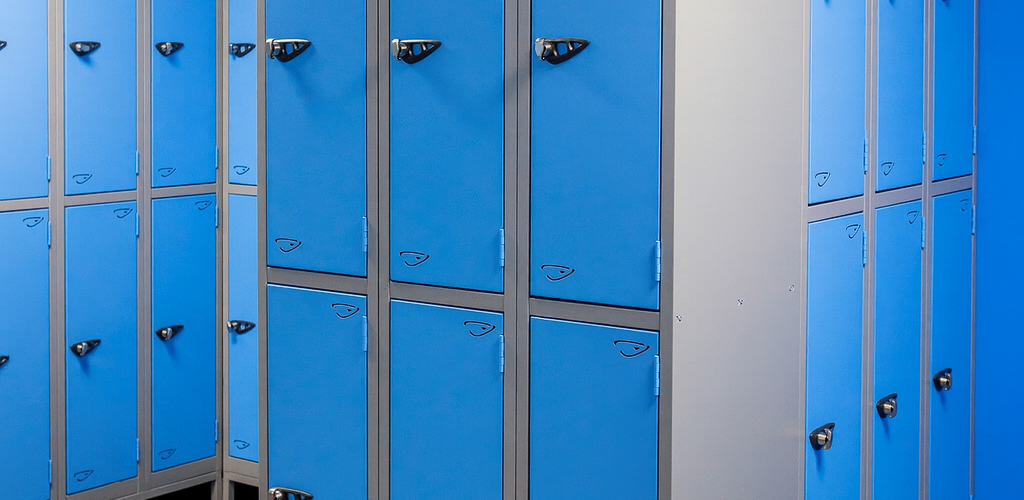
Choosing the correct locker size starts with what users actually need to store. Height, width and depth matter, but the external cabinet dimensions are only part of the decision. Compartment size, door configuration, internal fittings, locker depth and the available room space all affect whether a locker will work in everyday use.
There is no single standard locker size that is right for every UK school, workplace, factory, warehouse, gym or changing room. A full-height locker and a six-tier locker may have similar overall cabinet dimensions while providing completely different storage space for each user.
For help choosing locker dimensions and configurations, contact Total Locker Service, a UK supplier of locker and storage products.
This guide explains locker dimensions, compartment configurations, single-tier and multi-tier lockers, width, depth, height and how to choose locker sizes for bags, coats, workwear, PPE, schools, workplaces, leisure facilities and device storage.
If you already know the type of locker required and want to compare current products and exact dimensions, browse our commercial locker range.
Quick Answer: What Locker Size Do You Need?
Start with the largest item users regularly need to put inside the locker. Then decide how many users need storage and choose the smallest practical compartment that comfortably accommodates those belongings.
- Identify what users actually need to store.
- Measure representative bags, coats, PPE or equipment.
- Decide whether hanging space is required.
- Determine how many users need storage.
- Decide whether lockers are assigned or shared.
- Choose a preliminary locker configuration.
- Check internal compartment dimensions.
- Check the clear door opening.
- Check locker width and depth against the room.
- Allow for shelves, hooks, rails and lock bodies.
- Confirm the exact manufacturer’s dimensions before ordering.
The correct locker size is normally the smallest practical compartment that comfortably holds what the user genuinely needs to store.
Locker Dimensions Explained
Locker dimensions are normally described using height, width and depth.
| Dimension | What it means | Why it matters |
|---|---|---|
| Height | Vertical cabinet measurement | Determines overall fit and available vertical storage |
| Width | Measurement across the locker front | Affects storage width and how many cabinets fit along a wall |
| Depth | Front-to-back cabinet measurement | Affects storage capacity and room projection |
| Compartment height | Usable vertical space for one user | Important for coats, uniforms and bags |
| Compartment width | Usable internal width | Important for bags, helmets and equipment |
| Compartment depth | Usable front-to-back internal space | Important for backpacks, PPE, boots and bulky items |
External Dimensions vs Internal Locker Dimensions
Do not assume the external dimensions tell you exactly how much usable storage is available inside each compartment.
Internal space can be reduced by:
- shelves;
- coat hooks;
- garment rails;
- internal dividers;
- shoe compartments;
- clean and dirty partitions;
- charging equipment;
- lock bodies;
- and the construction of the locker door.
Where storage capacity is important, check the manufacturer’s actual internal dimensions and clear door opening rather than relying on the external cabinet size alone.
Locker Size vs Locker Configuration
Locker size and locker configuration are related, but they are not the same thing.
A locker cabinet can be divided into one large compartment or several smaller compartments. Increasing the number of doors normally increases user capacity but reduces the amount of storage available to each user.
| Configuration | Typical use | Main advantage | Main limitation |
|---|---|---|---|
| Single tier | Coats, uniforms, workwear and large bags | Maximum storage per user | Fewer users per cabinet |
| Two tier | Bags, clothing and general belongings | Good balance of space and capacity | Less hanging height |
| Three tier | Medium personal storage | More users per cabinet | Reduced vertical space |
| Four tier | Personal items and smaller bags | High user density | Limited garment storage |
| Five or six tier | Compact belongings and valuables | Maximum compartment count | Small storage volume per user |
| Z locker | Garments and personal belongings | Hanging space with increased capacity | Compartment shape must suit the belongings |
| Specialist locker | PPE, boots, tools or devices | Designed around a specific task | Less flexible for unrelated storage |
Single-Tier Locker Sizes
Single-tier lockers provide one large compartment through most or all of the locker cabinet height.
They are particularly useful for:
- coats;
- uniforms;
- overalls;
- workwear;
- larger backpacks;
- sports clothing;
- and belongings requiring vertical hanging space.
The main trade-off is capacity. A cabinet containing one full-height compartment serves one user rather than two, four or six users.
Two-Tier Locker Sizes
Two-tier lockers divide the locker column between two users and can provide a useful compromise between storage space and user capacity.
Typical contents include:
- backpacks;
- handbags;
- folded clothing;
- shoes;
- personal belongings;
- and smaller workwear items.
Two-tier lockers are often useful where users need more than small-item storage but do not require full-height hanging space.
Three-Tier and Four-Tier Locker Sizes
Three-tier and four-tier lockers increase the number of individual compartments within a locker bank while retaining more usable space than very high-tier lockers.
They can suit schools, offices, gyms, leisure facilities, staff areas and general personal storage where users do not need to hang full-length garments.
Door count alone does not tell you whether the compartment is large enough. Always compare the actual internal dimensions with the belongings users need to store.
Five-Tier and Six-Tier Locker Sizes
Five-tier and six-tier lockers maximise compartment numbers within a given amount of wall space.
They work best for relatively compact belongings such as:
- phones;
- wallets;
- keys;
- small bags;
- personal effects;
- and temporary day-use storage.
The risk is maximising capacity on paper while creating compartments that are too small for everyday belongings. Test representative bags and items before ordering a large installation.
Z Locker Sizes
Z lockers use shaped interlocking compartments to provide more vertical hanging space per user than simple rectangular multi-tier lockers while serving more users than conventional full-height lockers.
They can work well for workplaces where hanging garments are required but available wall length limits the number of conventional full-height lockers.
Because the internal compartment shape is different, check the proposed bags, clothing and footwear against the actual product before ordering.
Start With What Users Need to Store
| Items being stored | Main size consideration |
|---|---|
| Coats | Vertical hanging space |
| Backpacks | Internal width, depth and door opening |
| Handbags | Compartment width and depth |
| Books and folders | Internal height, width and shelf arrangement |
| Workwear | Vertical space and ventilation |
| Safety boots | Usable floor area |
| Helmets | Internal width and depth |
| PPE | Total shape and volume of the equipment set |
| Laptop bags | Internal dimensions and door opening |
| Phones and valuables | Compact compartment may be sufficient |
| Sports kit | Bag, clothing and footwear volume |
Measure Real Bags and Equipment
For larger projects, measuring representative belongings before choosing a locker can prevent an expensive sizing mistake.
Examples include:
- a normal school backpack;
- a staff laptop bag;
- a winter coat;
- work boots;
- a hard hat;
- a full PPE set;
- a sports bag;
- or the largest regular item expected on site.
Allow enough room for users to insert and remove the belongings comfortably. An item that technically fits only when compressed or turned awkwardly is not a good everyday storage solution.
Locker Width
Locker width affects both internal storage and how many cabinets fit along a wall.
Wider compartments can make it easier to store backpacks, helmets, equipment cases and bulky clothing. Narrower lockers can increase the number of cabinets along a wall, but only where the resulting internal compartment remains practical.
Locker Depth
Locker depth affects both usable storage space and how far the cabinet projects into the room.
Common commercial locker depths include approximately 300 mm, 450 mm and 600 mm, although exact dimensions vary by manufacturer and locker range.
| Depth | Typical use | Main consideration |
|---|---|---|
| Around 300 mm | Compact belongings and restricted spaces | Check that bags actually fit |
| Around 450 mm | General workplace, school and staff storage | Useful general-purpose starting point |
| Around 600 mm | PPE, coats, workwear and larger bags | Greater projection into the room |
There is no universal best depth. Choose it from the belongings and the room together.
For the dedicated comparison, see What Depth Locker Do I Need?.
Locker Height
Overall cabinet height should not be confused with individual compartment height.
A tall locker divided into six compartments gives each user far less vertical storage than the same cabinet configured as one full-height compartment.
Vertical space is particularly important where users store coats, overalls, uniforms or other garments that need to hang rather than be folded.
Door Opening Size Matters
An item can theoretically fit inside a locker but still be difficult to pass through the door opening.
Check clear opening dimensions where users store bulky items including:
- helmets;
- wide backpacks;
- tool cases;
- large boots;
- sports equipment;
- and protective equipment.
Assigned vs Shared Locker Sizes
Assigned lockers
Assigned users may leave possessions in the locker for longer periods and can therefore require more room for clothing, shoes, work equipment and personal items.
Shared and day-use lockers
Shared users may need storage only while they are on site. Smaller compartments can sometimes work well, but only where they still accommodate the actual belongings users bring.
Do not use shared operation as a reason to specify compartments that are impractically small.
Locker Size vs Number of Users
There is always a trade-off between individual storage size and the total number of users a locker bank can serve.
- Larger compartments provide more storage but serve fewer users.
- Smaller compartments increase user numbers but reduce storage capacity.
- Mixed configurations can serve different user groups better than one universal size.
If your main question is the number of lockers rather than their dimensions, use our How Many Lockers Do You Need? Capacity Planning Guide.
Consider Mixed Locker Sizes
Not every user needs the same compartment size.
A mixed installation might include:
- full-height lockers for coats and uniforms;
- two-tier lockers for bags and personal items;
- small compartments for visitors or day users;
- PPE lockers for industrial staff;
- and specialist device lockers for laptops and tablets.
This can provide better overall capacity than forcing every user group into the same locker format.
Locker Sizes for Schools
School locker sizes should reflect pupil age and what students actually carry.
- school bags;
- books and folders;
- coats;
- lunch items;
- PE kit;
- sports footwear;
- specialist equipment;
- student reach;
- and available corridor or locker-room space.
A large quantity of small compartments is not efficient if normal school bags cannot fit comfortably.
For the wider education specification, see our School Lockers UK guide.
Locker Sizes for Workplaces
| User group | Typical storage |
|---|---|
| Office staff | Coat, laptop bag, backpack, shoes and personal belongings |
| Factory staff | Workwear, PPE, boots, helmet and personal clothing |
| Warehouse staff | Outerwear, bag, PPE and footwear |
| Hybrid workers | Day bag, laptop equipment, coat and temporary belongings |
| Changing-room users | Clothing, footwear, toiletries and workwear |
For complete workplace layouts, see our Workplace Locker Layout Guide UK.
Locker Sizes for Gyms and Leisure Centres
Gym and leisure users commonly need enough space for clothing, footwear, bags and personal belongings during temporary use.
Consider sports-bag size, winter coats, shoes, peak-time demand, lock type and whether the locker material suits the changing-room environment.
Do not assume that a compartment suitable for wallets and phones will also accommodate a complete gym bag and outdoor clothing.
Locker Sizes for PPE and Workwear
PPE often needs considerably more storage space than general personal belongings.
- hard hats;
- safety boots;
- high-visibility clothing;
- protective jackets;
- respiratory equipment;
- gloves;
- overalls;
- and personal clothing.
Where workwear and personal clothing need to be separated, the internal configuration may be more important than the overall cabinet size.
Locker Sizes for Laptops and Devices
Device lockers should be selected around the equipment rather than general personal-storage dimensions.
- largest laptop or tablet dimensions;
- protective case dimensions;
- power supply;
- charging equipment;
- cable space;
- door opening;
- and ventilation requirements.
If devices need charging while stored, use equipment designed for that purpose. Browse our charging lockers and cabinets.
How Locker Size Affects Room Layout
The locker cabinet is only one part of the space requirement.
A practical installation also needs to consider:
- locker depth;
- open locker doors;
- people standing in front of lockers;
- opposing locker banks;
- benches;
- room doors;
- columns;
- fixed services;
- cleaning access;
- and movement during busy periods.
Use the size guide to choose suitable locker dimensions, then use our Locker Planning UK guide and Locker Room Layout Planning Guide UK to position them within the room.
Calculate Locker Bank Width
Once a locker model has been selected, use its actual cabinet width to calculate the length of the locker bank.
Locker bank width = number of locker cabinets × actual cabinet width
Use cabinet quantity rather than compartment quantity. A four-door cabinet provides four user compartments but still occupies one cabinet width.
Also allow for finishing panels, corner conditions and other installation components required by the chosen range.
Do Not Confuse Cabinets with Compartments
This is a common planning mistake.
- 20 single-tier cabinets can provide 20 user compartments.
- 20 two-tier cabinets can provide 40 user compartments.
- 20 four-tier cabinets can provide 80 user compartments.
The wall space occupied may be similar where the cabinet widths are the same, but the amount of storage provided to each user is very different.
Accessibility and Locker Height
High multi-tier installations place some compartments higher or lower than others. Where users need easier access, allocation should consider reach, approach space and the operation of the lock and door.
Accessibility should be considered as part of the complete room design rather than from locker dimensions alone.
Should Every Locker Be the Same Size?
No. A uniform installation may look tidy and simplify purchasing, but different users often have different storage requirements.
- Office workers may need compact personal storage.
- Factory staff may need larger workwear compartments.
- Maintenance staff may need PPE storage.
- Visitors may need temporary day-use compartments.
- Device users may need specialist laptop or charging lockers.
A planned mixture of locker configurations can sometimes use the available space more efficiently than one locker type throughout the site.
Plan for Future Locker Requirements
Locker requirements can change as organisations grow or working patterns change.
- staff growth;
- changes in pupil numbers;
- hybrid working;
- new PPE requirements;
- uniform changes;
- future device storage;
- and additional matching lockers.
Future planning does not mean deliberately buying oversized lockers. It means avoiding a configuration that is already close to its practical limit when installed.
Common Locker Size Selection Mistakes
- Assuming there is one standard UK locker size.
- Choosing from external dimensions without checking internal space.
- Choosing by door count rather than stored items.
- Installing compartments too small for normal bags.
- Buying full-height lockers where only compact storage is required.
- Ignoring locker depth.
- Ignoring clear door-opening size.
- Forgetting shelves, hooks, rails and lock bodies.
- Assuming every user needs the same compartment size.
- Ignoring winter coats.
- Ignoring PPE, boots and helmets.
- Choosing dimensions without considering the room layout.
- Confusing cabinet quantity with compartment quantity.
- Using approximate dimensions instead of the selected manufacturer’s specification.
Locker Size Checklist
- What is the largest regular item users need to store?
- What is the largest normal bag?
- Are coats or uniforms stored?
- Is hanging space required?
- Are boots stored?
- Is PPE stored?
- Are helmets stored?
- Are laptops or devices stored?
- Is charging required?
- How many people need storage?
- Are lockers assigned or shared?
- How much internal height is required?
- How much internal width is required?
- How much internal depth is required?
- Is the door opening large enough?
- Are shelves or hooks required?
- How wide is the available wall run?
- How much room depth is available?
- Will benches be installed?
- Have the exact manufacturer’s dimensions been confirmed?
Related Locker Size and Planning Guides
- Commercial Lockers – compare current products and exact dimensions.
- How to Choose Lockers – main UK locker buying and selection guide.
- Locker Depth Guide – compare 300 mm, 450 mm and 600 mm depths.
- Locker Capacity Planning – calculate how many compartments are required.
- Workplace Locker Layout Guide – workplace sizing and layout.
- School Lockers UK – education-specific locker selection.
- Locker Planning UK – overall space, layout and installation planning.
- Locker Installation Planning UK – delivery, fixing and project coordination.
Locker Sizes and Dimensions FAQs
What is the standard locker size in the UK?
There is no single standard locker size used by every UK manufacturer. Dimensions vary according to the product range, material, compartment configuration and intended application.
How do I choose the correct locker size?
Start with the largest items users regularly need to store. Measure those belongings, establish the number of users and then choose a compartment configuration that provides sufficient internal space while fitting the available room.
Should I check internal or external locker dimensions?
Check both. External dimensions determine how the cabinet fits into the room, while internal compartment dimensions determine whether users can store their belongings comfortably.
What is the difference between single-tier and multi-tier lockers?
Single-tier lockers provide one larger compartment per locker column. Multi-tier lockers divide the column into two or more smaller compartments, increasing the number of users served within a similar cabinet footprint.
Are two-tier lockers a good general-purpose option?
Two-tier lockers can provide a useful balance between compartment size and user capacity where full-height hanging space is not required. Suitability still depends on the actual internal dimensions and intended belongings.
Are six-tier lockers suitable for bags?
That depends on the actual compartment and bag dimensions. High-tier lockers are best for compact storage, so representative bags should be measured before ordering.
How deep should a locker be?
Locker depth depends on the belongings being stored and the available room space. Shallower lockers reduce room projection, while deeper lockers provide greater storage capacity for bags, coats, PPE and workwear.
What locker size is best for coats?
Coats normally need suitable vertical hanging space, so full-height or appropriately shaped garment compartments are generally more practical than small multi-tier compartments.
What locker size is best for PPE?
PPE lockers should be selected around the complete equipment set. Helmets, boots, clothing and specialist protective equipment can require substantially more space than ordinary personal storage.
Should every user have the same locker size?
Not necessarily. Different users can have different storage requirements, so a mixed installation can combine larger garment lockers, smaller personal-storage compartments and specialist lockers.
Choose Locker Dimensions Around Real Use
There is no single locker size that is right for every school, workplace, gym or changing room. The correct specification begins with the belongings users actually need to store.
Measure representative items, determine how many users need storage and choose a configuration with enough usable internal space. Then check the resulting cabinet width and depth against the available room, door clearance, circulation and installation requirements.
For current products and exact dimensions, browse our commercial locker range.
For help selecting an appropriate locker size or configuration, call 01284 749211 or email sales@totallocker.co.uk.
Discover more from Blog Total Locker Service
Subscribe to get the latest posts sent to your email.