Choosing the Right Bench for Your Environment: A Practical Guide to Changing Room Seating
April 13, 2026
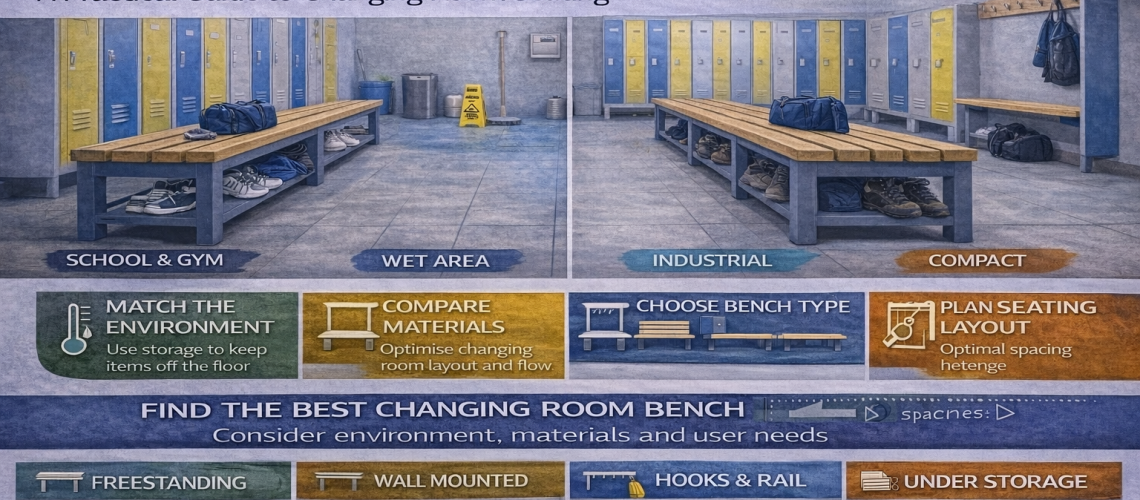
Choosing the right changing room bench is not only about picking a style you like. The best bench depends on where it will be used, who will use it and what the space needs to achieve each day. A bench that works well in a dry school changing room may not be the right choice for a wet leisure facility or an industrial staff area.
That is why bench selection works best when it starts with the environment. Materials, layout, hygiene demands, user behaviour and storage needs all play a part. When these factors are considered together, the result is usually a bench system that performs better, lasts longer and makes the room easier to use.
This guide brings the full bench decision process together. It explains how to match bench type, material and layout to the real demands of your environment so you can choose seating with more confidence.
Why environment should come first
Changing room benches are used in many different settings, but those settings do not place the same demands on the seating. Moisture, dirt, cleaning routines, daily traffic and the type of items users bring into the room can all change what the right bench looks like.
Starting with the environment helps you avoid common mistakes such as:
- choosing materials that do not suit the room conditions
- using a light-duty bench in a high-use workplace
- adding storage features that make cleaning harder
- selecting a layout that reduces movement space
- focusing on appearance before practical use
The best bench is the one that fits the real conditions of the room, not the one that only looks right on a product sheet.
Step one: define the type of environment
The first step is identifying what kind of changing space you are dealing with. Most bench decisions become easier once the room is clearly defined.
Common environments include:
- school and college changing rooms
- workplace welfare and staff changing areas
- gyms and leisure facilities
- wet-side pool or shower-adjacent spaces
- industrial and PPE changing environments
- compact mixed-use locker rooms
Each of these has different priorities. Some need stronger hygiene performance. Some need more storage. Some need heavier-duty seating. Some need layouts that support quick user turnover.
Step two: match the material to the conditions
Material choice is one of the biggest decisions. It affects hygiene, maintenance and how well the bench performs over time.
In general:
- wood benches suit many dry environments where a traditional appearance and comfortable seating surface are important
- plastic or polymer benches are often the strongest option in wet or hygiene-sensitive areas because they resist moisture and are easier to clean
- metal frames provide structural strength and are often used to support either wood or plastic seating surfaces
If the room is wet, the material needs to reflect that first. If it is dry, you usually have more flexibility.
Step three: decide what type of bench you actually need
Not all benches work in the same way. Some are simple seating units. Others combine seating with hooks, rails or storage. The right type depends on how the room is used and what users need around them while changing.
Common types include:
- freestanding benches for flexible layouts and more traditional seating arrangements
- wall mounted benches where easier cleaning access and clear floor space are priorities
- benches with hooks for coats, bags and everyday hanging needs
- benches with rails for more structured garment storage
- benches with storage underneath for shoes, bags and kit in more organised layouts
- heavy duty benches for industrial workplaces and demanding staff environments
The right choice depends on whether the bench needs to do one job well or support several practical needs in the same footprint.
Step four: think about who will use the bench
User behaviour matters just as much as the room itself. A bench for students, gym users and industrial workers may all look similar at first glance, but the real demands are different.
Ask practical questions such as:
- Will users be changing shoes, uniforms or full workwear?
- Do they need somewhere to place bags, towels or kit?
- Are they likely to bring wet items into the room?
- Will the room be used in short bursts or heavy shift-based waves?
- Do users need hooks, rails or nearby storage as part of the seating area?
The better you understand the people using the space, the easier it is to choose the right bench specification.
Step five: plan the layout around real movement
A good bench can still underperform in a poor layout. Seating should never be planned in isolation from the room. Space is needed for users to sit, stand, move and access lockers or hooks without creating congestion.
A strong layout should support:
- clear walkways through the changing room
- enough room to sit and reach belongings comfortably
- easy access to lockers and other storage nearby
- cleaning access around and beneath benches
- safe movement during busy periods
In smaller rooms, this often means every bench feature needs to justify the space it uses.
Step six: consider hygiene and cleaning from the start
Bench selection is not only about seating. It also affects how easy the room is to clean and maintain. High-contact surfaces need materials and layouts that support hygiene rather than work against it.
This is especially important in:
- wet leisure environments
- shared-use changing rooms
- schools and colleges
- healthcare-adjacent or hygiene-focused spaces
- workplaces with regular welfare room use
Benches that are easier to wipe down, easier to inspect and easier to clean around usually perform better over time.
Step seven: decide whether extra features add value or clutter
Hooks, rails and under-storage can all be very useful, but only when they support the real needs of the room. Added functionality should make the space more organised, not more complicated.
These features are often worthwhile when:
- users need somewhere obvious to place bags or shoes
- clothing needs to be hung close to the bench
- the room is compact and must use space efficiently
- the added storage still allows easy cleaning and clear circulation
They may be less useful when the room is already tight or when extra storage simply encourages clutter around the seating.
Choosing the right bench for common environments
Schools and colleges
School changing rooms often need durable, practical benches that cope with heavy daily use. Freestanding benches or bench systems with hooks can work well, provided the layout still allows clear movement and easy supervision.
Workplaces and staff welfare areas
Workplace benches often need to support coats, shoes, bags and changing routines. In some cases, under-bench storage or hooks add useful functionality. In heavier-use work environments, stronger construction may be needed.
Gyms and leisure facilities
These environments usually need benches that cope with shared use, changing turnover and regular cleaning. Wet-side spaces often benefit from moisture-resistant materials and easy-clean layouts, while dry-side gym areas may allow more flexibility.
Wet areas and poolside changing spaces
Moisture-resistant materials and strong hygiene performance come first here. Wall mounted or easy-clean bench systems may be especially useful where floor cleaning access matters.
Industrial and PPE environments
These spaces often need heavy duty benches with stronger frames, practical changing support and layouts that work during shift changes. Hooks, rails or nearby storage may also be important for workwear and protective clothing.
Common mistakes when choosing a bench
Several mistakes appear again and again when bench choice is made too quickly.
- choosing materials that do not suit the environment
- ignoring how heavily the room will be used
- adding features without checking layout impact
- focusing on appearance before hygiene and maintenance
- using standard benches where heavy duty seating is really needed
- forgetting that bench type and room spacing need to work together
The strongest specification usually comes from looking at the room as a complete system rather than as a list of separate products.
A simple decision checklist
Before making the final choice, ask:
- Is the environment wet, dry, industrial or hygiene-sensitive?
- What will users bring into the room?
- Do they need storage, hooks or rails near the seating?
- How important is easy cleaning access?
- Will the layout still work at peak use?
- Does the bench need to be standard or heavy duty?
- Will the material hold up well in the real conditions of the room?
If those questions are answered clearly, the right bench type is usually much easier to identify.
Final thoughts on choosing the right bench for your environment
The best changing room bench is the one that fits the environment properly. Materials, layout, hygiene, user behaviour and storage needs all play a role. When these factors are planned together, the seating becomes more practical, easier to maintain and better suited to everyday use.
Whether you are specifying benches for a school, workplace, gym, wet area or industrial changing room, the key is to match the bench to the real conditions rather than treating every room the same. That usually leads to better long-term performance and a more effective space overall.
Explore our locker range, review locker lock options, and browse more guidance on the Total Locker Service blog.
“`
Discover more from Blog Total Locker Service
Subscribe to get the latest posts sent to your email.