Workplace Lockers UK: Staff Storage, Security, Compliance and Layout Guide
March 31, 2026
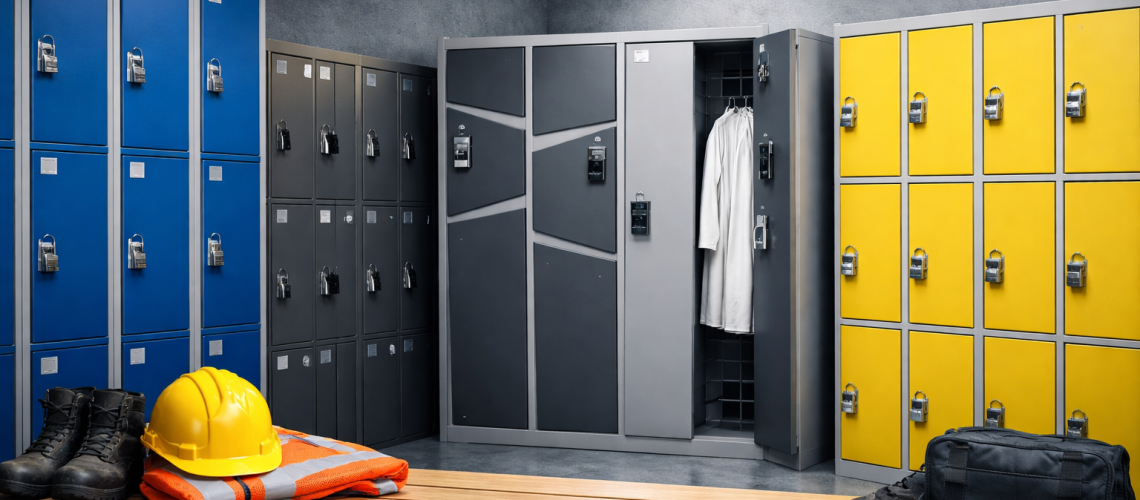
Workplace lockers help businesses create secure, organised and practical staff storage. They support day-to-day routines, protect personal belongings and make staff areas easier to manage. In many settings, they also play a part in hygiene, operational control and the overall presentation of the workplace.
This guide is designed as the main workplace lockers guide for the cluster. It sits between a broad locker explainer and a commercial product page. That means the focus here is on planning, layout, lock choice, staff use, changing-room flow, security and policy rather than on price-led buying terms. If you are comparing workplace lockers, looking at staff lockers or reviewing commercial staff storage for a live project, the dedicated workplace page can support the next step.
Across offices, warehouses, factories, leisure sites, healthcare settings and mixed-use workplaces, the right locker system should fit the people, the workflow and the room. A good installation supports security without creating unnecessary admin. It should also make the area function properly rather than simply fill a wall with doors.
In this pillar, we look at where workplace lockers are used, how sizes and door formats affect usability, which lock options suit different staff environments, how layouts shape changing rooms and welfare spaces, and how security and policy fit into procurement.
Why workplace lockers still matter
Even in flexible workplaces, staff still need secure space for coats, bags, phones, lunch items, uniforms, PPE and personal belongings. Without lockers, these items tend to end up under desks, on chairs, in corners or along circulation routes. That creates clutter, weakens security and makes staff areas feel less organised than they should.
Orderly storage solves more than one problem at once. Keeping personal property out of the way. It gives staff a predictable place to store what they need during the day. This also helps managers maintain tidier, safer and more professional staff areas. Where teams change clothes, rotate shifts or move between zones, lockers become even more important because the room has to support movement as well as storage.
There is also a wider workplace benefit. Staff facilities influence how a site feels to employees, contractors and visitors. A well-planned row of lockers, sensible circulation space and clear allocation rules all signal that the workplace is being run properly.
Where workplace lockers are used
The phrase workplace lockers covers a wide range of environments. The needs of an office team are different from those of a warehouse crew, a production workforce or staff using a shared changing room. That is why environment-led planning matters so much.
Office workplaces
Office lockers are often used in hybrid environments where not every employee has a fixed desk. Staff may need somewhere secure for laptops, bags, coats and personal items while they work in shared or hot-desk spaces. In these settings, the visual finish often matters alongside function. Lockers may be placed near receptions, breakouts, circulation areas or open-plan floors, so the design needs to feel suitable for the wider office interior.
Factories and production sites
Manufacturing and production environments usually need tougher storage and more operational thinking. Teams may need space for uniforms, work boots, tools, protective clothing or separate clean and used garments. Shift changes can also put pressure on the room, which means locker numbers, door styles and layout decisions need to support quick access without bottlenecks.
Warehouses and logistics settings
Warehouse staff lockers often sit inside welfare areas, entrance zones or staff changing rooms. Durability matters here, but so do practicality and cleaning access. Employees may arrive with outerwear, packed food, phones and work equipment, so the lockers need to match real storage needs rather than an assumed standard size.
Staff changing rooms
Changing areas create a more specific challenge because the room needs to support storage, movement, seating and privacy at the same time. In those spaces, locker selection cannot be separated from layout. Door openings, benches, aisle widths and the natural flow of users all affect whether the room works well in practice. For more detailed planning, see our guide to locker room layout and staff changing room layout.
Mixed-use and hybrid workplaces
Some businesses combine office, operational and welfare spaces in one site. A hybrid head office with warehouse staff, drivers, office teams and visitors may need more than one locker type. In those cases, a single product choice across all areas often leads to compromise. Better results usually come from matching each zone to its own use case.
A more detailed environment comparison can sit in the supporting article on offices, factories and warehouses, but the core principle stays the same: the best locker system is the one that reflects how the workplace actually runs.
How to choose workplace lockers without turning this into a generic buying guide
This page is intentionally workplace-specific. It is not trying to replace a broad locker buying guide that covers schools, gyms and every other sector. Instead, it focuses on the practical decisions that shape staff storage in working environments.
That means starting with use rather than with product labels. Ask what people need to store, how long they need access for, whether the lockers are assigned or shared, and what the surrounding room needs to do at peak times. Once those answers are clear, the right locker sizes, door formats, lock types and layout choices become much easier to define.
For live projects where product comparison is the next step, move from this guide to the dedicated workplace lockers page rather than forcing the hub to carry hard commercial intent.
Choosing sizes and door configurations
Locker size has a direct effect on usability. A unit that is too small quickly becomes frustrating. One that is too large may waste valuable floor space. Good planning comes from matching the compartment to the job.
In office environments, smaller personal storage lockers may be enough for a laptop bag, coat and everyday items. On factory or warehouse sites, staff may need room for bulky outerwear, footwear, uniforms or PPE. A welfare area used by shift workers may need a different format again, especially if users are changing in and out of workwear on site.
Single-door lockers
Single-door formats tend to suit users who need more internal height and better personal capacity. They are often useful where coats, uniforms or larger bags need to be stored.
Two-door and multi-door lockers
Two-door and multi-door options can increase user numbers within the same footprint. They work well where staff mainly store smaller items or where businesses want a compact day-use solution. The trade-off is reduced space per user, so they need to be selected carefully.
Z lockers and space-efficient formats
Some workplaces want a shape that gives better hanging length while still fitting more users into a bank. Z lockers and other space-efficient formats can help in that situation, especially when staff need room for clothing but the wall length is limited.
Clean and dirty separation
Where uniforms, PPE or protective garments are involved, it may be necessary to separate personal clothing from workwear, or clean items from used ones. This affects both the compartment style and the operational policy around the lockers. It is also one reason why not every workplace should use the same standard locker format.
If you want a more detailed planning page focused on dimensions and room fit, that should sit in the supporting cluster post about workplace locker sizes and layouts. From this pillar point of view, the key is simple: size follows use, and use has to be defined properly before procurement starts.
What lock options suit different staff environments?
Lock choice changes the daily experience of a locker installation. It affects convenience, admin workload, key control, user behaviour and the ability to manage access when problems arise. The right answer depends on who is using the lockers and how the workplace operates.
Standard key locks
Traditional key locks remain a straightforward choice for many assigned staff lockers. They are familiar and easy to understand. However, they also create an ongoing admin task because lost keys, spare keys and replacement requests have to be managed properly.
Padlock fittings
Hasp fittings allow staff to use their own padlock or one issued by the employer. This can reduce central key handling, although it may introduce inconsistency if the quality of padlocks varies from one user to another.
Mechanical combination locks
Combination locks remove the need for physical keys and can work well for shared-use or day-use staff storage. They are often attractive where managers want a simple non-powered option with less risk of lost keys.
Digital and electronic locks
Electronic systems can offer greater flexibility, especially in larger workplaces or hybrid offices. PIN access, RFID credentials, timed allocation and management override functions may all be useful depending on the site. A separate guide to locker lock types and locker security systems looks at wider comparisons, while this workplace hub focuses on staff-use scenarios.
Smart lockers for hybrid workplaces
Where occupancy changes daily and employees do not all attend at the same time, smart allocation may be worth considering. In those cases, smart lockers for hybrid workplaces can support temporary assignment, shared storage and easier management across office teams.
The best approach is to match lock type to user behaviour. A fixed workforce on assigned lockers may be well served by a simple keyed or mechanical system. By contrast, a hybrid office, mixed-use workplace or high-turnover environment may benefit from more flexible digital control.
Why layout matters as much as the locker itself
Good products still fail in bad layouts. A locker bank that looks fine on paper can become frustrating if doors clash, aisles narrow too much or benches block the natural route through the room. Planning has to account for how people move, not just for where the walls are.
This matters most in changing rooms and welfare areas. Staff may arrive at the same time, queue for access, change clothing, sit to remove footwear and carry bags through the space. When the layout ignores those patterns, the room feels cramped even if the total floor area appears reasonable.
Key layout questions
- How many people use the space at peak times?
- Do users need bench seating as well as storage?
- Will doors open into circulation routes?
- Can cleaning staff reach around and beneath the lockers easily?
- Is there a clear route from entrance to locker bank to changing area?
- Do different staff groups need separate zones?
- Does the layout support wet and dry separation where relevant?
These decisions influence the success of the project more than many buyers expect. For a deeper look at room planning, visit our guide to locker room layout. The companion post in this cluster should focus more tightly on staff-area sizing and configuration, but the principle remains the same: layout is part of the specification, not an afterthought.
Workplace locker security and theft prevention
Security is about more than the lock fitted to the door. It also includes the position of the lockers, the visibility of the area, the access rules, the management of overrides and the way incidents are handled. A strong product cannot compensate for poor process.
In practical terms, businesses should think about who allocates lockers, how spare access is controlled, what happens when keys are lost, how abandoned contents are dealt with and whether higher-risk areas need additional supervision. Lighting, sightlines and general management standards all support better outcomes.
If your main concern is theft reduction and staff reassurance, see our guide to workplace locker security and how to prevent locker theft. That page should remain the cluster home for theft-prevention intent, while this pillar keeps the broader overview.
Policy, searches and employee rights
Lockers sit at the intersection of facilities, security and staff policy. Once an employer provides storage, there needs to be clarity around access, searches, key control, abandoned property and the circumstances in which management can open a locker. This is where operational process becomes just as important as the hardware.
Employers should not assume that a locker policy can be improvised after installation. Clear rules help reduce disputes and make day-to-day administration easier. Staff should understand whether lockers are assigned or shared, whether inspections can take place, how keys or codes are managed, and what happens when an employee leaves or forgets their access method.
For the legal and policy side, read our article on employee locker rights UK and locker search policy. This pillar should support that page, not replace it. A separate supporting post on staff locker policies can then focus more tightly on practical workplace procedures such as access, searches and key control.
PPE, uniforms and clean practical staff storage
Some workplaces need more than a basic personal locker. Teams using uniforms, PPE, safety footwear or specialist garments may need storage that separates personal items from work clothing. In other cases, businesses may want lockers that help keep clean items apart from used ones or that support a specific routine before and after a shift.
This requirement is common in logistics, manufacturing, engineering, facilities and some healthcare-adjacent environments. It influences locker choice, but it also affects policy and room planning. Benches, boot changing space, cleaning access and circulation all become more important once the storage is tied to a workwear routine rather than a simple bag-and-coat use case.
A niche supporting page on PPE and uniform lockers can expand this topic further. Here, the main point is that operational storage needs should be built into the brief from the start rather than forced into a standard office-style locker format.
Assigned lockers or shared-use lockers?
Not every workplace needs one locker per employee. The right model depends on attendance patterns, staffing structure and the kind of items being stored.
Assigned lockers make sense where staff attend regularly, keep personal effects on site, store uniforms or rely on a consistent daily base. Shared-use systems are often more suitable in hybrid offices, visitor-heavy environments or workplaces where staff are on site less frequently.
Choosing between these approaches affects product selection, lock type and administration. Shared-use systems often work better with combination or electronic access. Assigned lockers may be perfectly practical with keys, padlocks or simpler mechanical formats. The important thing is to base the decision on real occupancy and use patterns rather than on assumptions.
How security and policy fit into procurement
Procurement decisions should not focus only on materials and dimensions. The brief should also cover how the lockers will be managed after installation. Security and policy are not separate from procurement. They are part of it.
Before specifying a system, it helps to document:
- who the users are
- what they need to store
- whether lockers are assigned or shared
- which lock types are realistic for the site
- who controls spare access or override functions
- how lost keys or forgotten codes will be handled
- whether searches or inspections are part of policy
- what the room has to do during peak use
That process leads to better decisions and reduces the risk of buying a system that looks acceptable at first glance but performs badly once staff start using it.
A simple workplace locker planning checklist
- Define the workplace type and user group.
- List what staff will actually store.
- Decide whether the lockers are assigned, day-use or shared.
- Choose the right size and door format for the items involved.
- Match the lock option to the level of admin the site can manage.
- Check the layout with benches, aisles and cleaning access in mind.
- Review security, key control and override procedures.
- Link the locker choice to staff policy before ordering.
- Use the commercial page only when the project is ready for product comparison.
When to move from the guide to the commercial page
This pillar should help users understand the decisions behind a good workplace locker scheme. Once those decisions are clearer, the next step is product comparison and specification. At that point, the dedicated workplace lockers page is the right destination for buyers reviewing options for staff lockers and commercial staff storage.
Keeping that commercial hand-off clear is important for SEO as well as for usability. The guide should own informational intent around planning, layout, lock options and policy. The product page should carry the stronger sales-led terms.
Related workplace locker guides
This workplace hub connects naturally with the rest of the cluster. Depending on the reader’s next question, useful follow-on pages include smart lockers for hybrid workplaces, workplace locker security, employee locker rights UK, locker room layout and the broader guide to locker lock types.
As the cluster grows, the supporting posts on environments, sizes, lock options, staff policies, changing rooms, PPE storage and office fit-out planning can all link back into this page to strengthen the topic structure.
Conclusion
Workplace lockers are not just a product choice. They are part of how a workplace manages staff storage, daily routines, changing areas, personal security and operational control. The best schemes come from matching the lockers to the environment, the users and the layout rather than selecting a one-size-fits-all format.
Offices, factories, warehouses and staff changing rooms all have different pressures. Sizes and door configurations need to reflect what people actually store. Lock options should suit the management style of the site. Layout has to support movement, seating and cleaning. Security and policy should be built into the brief before procurement begins.
When those elements are aligned, workplace lockers do more than hold bags and coats. They support cleaner rooms, better staff experience, stronger organisation and more effective workplace management across the site.
Frequently asked questions about workplace lockers
What are workplace lockers used for?
They are used to store staff belongings, uniforms, PPE, bags, coats and other personal items in offices, warehouses, factories and changing areas. The exact role depends on the workplace and the users.
Are office lockers and factory lockers the same?
Not always. Office lockers often focus on compact personal storage and appearance, while factory lockers may need more robust construction, greater internal capacity or separation for uniforms and workwear.
Which lock type is best for staff lockers?
The best option depends on whether the lockers are assigned or shared, how much admin the site can handle and whether flexibility or auditability matters. Keyed, padlock, mechanical and digital options can all be suitable in the right environment.
Do workplace lockers need a policy?
Yes. A clear policy helps with allocation, searches, key control, override access, abandoned contents and staff expectations. It reduces confusion and supports fair, consistent management.
Should this page sell lockers directly?
No. This page works best as the informational hub for the workplace cluster. Stronger commercial intent should remain with the dedicated workplace product page at /worklockers.php.
Discover more from Blog Total Locker Service
Subscribe to get the latest posts sent to your email.