How to Choose Workplace Lockers for a New Office Fit-Out
April 1, 2026
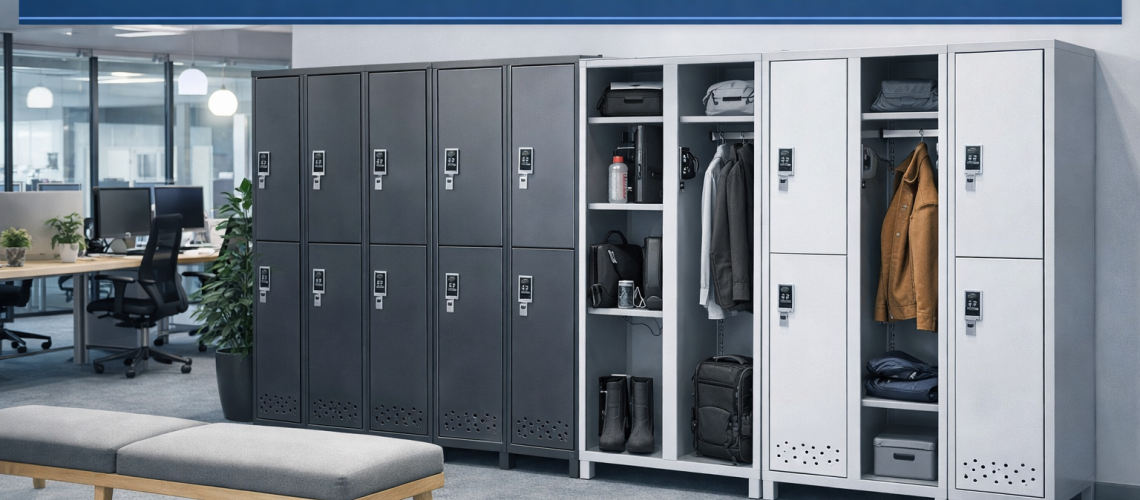
Workplace lockers are now a regular part of many office fit-outs. They support flexible working, reduce desk clutter and give staff somewhere secure to store coats, bags, laptops and personal items. In a new office project, they can also help shape how people move through the space and how shared areas function day to day.
However, choosing lockers for a new office is not only about picking a product style. The best result comes from matching the storage to the way the office will actually operate. That means looking at staff routines, hybrid working patterns, locker sizes, layout, lock options and the overall feel of the space.
This guide explains how to choose office fit-out lockers, office staff lockers and workplace lockers for new offices without turning the page into a generic buying guide. For the main workplace lockers guide, visit the hub page. If your project needs technology-led allocation, see our guide to smart lockers for hybrid workplaces. When you are ready to compare products, visit our workplace lockers page for staff lockers and commercial staff storage.
Why lockers matter in a modern office fit-out
In many offices, staff no longer have a fixed desk every day. Even where assigned desks still exist, people often bring more into the workplace than the desk itself should hold. Coats, bags, lunch items, headphones, laptops, shoes and personal belongings all need a practical home. Without lockers, those items tend to spill into the wider office, making the space feel busier and less organised.
Lockers support a better balance between personal storage and shared workspace. They keep desks clearer, help maintain a tidier visual environment and give staff a more secure place for daily belongings. In a well-planned office, they also support the wider fit-out by defining arrival points, storage zones and transitions between public and private areas.
That makes lockers part of the office planning conversation rather than an afterthought added at the end of the project.
Start with how the office will actually work
The best starting point is not the locker finish or the number of doors. It is the workplace pattern. Ask how often staff are on site, whether desks are fixed or shared, what employees need to store and where the storage should sit within the office plan.
Some offices need lockers mainly for coats, bags and day-use items. Others need secure personal storage for laptops and equipment in a more flexible working environment. Some teams may attend every day, while others rotate through the office during the week. Those differences affect the locker quantity, the size per user and whether the lockers should be assigned or shared.
This is why a good staff locker planning guide starts with behaviour and workflow rather than with a catalogue page.
What staff usually need to store in an office
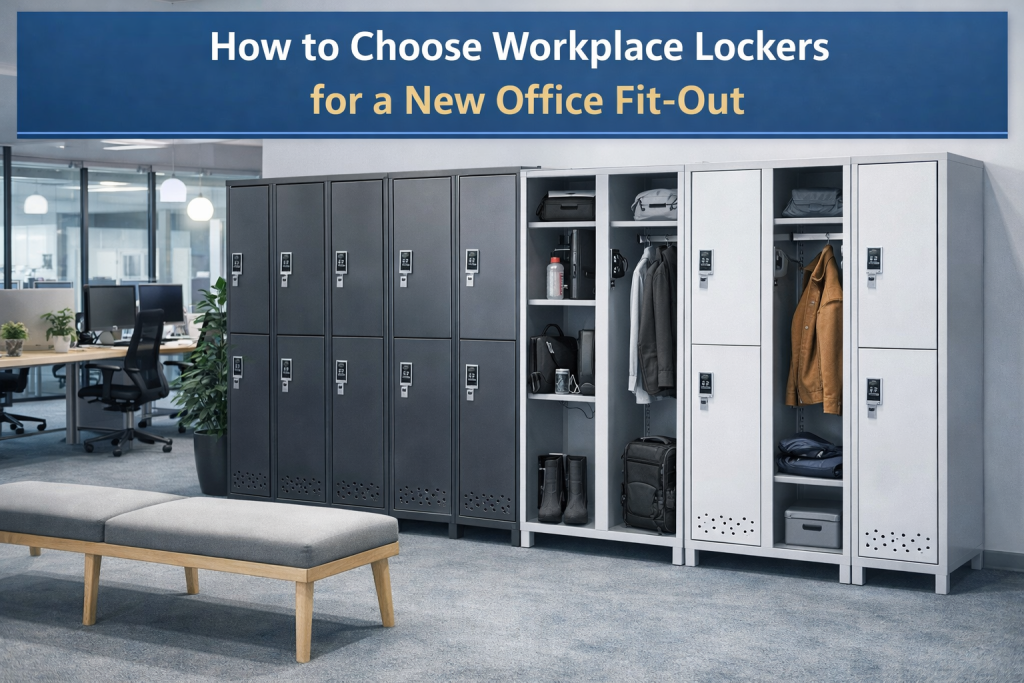
Office storage needs are usually lighter than those in factories or warehouses, but they still vary more than many projects assume. A locker may need to hold:
- coats and jackets
- laptop bags or backpacks
- handbags and personal items
- lunch containers
- headphones and chargers
- small work equipment
- gym clothes or commuting items
Once those needs are listed clearly, it becomes easier to decide whether compact personal lockers are enough or whether staff need something with more hanging space and internal capacity. A new office fit-out often works best when the storage matches real use rather than an assumed standard user.
Assigned lockers or shared lockers?
This is one of the most important early choices in an office locker scheme. Assigned lockers give each user a consistent space and can work well where staff attend frequently or keep personal items at work from one day to the next. Shared lockers are often a better match for hybrid offices where attendance varies and not every employee needs storage on every day of the week.
The right answer depends on occupancy patterns rather than headcount alone. If a business assumes every employee needs a permanent locker, it may over-allocate space. If it assumes everyone is happy to share without looking closely at how teams use the office, it may end up with too little capacity and a frustrating experience for staff.
For offices with hybrid attendance, this question often overlaps with technology and allocation methods. That is where smart lockers for hybrid workplaces can become relevant.
Choosing the right locker size for office staff
Office staff lockers do not always need the same internal space as workplace lockers in more operational environments. Even so, choosing a size that is too small can quickly reduce adoption. If staff cannot fit a coat, bag or laptop case inside, they may go back to storing items at desks or leaving them in meeting rooms and breakout areas.
Compact lockers can be very effective where the main purpose is short-term personal storage. Larger formats may be more appropriate where commuting patterns, hot-desking or longer days on site mean staff need extra room. The key is to size the lockers for the real mix of belongings rather than for the smallest possible footprint.
For broader size and layout planning, see our guide to workplace locker sizes and layouts.
Where should office lockers go?
Placement matters as much as product choice. In a new office fit-out, lockers often sit near arrival points, near breakout areas or close to shared desk zones. The aim is to make them easy to use without letting them dominate the visual feel of the workplace.
Good positioning usually reflects the natural arrival and departure pattern of the office. Staff should be able to enter, store their belongings and move into the workspace without awkward detours or bottlenecks. At the same time, the locker bank should not disrupt circulation or make the office feel crowded.
It often helps to think of lockers as part of the entrance and transition sequence. They can create a clear edge between personal storage and the main working environment, which is especially useful in hot-desking and flexible office layouts.
Office locker layout should support the wider fit-out
An office locker bank should feel integrated with the workplace rather than added as a late utility feature. That means thinking about more than wall length. The surrounding circulation space, nearby seating, sightlines and the general tone of the interior all play a part in whether the installation feels right.
In some offices, a bank of compact lockers can sit neatly within a shared touchdown area. In others, lockers may work better in a quieter storage zone just outside the main work floor. The best answer depends on how staff move, where they gather and how visible the storage should be.
This is also why office locker layout should be viewed as a fit-out issue rather than a simple storage decision. The lockers influence the feel of the space as well as its function.
Should office lockers match the interior design?
In most office environments, yes. Unlike back-of-house staff areas, office lockers are often seen by employees, clients and visitors. Colour, finish, proportions and overall presentation therefore matter more than they might in a warehouse or factory welfare block.
That does not mean appearance should override function. A well-finished locker that is too small or badly placed will still fail in daily use. The aim is to find a balance where the lockers look appropriate for the office and still support the real storage need.
In many new office fit-outs, that means choosing a cleaner, more integrated look rather than a heavy industrial appearance. The right finish can help the storage feel like part of the design language of the workplace.
Which lock options suit a new office?
Lock choice depends on whether the office uses assigned or shared storage and how much flexibility the workplace needs. Key locks can still work in smaller or more traditional office environments where users keep the same locker. Mechanical combinations remove the need for physical keys and can reduce admin. Digital or smart access may be more suitable where the office relies on flexible allocation, hybrid attendance or tighter control over use.
Technology should only be added where it solves a real problem. In some fit-outs, a simple combination lock is enough. In others, the ability to assign lockers temporarily or link access to the wider workplace routine can justify a smarter system.
For a more detailed comparison, see our guides to locker lock types and smart lockers for hybrid workplaces.
How hybrid working changes the locker brief
Hybrid working often changes both the number of lockers needed and the way they are managed. In a five-day office, a one-locker-per-person model may feel natural. In a hybrid office, that approach can waste valuable space if large parts of the team attend only on certain days.
That does not mean the office needs fewer lockers in every case. It means the business needs to understand its actual attendance pattern before deciding how much storage to provide. In some workplaces, shared lockers or day-use lockers work very well. In others, certain teams may still need permanent allocation because they keep equipment or personal items on site between visits.
The most successful fit-outs usually build the locker brief around real workplace behaviour instead of using an outdated fixed-desk model.
Common mistakes in office locker planning
- choosing lockers before understanding how the office will operate
- assuming every employee needs a permanently assigned locker
- making the compartments too small for coats, bags or laptops
- placing lockers where they block circulation or clutter shared areas
- treating appearance and function as separate decisions
- adding smart access where a simpler system would work just as well
- using a headcount formula instead of looking at real attendance patterns
Most of these problems come from treating the lockers as a furniture line item rather than as part of the office strategy.
How to choose workplace lockers for a new office fit-out
The best method is to begin with staff behaviour, then work through capacity, location, size and lock type in that order. Define what people need to store, when they attend, whether the storage is assigned or shared and how visible the locker bank should be within the fit-out. Once those points are clear, the product choice becomes much easier.
Compact storage may be enough for some offices. Others need more generous personal lockers, smarter allocation or a quieter storage zone that sits slightly away from the main work floor. The right answer depends on the office model, not on a standard template.
When the planning stage is complete and you are ready to review products, visit our workplace lockers page for office and staff storage options.
Conclusion
Office lockers can add real value to a new fit-out when they are planned properly. They support hybrid working, reduce clutter, improve staff storage and help shape a more organised workplace. The best schemes are built around how the office actually operates rather than around assumptions carried over from older layouts.
A successful office locker plan balances storage need, space efficiency, visual integration and ease of use. For the wider cluster, return to the workplace lockers guide. If technology-led allocation is relevant, visit smart lockers for hybrid workplaces. For product-led next steps, see our commercial staff storage page.
Frequently asked questions
Why are lockers useful in a new office fit-out?
They provide secure personal storage, support cleaner desk areas and help flexible workspaces function more smoothly.
Should office lockers be assigned or shared?
That depends on how often staff are on site and what they need to store. Hybrid offices often suit shared or flexible allocation, while some teams may still benefit from assigned lockers.
What should office staff lockers be large enough to hold?
They should be sized for the items staff actually bring in, which often include coats, bags, laptops, lunch items and personal belongings.
Are smart lockers worth it in an office?
They can be, especially where hybrid attendance and temporary allocation create a genuine need for flexible management.
Where should office lockers be placed?
They usually work best near arrival points, near shared desk zones or in dedicated storage areas where they are easy to use without interrupting circulation.
Discover more from Blog Total Locker Service
Subscribe to get the latest posts sent to your email.