Bench Layout and Spacing in Changing Rooms: How to Plan Safer, More Practical Seating Areas
April 13, 2026
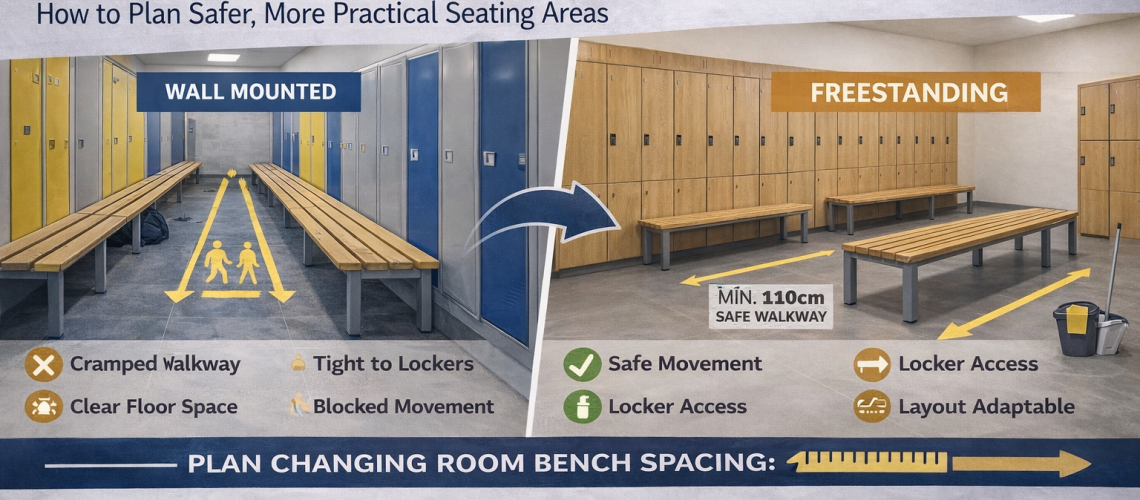
Bench layout has a direct effect on how well a changing room works. The right bench can still underperform if the surrounding space is cramped, awkward to clean or difficult for people to move through. In schools, workplaces, gyms and leisure facilities, spacing matters just as much as the bench itself.
Good bench spacing helps users sit comfortably, access lockers more easily and move around the area without congestion. It also makes cleaning simpler and reduces the risk of damage caused by benches being placed too tightly against lockers, walls or walkways.
This guide explains why bench layout matters, what to consider when planning spacing and how to create changing room seating areas that are safer, cleaner and easier to use.
Why bench layout matters
Changing room benches do more than provide a place to sit. They shape how users move through the room, where bags and shoes end up, how easy the floor is to clean and whether the space feels organised or overcrowded. A poor layout can make even a well-fitted changing room feel difficult to use.
- improves movement through the changing room
- supports easier access to lockers and hooks
- reduces congestion at busy times
- helps cleaners reach the floor and surrounding surfaces
- creates a more comfortable user experience
- reduces accidental knocks and wear
When benches are planned properly, the whole space usually feels calmer, cleaner and more practical.
What happens when bench spacing is too tight?
Cramped changing rooms tend to develop the same problems. Users struggle to sit and move comfortably. Bags spill into the walkway. Lockers become harder to open properly. Dirt builds up where the floor is difficult to reach. Over time, the room starts to feel more worn and harder to manage.
Common signs of poor spacing include:
- walkways that feel narrow or blocked
- benches placed too close to locker doors
- users constantly brushing past one another
- bags and shoes left in circulation routes
- awkward dead spaces that are hard to clean
- faster wear on lockers, benches and surrounding walls
A layout may look efficient on paper but still perform badly once people start using it at busy times.
Start with how the room will actually be used
The best bench layout starts with user behaviour. Before deciding where benches should go, it helps to think about what people will be doing in the room and when they will be doing it.
Ask practical questions such as:
- How many people will use the room at the busiest time?
- Will they be changing shoes, clothing or full uniforms?
- Will they also need access to lockers while seated nearby?
- Are bags, sports kit or PPE likely to be placed on or beneath the bench?
- Does the room need to support quick turnover or longer changing periods?
- Will cleaners need regular access around and beneath the seating?
The layout for a school PE changing room is not the same as the layout for a staff welfare room or a wet-side leisure changing area. The environment changes the spacing priorities.
Bench spacing affects locker access too
In many changing rooms, benches and lockers work together. If the bench is placed too close to the locker bank, users may find it hard to open doors fully, stand comfortably or organise belongings without getting in the way of others.
A better layout should allow enough room for people to:
- sit on the bench comfortably
- stand up and move away easily
- open locker doors without obstruction
- handle bags, shoes and clothing without blocking the route
This is especially important in schools, gyms and workplace changing areas where many users arrive at once.
Central benches vs perimeter benches
Bench layout usually follows one of two broad approaches. Benches may sit along the edge of the room, or they may form central seating runs within the space. Both can work well, but each changes how the room feels and functions.
Perimeter bench layouts
Benches placed along walls can keep the centre of the room more open. This often suits smaller changing areas or layouts where clear movement space is a priority. Wall mounted benches can be especially effective in this arrangement.
Central bench layouts
Central benches can make better use of larger rooms, but only when enough circulation space is left around them. A central seating run that is too close to lockers or walls can quickly make the space feel crowded.
The best option depends on room shape, locker position and how people need to move through the space.
Cleaning access should be built into the layout
Bench layout has a major effect on cleaning. If the floor beneath, behind or around the seating is difficult to reach, dirt and moisture will build up. That affects both hygiene and appearance, especially in busy or wet environments.
A good layout should make it easier to:
- reach the floor around the bench
- clean beneath the seating where applicable
- avoid creating narrow dirt traps next to walls or lockers
- maintain clear access for routine cleaning equipment
Wall mounted benches often help here by leaving the floor beneath clear. Freestanding benches can still work well, but they need enough surrounding space to avoid becoming awkward to clean around.
Wet area bench spacing needs extra care
Wet area changing rooms place more pressure on layout because moisture, cleaning routines and user movement all increase. Benches in these spaces need spacing that supports both hygiene and safe movement.
In wet environments, poor spacing can lead to:
- harder floor cleaning and drying
- more moisture collecting in difficult areas
- increased slip risk from cluttered routes
- less comfortable use during busy periods
That is why wet area bench layouts should prioritise clear walkways, easy cleaning access and materials suited to the environment.
Dry area layouts still need practical spacing
Dry changing rooms give more flexibility in bench style and material, but spacing still matters. In schools and workplaces, users often bring bags, coats, shoes and personal items into the room. That can quickly make a narrow layout feel tighter than expected.
Dry area layouts work best when they support:
- clear movement between benches and lockers
- enough room for seated and standing users
- easy access to hooks, lockers and surrounding storage
- simple day-to-day cleaning and maintenance
Even in dry areas, bench placement should be driven by real use rather than by trying to fit in as many seats as possible.
How bench layout affects safety
Changing rooms need to support safe movement. Poor bench placement can create pinch points, blocked routes and unnecessary trip hazards. This is especially important in schools, leisure centres and workplace welfare areas where many users move through the space at once.
A safer layout usually includes:
- clear routes through the room
- bench positions that do not obstruct exits or key access points
- enough circulation space for users carrying bags or equipment
- a layout that avoids forcing people into tight corners
Bench spacing is not only about comfort. It is also part of safe room design.
Common layout mistakes to avoid
Several planning mistakes appear again and again in poorly arranged changing rooms.
- placing benches too close to locker fronts
- trying to maximise seating at the expense of movement space
- ignoring how bags, shoes and clothing affect the usable aisle width
- creating narrow areas that are difficult to clean
- using central benches in rooms that are too small to support them
- forgetting that wet areas need more hygiene-focused spacing
These issues are often avoidable when the room is planned around real behaviour rather than simple dimensions alone.
How to plan a better bench layout
A stronger layout usually comes from stepping back and looking at the room as a whole system. Benches, lockers, walkways, cleaning access and user movement all need to work together.
Before finalising the layout, check:
- how people will enter and move through the room
- whether seated users will block locker access
- how easy it will be to clean around and beneath the benches
- whether the layout still works at peak occupancy
- if the seating position supports the intended environment
When those points are considered early, the finished space tends to be easier to use and maintain.
Final thoughts on bench layout and spacing
Bench layout is a practical design choice that affects comfort, hygiene, safety and long-term usability. A well-spaced changing room feels easier to move through, easier to clean and easier to manage. A poorly spaced one creates friction every day.
Whether you are planning benches for a school, workplace, gym or leisure facility, spacing should be treated as part of the main specification rather than an afterthought. When the seating layout matches the environment and the user flow, the whole room works better.
Explore our locker range, review locker lock options, and browse more guidance on the Total Locker Service blog.
“`
Discover more from Blog Total Locker Service
Subscribe to get the latest posts sent to your email.