Anti-Bacterial and Anti-Viral Bench Coatings: Do They Improve Changing Room Hygiene?
April 13, 2026
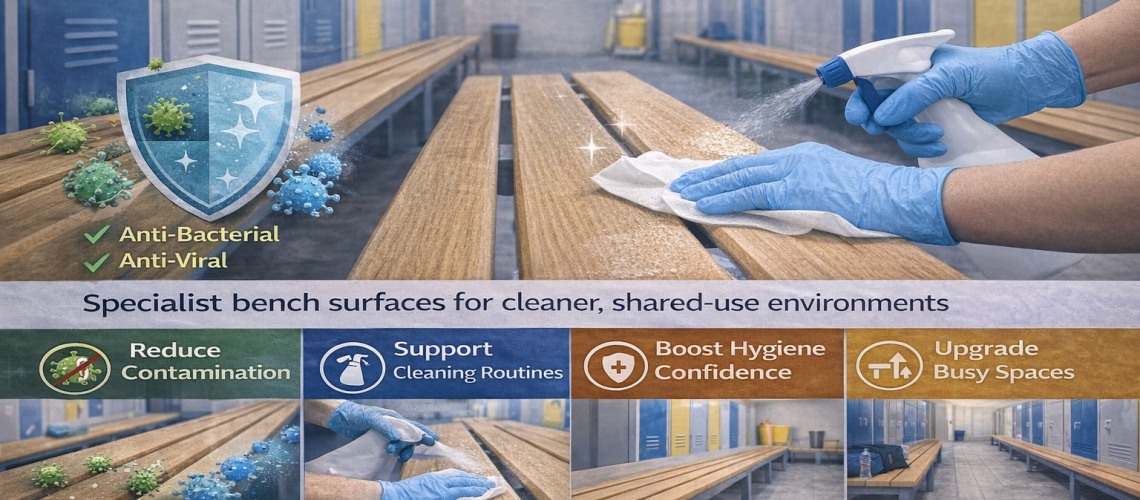
These coatings are designed to support hygiene by helping to reduce contamination on the bench surface. They are not a replacement for regular cleaning, but they can add another layer of protection in environments where cleanliness, shared use and user confidence all matter.
This guide explains what anti-bacterial and anti-viral bench coatings are, how they fit into changing room design and when they may be worth considering.
Why bench hygiene matters
Changing room benches come into direct contact with users, clothing, bags and footwear. In wet or busy environments, that contact increases. Moisture, dirt and frequent shared use can all place more pressure on hygiene management.
That means bench design should support:
- easy routine cleaning
- materials suited to the environment
- layouts that allow access for maintenance
- surfaces that help the room stay cleaner and easier to manage
Anti-bacterial and anti-viral coatings sit within that wider hygiene strategy. They are one part of the specification, not the whole answer on their own.
What are anti-bacterial bench coatings?
Anti-bacterial bench coatings are surface treatments designed to help limit the presence or growth of bacteria on the bench surface. In practical terms, they are used to support a cleaner, more hygienic seating area between routine cleaning cycles.
They are often considered in:
- schools and colleges
- leisure centres and gyms
- healthcare-adjacent environments
- busy workplace welfare areas
- shared-use changing rooms
In these spaces, benches are touched frequently and may be used by many people over the course of a day.
What are anti-viral bench coatings?
Anti-viral coatings are intended to support surface hygiene by helping to reduce viral contamination on treated surfaces. Like anti-bacterial coatings, they are typically specified where shared use is high and where hygiene reassurance matters to users and site managers.
These coatings may be seen as especially relevant in environments where:
- many users share the same space each day
- surface hygiene is a visible concern
- facility managers want stronger hygiene messaging
- the seating forms part of a wider cleanliness-focused fit-out
The purpose is to support hygiene performance, not to remove the need for cleaning or sensible facility management.
How these coatings fit into real-world bench design
Bench coatings should be viewed as an added specification benefit rather than the main hygiene solution. A coated bench still needs the right base material, the right environment and the right cleaning routine. If those things are missing, the coating alone will not solve the problem.
A stronger hygiene-focused bench setup usually combines:
- materials suited to wet or dry conditions
- bench designs that are easy to clean
- good spacing and layout access
- regular cleaning and inspection
- coatings where higher-spec hygiene support is needed
That combined approach is usually more effective than relying on one feature alone.
Where anti-bacterial and anti-viral coatings are most useful
These coatings can be useful in any shared changing environment, but they tend to be most relevant where hygiene has a stronger operational or reputational importance.
Schools and education settings
In schools, benches are used by large numbers of students and often see heavy daily traffic. A coating may add reassurance and support wider hygiene objectives, especially in PE changing areas and communal spaces.
Leisure centres and gyms
Changing rooms in leisure settings often have high user turnover and frequent contact with moisture, towels, bags and sports clothing. Hygiene support features can be especially attractive here.
Workplace welfare areas
In staff changing rooms, break-out welfare areas and operational settings, coatings may help support a cleaner shared environment, especially where benches are used across shifts.
Healthcare-adjacent or hygiene-sensitive spaces
Where users expect higher visible standards of hygiene, coated seating surfaces may offer an additional practical and presentational benefit.
Wet areas vs dry areas
The value of a coating still depends on the underlying bench material and environment. In wet areas, moisture-resistant materials remain the first priority. In dry areas, the coating may be used more as an added hygiene feature rather than a response to moisture conditions.
In practice:
- wet areas still need moisture-suited materials first
- dry areas may benefit from coatings where shared use is high
- coatings work best when matched to the environment rather than specified in isolation
This is why coatings should always be considered alongside material choice, not instead of it.
Do anti-bacterial and anti-viral coatings replace cleaning?
No. This is one of the most important points. Coatings can support hygiene, but they do not remove the need for regular cleaning, sensible bench design or good facility management. A poorly maintained bench with a specialist coating is still poorly maintained.
Routine cleaning is still needed to:
- remove visible dirt and debris
- manage moisture and residue
- keep the space looking professional
- maintain the wider hygiene standard of the room
Coatings should be treated as part of the hygiene system, not a substitute for it.
How coatings can support user confidence
In shared spaces, hygiene is not only operational. It also affects how users feel about the environment. Benches with anti-bacterial or anti-viral coatings can contribute to a stronger impression of cleanliness and care, especially when combined with visible maintenance standards.
This can be valuable in:
- schools communicating hygiene priorities
- premium leisure facilities
- workplaces investing in staff welfare
- public or semi-public facilities with shared seating
In other words, the benefit may be partly practical and partly about trust in the environment.
What else matters besides the coating?
A coating can add value, but several other factors usually have just as much impact on hygiene performance.
- bench material suitability
- ease of cleaning the surface
- good room ventilation where relevant
- layout and spacing that allow cleaning access
- how clutter is controlled around the seating
- the consistency of the cleaning schedule
If these fundamentals are weak, a higher-spec coating will have limited practical effect on its own.
When are these coatings worth considering?
They are most worth considering when hygiene is already a key part of the specification and the facility wants to strengthen that position further. They can be particularly useful when:
- the space is heavily shared
- hygiene messaging matters to users
- the site wants a higher-spec bench solution
- bench surfaces are part of a broader hygienic interior strategy
- the environment is expected to demonstrate a stronger duty of care
They may be less essential where the space is lightly used, the environment is simple and regular cleaning already addresses the main practical needs.
Common mistakes to avoid
Several errors appear when coatings are specified without considering the wider bench system.
- treating the coating as a replacement for cleaning
- ignoring the importance of moisture-resistant materials in wet areas
- focusing on the coating while overlooking layout and cleaning access
- assuming every environment needs a higher-spec coating
- specifying hygiene features without a clear operational reason
The strongest approach is to start with the environment and the hygiene requirement, then decide whether the coating adds meaningful value.
How to decide if coated bench seating is right for your site
Before choosing coated bench seating, ask:
- How heavily shared is the changing room?
- Is hygiene a visible priority for users or stakeholders?
- Are we already using materials suited to the environment?
- Will the benches still be easy to clean and maintain?
- Does the coating support a real need, or is it only being added by default?
These questions help turn a vague upgrade into a more grounded specification decision.
Final thoughts on anti-bacterial and anti-viral bench coatings
Anti-bacterial and anti-viral bench coatings can be a useful upgrade in changing rooms where hygiene, shared use and user reassurance all matter. They help support a cleaner seating environment, but they work best when paired with the right materials, layout and cleaning routine.
The real value comes from seeing them as part of a complete hygiene-focused bench strategy rather than a stand-alone solution. When used in the right environment and for the right reason, they can add practical and visible value to the changing room.
Explore our locker range, review locker lock options, and browse more guidance on the Total Locker Service blog.
“`
Discover more from Blog Total Locker Service
Subscribe to get the latest posts sent to your email.