Anti Ligature Lockers UK: Mental Health Storage Compliance Guide (2026)
February 26, 2026

Anti ligature lockers in the UK are designed to reduce the risk of self-harm in mental health, custodial and high-dependency environments. Storage systems within these facilities must prioritise safety without compromising durability or infection control standards.
This guide explains anti ligature cabinet requirements, relevant NHS design principles and how estates teams can specify compliant storage solutions in 2026.
For wider regulatory context, see our UK Secure Storage Compliance Guide 2026.
What Does “Anti Ligature” Mean?
What Does Anti Ligature Mean?
An anti ligature design reduces or removes points where cords, fabric or other materials could be attached. In mental health settings, this is a critical patient safety requirement.
Ligature risks may arise from:
- Protruding handles
- Exposed hinges
- Sharp corners
- Open gaps between door and frame
- Traditional padlock fittings
Where Are Anti Ligature Lockers Required?
Where Are Anti Ligature Lockers Required?
- Mental health wards
- Psychiatric intensive care units (PICU)
- Secure hospitals
- Special educational needs environments
- Custodial settings
In these environments, standard steel lockers are not suitable.
Anti Ligature Locker Design Features
Key Anti Ligature Locker Design Features
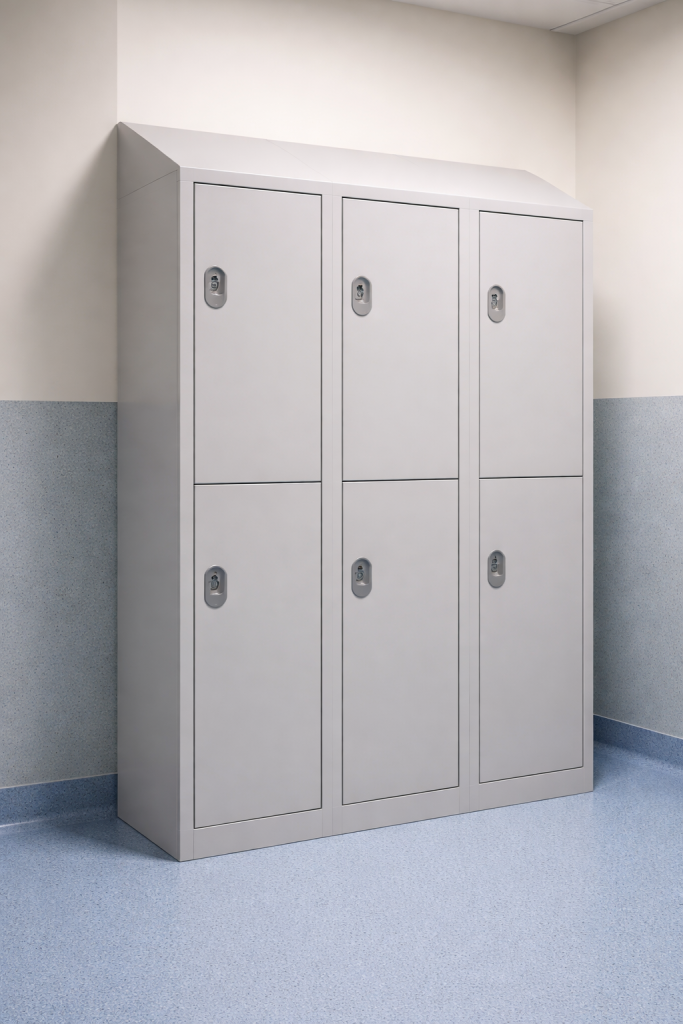
- Sloping tops to prevent climbing or attachment
- Flush-fitting doors
- Concealed hinges
- Recessed or flush handles
- Rounded edges and corners
- Minimal internal fixing exposure
NHS & Healthcare Guidance
NHS Design Guidance & Mental Health Standards
While no single regulation mandates specific locker models, NHS design guidance and Health Building Notes require environments to minimise ligature risk wherever reasonably practicable.
Design decisions should align with:
- HTM guidance principles
- Health Building Notes (HBN)
- Trust-specific ligature risk assessments
- Care Quality Commission (CQC) expectations
Infection Control Considerations
Infection Control & Cleanability
Anti ligature lockers must also meet infection control expectations. Powder-coated steel with smooth welds supports hygienic cleaning regimes.
Locking & Access Systems
Safe Locking Systems in Mental Health Settings
- Recessed cam locks
- Staff override systems
- Controlled master key access
- Reduced protrusion mechanisms
Padlocks are typically unsuitable in anti ligature environments.
Installation & Positioning
Installation & Positioning Best Practice
- Secure wall fixing where required
- Avoid alignment near windows or high anchor points
- Maintain supervision visibility
- Allow cleaning access around units
Difference Between Standard & Anti Ligature Lockers
Standard Lockers vs Anti Ligature Lockers
- Standard lockers may have exposed hinges
- Standard lockers often have protruding handles
- Anti ligature units minimise attachment points
- Anti ligature lockers are specifically designed for high-risk environments
Choosing the Right Anti Ligature Locker UK
How to Choose the Right Anti Ligature Locker UK
- Review formal ligature risk assessment
- Confirm installation location
- Consider staff-only vs patient access
- Evaluate long-term durability
- Plan for maintenance access
Explore our specialist Anti Ligature Lockers designed for healthcare environments.
Frequently Asked Questions
Frequently Asked Questions
Are anti ligature lockers mandatory?
They are required wherever ligature risk assessments identify potential harm from standard fittings.
Can standard lockers be modified?
Modifications rarely achieve full anti ligature compliance. Purpose-built units are recommended.
Discover more from Blog Total Locker Service
Subscribe to get the latest posts sent to your email.