Wet Area vs Dry Area Bench Seating: Choosing the Right Benches for Each Environment
April 13, 2026
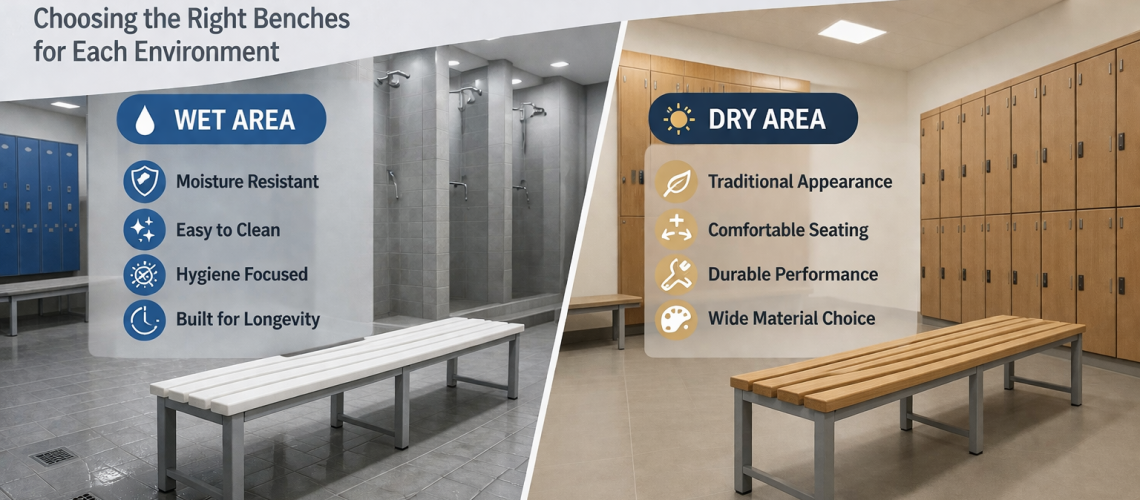
Bench seating needs to match the environment it is placed in. A bench that works well in a dry school changing room may not perform properly beside a swimming pool or in a shower area. Moisture, cleaning routines and user behaviour all affect which type of bench is the right fit.
That is why wet area benches and dry area benches should not be treated as interchangeable. The materials, construction and long-term performance requirements are different. Choosing correctly helps improve hygiene, durability and day-to-day usability.
This guide explains the difference between wet area and dry area bench seating, what to consider in each setting and how to choose the right solution for your site.
Why the environment matters
The surrounding environment has a direct effect on bench performance. Benches are exposed to regular use, but the conditions around them are what usually determine how well they hold up over time. Water, humidity, cleaning chemicals, footwear, bags and user traffic all place pressure on the seating.
- wet areas place more stress on moisture resistance and hygiene
- dry areas allow more flexibility in materials and finishes
- cleaning routines differ between each type of environment
- the wrong bench choice can lead to early wear and harder maintenance
Matching the bench to the environment usually leads to better performance and lower long-term maintenance.
What counts as a wet area?
Wet areas are spaces where benches are regularly exposed to moisture, humidity or water from nearby activity. Some are obviously wet, while others stay damp because of steam, washdown cleaning or frequent use by people in wet clothing.
Common wet area environments include:
- swimming pool changing rooms
- shower rooms and wash areas
- spa and wellness facilities
- wet-side leisure centre changing rooms
- hygiene-sensitive environments with regular washdown cleaning
These areas need bench materials and designs that can cope with repeated moisture exposure without becoming harder to clean or maintain.
What counts as a dry area?
Dry areas are spaces where benches are used in more controlled conditions. While users may still bring in coats, bags and shoes, the seating is not exposed to постоян moisture or heavy washdown routines.
Common dry area environments include:
- school changing rooms
- workplace locker rooms
- office welfare areas
- dry-side sports changing areas
- education and workplace circulation spaces
Dry areas still need durable seating, but they usually allow a wider choice of materials and finishes.
Best bench materials for wet areas
Moisture resistance is the main priority in wet areas. Benches in these spaces should be made from materials that do not absorb water easily and that can be cleaned regularly without deteriorating.
Plastic or polymer bench seating is often the most practical choice because it:
- resists water and humidity well
- is easy to clean and maintain
- supports hygiene-sensitive environments
- performs better in wet changing rooms and shower-adjacent spaces
Metal frames are also commonly used in wet area bench systems, provided they are properly finished for the environment. The key is choosing a combination that supports hygiene and long-term durability.
Best bench materials for dry areas
Dry areas give more flexibility. Wood slat benches are often a popular choice because they offer a traditional appearance and perform well when moisture is not a constant issue. Metal-framed benches with wood seating are common in schools, workplaces and general locker rooms.
Dry area bench seating often works well when it offers:
- durability for daily use
- comfortable seating surface
- a finish that suits the surrounding interior
- easy access for cleaning
Plastic can still be used in dry spaces, but it is often chosen more for hygiene or maintenance reasons than for appearance.
Cleaning and hygiene differences
Wet areas usually demand more intensive cleaning. Benches may need regular wipe-downs, moisture management and materials that do not trap dirt or water. In these environments, the easier the bench is to clean, the better it tends to perform over time.
Dry areas still need good hygiene standards, but cleaning routines are often less aggressive. This makes it easier to use materials such as wood, provided they are well maintained and suitable for the level of use.
In both cases, bench design matters as much as the material. Good bench seating should:
- allow access beneath and around the seating
- avoid creating awkward dirt traps
- support regular cleaning without excessive effort
- match the hygiene expectations of the site
How user behaviour changes the choice
User behaviour affects bench performance in both wet and dry areas. In wet environments, users often sit in damp swimwear, place wet towels on the bench or move through the area with water on footwear. In dry environments, benches may see heavier bag use, shoes, coats and general daily traffic.
That means the best bench choice depends not just on the environment itself, but on how people use the space day after day.
Freestanding vs wall-mounted benches in wet and dry spaces
Bench type also plays a role. In wet areas, wall-mounted benches can help by leaving the floor clear and making cleaning easier. Freestanding benches may still work well, but they need to be chosen carefully so they do not make hygiene routines harder.
In dry areas, both freestanding and wall-mounted benches can perform well. The choice usually comes down to layout, flexibility and how the space is managed.
In general:
- wet areas often benefit from easy-clean designs and clear floor access
- dry areas allow more flexibility in layout and style
- both environments need spacing that supports user movement and maintenance
Common mistakes to avoid
Several problems come up when wet and dry area bench seating are treated the same.
- using wood benches in areas with regular moisture exposure
- choosing bench materials based only on appearance
- ignoring how demanding the cleaning routine will be
- failing to consider hygiene expectations in wet environments
- overlooking the importance of easy access beneath and around the bench
The wrong material may still look acceptable at first, but performance usually tells the real story over time.
How to choose between wet area and dry area bench seating
Start by looking at the real conditions of the space rather than how it appears on paper. Ask:
- Will the benches be exposed to regular water or humidity?
- How often will the area be cleaned, and how aggressively?
- Are users likely to sit with wet clothing or towels?
- Does the design need to prioritise hygiene above appearance?
- How much flexibility is needed in the layout?
Once those questions are answered, the material and design choice usually becomes clearer.
Final thoughts on wet area vs dry area bench seating
Wet area benches and dry area benches serve the same basic function, but they do not face the same conditions. Wet spaces need moisture-resistant, easy-clean seating that supports hygiene and regular maintenance. Dry spaces offer more flexibility and often allow traditional wood finishes where they make sense.
By choosing bench seating that matches the real environment, you can improve durability, make cleaning easier and create a better experience for users.
Explore our locker range, review locker lock options, and browse more guidance on the Total Locker Service blog.
“`
Discover more from Blog Total Locker Service
Subscribe to get the latest posts sent to your email.