Understanding Total Locker Service Padlocks
August 19, 2023
Padlocks are a simple and flexible way to secure lockers fitted with a hasp-and-staple or similar padlock fitting. They are widely used in schools, workplaces, gyms, leisure centres, changing rooms and industrial facilities.
The right padlock depends on the locker fitting, shackle size, level of security required, environment and whether users need a key or combination lock.
Total Locker Service supplies a range of padlocks for lockers and other secure storage applications.
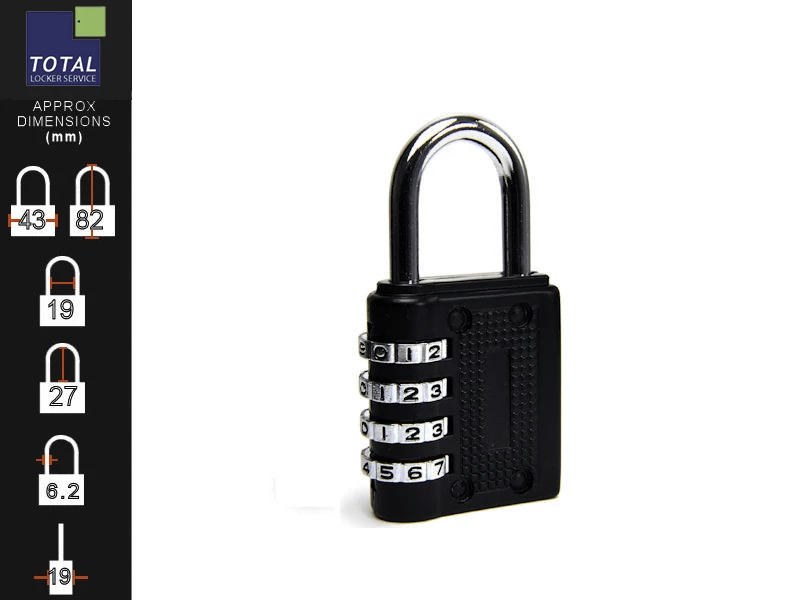
How Padlocks Work on Lockers
A locker padlock normally passes through a hasp or padlock fitting mounted on the locker door. Closing the padlock prevents the fitting from being released and keeps the door secured.
This means the padlock and the locker fitting must be compatible. A padlock with a shackle that is too thick, too short or too large may not fit correctly.
Keyed vs Combination Padlocks
| Padlock type | Main advantage | Main consideration |
|---|---|---|
| Keyed padlock | Simple and familiar to use | Keys can be lost and may need replacing |
| Combination padlock | No separate key required | Users must remember the code |
| Resettable combination padlock | Code can be changed by the authorised user | Reset procedures need to be controlled |
The best choice depends on how the lockers are managed and whether they are assigned to individual users or shared between different people.
Padlocks for Assigned Lockers
Where one person uses the same locker for a long period, either a keyed or combination padlock can work well.
For workplaces and schools, management should decide how lost keys, forgotten combinations and abandoned padlocks will be handled before large numbers of padlocks are issued.
Padlocks for Shared or Temporary Lockers
Shared or temporary-use lockers may require a different management approach because users change more frequently.
- Users may bring their own padlock.
- The site may issue padlocks temporarily.
- Combination padlocks can avoid key handling.
- Reset procedures may be required when users change.
- Management may need a process for removing abandoned padlocks.
Check the Padlock Shackle Size
Shackle size is one of the most important compatibility checks when choosing a padlock for a locker.
- Shackle diameter: must fit through the locker hasp or padlock fitting.
- Shackle clearance: must provide enough room to pass through and close properly.
- Shackle length: should suit the fitting without leaving unnecessary free space.
If replacing an existing padlock, measuring the old padlock or checking the locker manufacturer’s specification can reduce the risk of ordering an incompatible size.
Padlock Size and Security
A larger padlock is not automatically the best choice for every locker. The lock must first fit the hasp correctly and allow normal use of the door.
The required security level should reflect what is being stored, the environment and how the locker area is supervised.
Indoor and Outdoor Padlocks
Environmental conditions matter when selecting a padlock.
Indoor locker areas normally place fewer demands on the lock than exposed outdoor locations or wet leisure environments. Where moisture, humidity or weather exposure is expected, choose a padlock designed for those conditions.
Do not assume that every standard locker padlock is suitable for permanent outdoor use.
Padlocks for Gym and Leisure Lockers
Padlocks are commonly used on leisure and gym lockers because they allow the user to control access without the facility needing to manage individual locker keys.
- Check that the shackle fits the locker hasp.
- Consider whether users will bring their own padlocks.
- Decide how forgotten combinations will be handled.
- Provide a procedure for abandoned padlocks.
- Consider moisture resistance in humid changing areas.
Padlocks for School Lockers
Padlocks can also be used on school lockers where the locker design includes a suitable hasp fitting.
Before adopting padlocks across a school, consider whether students will provide their own locks, whether the school will issue them, and how lost keys, forgotten combinations or abandoned locks will be managed.
Padlocks for Workplace Lockers
Workplace lockers often use padlocks where employers want a simple locking system without managing individual locker keys.
This can work well for personal storage, workwear and PPE lockers, provided the site has a clear policy for lock removal, staff leavers and lost access.
Padlocks vs Built-In Locker Locks
| Feature | Padlock | Built-in locker lock |
|---|---|---|
| Lock supplied separately | Yes | No |
| User can bring their own lock | Possible | No |
| Requires locker hasp | Yes | No |
| Key management | Depends on padlock type | Depends on locker lock type |
| Easy to replace independently | Usually | May require compatible replacement parts |
For a wider comparison of locker locking systems, see our locker locks range.
Looking After Padlocks
Routine care can help keep a padlock operating correctly.
- Keep the padlock reasonably clean.
- Avoid forcing the key or mechanism.
- Remove dirt from around the shackle and lock body.
- Follow the manufacturer’s maintenance guidance.
- Replace damaged keys.
- Inspect locks used in damp or exposed areas for deterioration.
Do not apply lubricants or chemicals unless they are suitable for the specific lock mechanism.
When Should a Padlock Be Replaced?
A padlock should be replaced when damage or wear affects normal operation or security.
- The shackle is visibly damaged or distorted.
- The key no longer operates reliably.
- The combination mechanism becomes unreliable.
- The lock body is badly corroded.
- The padlock no longer closes correctly.
- The lock is no longer suitable for the intended environment.
How to Choose a Padlock for a Locker
Before ordering, check:
- locker or hasp type;
- maximum suitable shackle diameter;
- required shackle clearance;
- keyed or combination operation;
- indoor, humid or outdoor environment;
- number of users;
- whether lockers are assigned or shared;
- required security level; and
- how lost access will be managed.
View our padlock range for current options.
Common Padlock Mistakes
- Buying a padlock without checking the locker hasp size.
- Assuming a bigger lock will automatically provide a better solution.
- Using an indoor padlock permanently in an exposed environment.
- Ignoring how lost keys or forgotten combinations will be managed.
- Using a padlock that prevents the locker door from closing properly.
- Continuing to use a damaged or unreliable padlock.
Padlock FAQs
What size padlock do I need for a locker?
The padlock must fit the locker hasp or padlock fitting. Check the maximum shackle diameter, required clearance and available space before ordering.
Are combination padlocks suitable for lockers?
Yes. Combination padlocks can be suitable for lockers fitted with an appropriate hasp. They remove the need for a separate key, but users must remember the code and the site should have a procedure for forgotten combinations.
Can any padlock be used on a locker?
No. The padlock must physically fit the locker hasp and should also be suitable for the required security level and environment.
Are keyed or combination padlocks better for lockers?
Neither is universally better. Keyed padlocks are simple to use but require key management, while combination padlocks remove the need for a key but rely on users remembering and managing their codes.
Can padlocks be used on outdoor lockers?
They can, but the padlock should be suitable for the expected weather and moisture exposure. Not every standard padlock is designed for permanent outdoor use.
When should a locker padlock be replaced?
Replace a padlock when the shackle, body, key mechanism or combination mechanism is damaged, unreliable or no longer suitable for the application.
Choose a Padlock That Fits the Locker and the Way It Is Used
The most important starting point is compatibility. A locker padlock needs the correct shackle dimensions for the hasp, but it should also suit the users, environment and way the locker system is managed.
Browse our padlocks for lockers or see our locker locks for alternative locking options.
Discover more from Blog Total Locker Service
Subscribe to get the latest posts sent to your email.