Types of Changing Room Benches: Choosing the Right Seating for Your Space
April 12, 2026
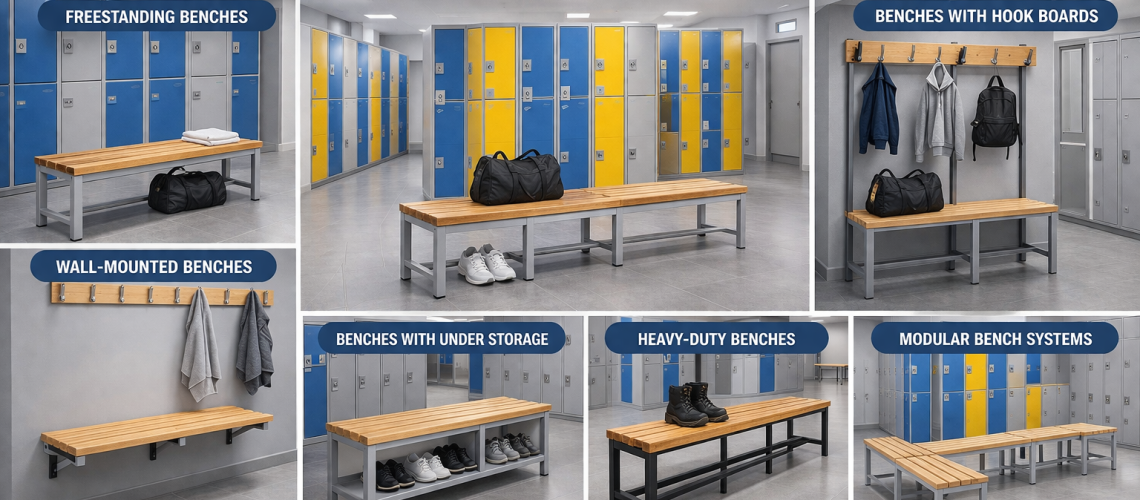
Changing room benches come in a range of types, each designed to suit different environments, user needs and layout requirements. Choosing the right bench is not just about appearance. It affects how the space functions, how easy it is to clean and how comfortable it is for users.
In workplaces, schools, gyms and leisure facilities, benches support daily routines such as changing footwear, organising belongings and moving through the space. The right type of bench helps everything run more smoothly. The wrong choice can lead to congestion, cleaning issues and reduced usability.
This guide explains the main types of changing room benches and how to choose the best option for your environment.
Why bench type matters
Bench type influences how the entire locker area works. It affects layout flexibility, cleaning access, durability and how users interact with the space. A well-chosen bench supports both comfort and efficiency.
- improves user comfort and accessibility
- supports better movement through the space
- helps maintain hygiene standards
- reduces wear on surrounding fixtures
- makes cleaning easier and more effective
- aligns with the demands of the environment
Freestanding benches
Freestanding benches are one of the most common types. They sit directly on the floor and can be moved or repositioned if needed. This makes them a flexible option for many environments.
They are often used in:
- gym and leisure changing rooms
- school changing areas
- workplace locker rooms
- multi-use facilities
Freestanding benches are easy to install and adapt to changing layouts. However, they may make floor cleaning slightly more involved if they are not regularly moved.
Wall-mounted benches
Wall-mounted benches are fixed directly to the wall, leaving the floor area beneath clear. This design improves cleaning access and helps maintain a more hygienic environment.
They are particularly useful in:
- hygiene-sensitive environments
- wet areas such as swimming pools
- healthcare and clean settings
- facilities with strict cleaning routines
Wall-mounted benches create a cleaner, more open look. They are less flexible than freestanding options, as they are fixed in place once installed.
Benches with hook boards
Benches with integrated hook boards combine seating with vertical storage. Hooks mounted above the bench allow users to hang coats, bags or clothing, making the space more organised.
These are commonly used in:
- school changing rooms
- workplace locker areas
- sports facilities
- team changing environments
This type of bench helps maximise space by combining two functions into one unit. It is especially useful where lockers are not the only storage solution.
Benches with under storage
Some benches include storage space beneath the seating area. This can be used for bags, shoes or equipment, helping to keep the floor clear and the area organised.
These benches are ideal for:
- compact changing rooms
- workplaces with limited space
- schools and sports facilities
- areas where additional storage is needed
Under-storage benches improve space efficiency but should still allow enough access for cleaning.
Heavy-duty benches
Heavy-duty benches are designed for demanding environments where durability is critical. They are built to withstand higher loads, frequent use and tougher conditions.
They are commonly used in:
- industrial workplaces
- factories and warehouses
- staff changing areas with PPE
- high-traffic environments
These benches are typically more robust and designed for long-term performance under pressure.
Modular and combined systems
Modular bench systems can be combined with lockers, hooks and storage units to create a fully integrated changing room solution. These systems are often used in larger or more complex installations.
They are suitable for:
- large workplace facilities
- leisure centres and gyms
- schools with structured layouts
- projects requiring consistent design
Modular systems provide a clean, coordinated appearance and can improve overall space efficiency.
Choosing the right type of bench
The best bench type depends on how the space is used. There is no single solution that works for every environment.
When selecting a bench, consider:
- the type of environment (wet or dry)
- how often the area is used
- the number of users at peak times
- cleaning and hygiene requirements
- whether storage or hooks are needed
- how flexible the layout needs to be
Matching the bench type to these factors will result in a more effective and practical installation.
Common mistakes to avoid
- choosing bench types based only on appearance
- ignoring cleaning and maintenance needs
- overcrowding the space with too many benches
- selecting materials that do not suit the environment
- failing to consider how users move through the area
These mistakes can reduce usability and increase long-term maintenance issues.
Final thoughts on changing room bench types
Changing room benches are a key part of any locker area. Freestanding, wall-mounted, hook-integrated and storage-based designs all have their place. The right choice depends on the environment, the users and how the space is expected to perform.
By selecting the correct bench type, you can improve comfort, organisation and efficiency while supporting better hygiene and long-term durability.
Explore our locker range, review locker lock options, and browse more guidance on the Total Locker Service blog.
“`
Discover more from Blog Total Locker Service
Subscribe to get the latest posts sent to your email.