Locker Sizes and Configurations: Choosing the Right Compartments for Your Space
April 11, 2026
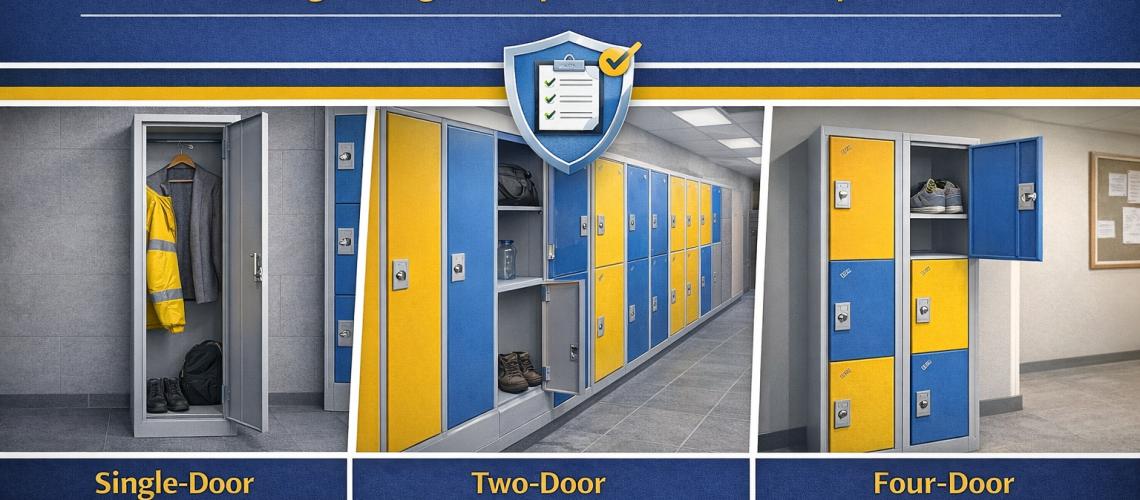
Locker size is one of the most important decisions in any storage project. The right locker needs to hold the items users actually bring, fit the available space and support the way the area works each day. That is why size and configuration should be planned carefully from the start.
A locker that is too small quickly becomes frustrating. A locker that is larger than necessary may waste valuable floor space and reduce the total number of users the installation can support. The best result usually comes from balancing capacity, layout, user needs and the physical limits of the room.
This guide explains how locker sizes and compartment configurations work, what to consider before choosing them, and how to match the right setup to schools, workplaces, gyms and changing areas.
Why locker size matters
Locker size affects more than storage volume. It influences user experience, circulation space, installation planning and long-term value. Choosing the correct size helps users store belongings comfortably without making the locker area larger or more expensive than it needs to be.
The right locker size can help you:
- match storage space to real user needs
- fit more lockers into the room without making it cramped
- support better organisation of personal items, bags or clothing
- improve day-to-day usability
- avoid wasted space inside the locker bank
- create a more efficient installation overall
When locker size is chosen badly, users either struggle to fit items inside or end up paying for capacity they do not really need.
What does locker configuration mean?
Locker configuration refers to the way compartments are arranged within the locker body. This includes the number of doors, the size of each compartment and the overall shape of the unit. For example, one full-height locker column has a very different configuration from a column split into two, four or six smaller compartments.
Configuration affects:
- how many users each locker bank can support
- what items each user can store
- how the locker area looks and functions
- whether the lockers suit assigned or shared use
- how efficiently the room space is used
Size and configuration should always be considered together rather than as separate decisions.
Common locker configurations explained
Although lockers come in many formats, a few core configurations are especially common.
Single-door lockers
Single-door lockers provide one full-height compartment per column. They are often chosen when users need room for coats, bags, uniforms or bulkier personal items. This configuration suits assigned use well because it gives one user a larger personal space.
Single-door lockers are often best for:
- staff changing rooms
- workplace lockers for coats and bags
- school staff rooms
- uniform and PPE storage
- users who need larger personal capacity
Two-door lockers
Two-door lockers divide the height into two stacked compartments. They offer a middle ground between capacity and user numbers. Each compartment is smaller than a full-height locker, but still useful for everyday belongings such as bags, shoes, lunch items and folded clothing.
Two-door lockers are often best for:
- offices and hybrid workplaces
- school corridors
- general personal storage
- sites balancing user numbers with reasonable compartment size
Four-door lockers
Four-door lockers split the column into four smaller compartments. They are useful where many users need secure storage for smaller items rather than full clothing storage. This makes them popular in schools, leisure facilities and compact workplace areas.
Four-door lockers are often best for:
- schools and colleges
- gyms and leisure settings
- compact staff locker areas
- personal item storage where coats are not the main priority
Six-door and small-compartment lockers
Smaller multi-door configurations increase user numbers further by dividing the locker into more compact compartments. These are best when users only need space for a few personal items, a phone, a wallet, a small bag or similar belongings.
These configurations are often best for:
- short-stay visitor areas
- device or small-item storage
- public-facing environments
- high-user-density locker banks
How to choose the right locker size
The right size usually becomes clear once you define what users need to store. Start with the contents, not the locker brochure.
Ask practical questions such as:
- Will users store coats, uniforms or PPE?
- Do they need room for backpacks, helmets or laptop bags?
- Are lockers mainly for phones, wallets and small personal items?
- Will the lockers be used all day or only for short visits?
- Do users need hanging space, shelf space or simple open storage?
- How many users must the installation support?
Once those answers are clear, you can match the compartment size more accurately to the real demand.
Assigned lockers vs shared-use lockers
The usage model also affects configuration choice. Assigned lockers are usually better when each user needs more room and returns to the same compartment regularly. Shared-use lockers often work well with smaller compartments because the focus is on short-term secure storage rather than full daily capacity.
Assigned lockers often suit:
- single-door lockers
- larger two-door formats
- configurations designed for bags, coats or workwear
Shared-use lockers often suit:
- two-door lockers for day use
- four-door or six-door lockers for compact storage
- formats that maximise user numbers in limited space
The key is making sure the compartment matches how long users stay and how much they need to carry.
Locker sizes for workplaces
In workplaces, locker requirements vary widely. An office user may only need space for a coat, bag and laptop case. An industrial worker may need room for uniforms, PPE, footwear and personal clothing. That means a one-size-fits-all approach rarely works well.
Workplace lockers should be planned around:
- the type of work being done
- whether staff change on site
- the need to separate workwear and personal items
- how many staff need lockers at peak use
- the amount of available floor and wall space
For office environments, mid-sized compartments often work well. For staff changing rooms, larger compartments are usually more practical.
Locker sizes for schools and colleges
Education environments often need to balance large user numbers with limited space. Students may need room for books, bags, lunch items and PE kit, but not always a full-height wardrobe-style locker. That is why multi-compartment layouts are often common in school settings.
School locker planning should consider:
- student age group
- bag size and daily item volume
- whether PE kit or sportswear must fit inside
- corridor width and traffic flow
- how many students require storage
Smaller compartments can work very well in schools, but they still need to be practical for real student use rather than just efficient on paper.
Locker sizes for gyms and leisure facilities
Gym and leisure users often bring smaller personal belongings, changing items and perhaps a compact bag. That makes mid-size and smaller compartments common in these settings. Even so, the user journey still matters. A locker should feel easy to use, not cramped or awkward.
Leisure locker planning should consider:
- whether the lockers are for short stays or longer visits
- whether bags and shoes need to fit inside
- how many users arrive during peak periods
- the need for wet-area suitable materials
- shared-use lock choice and turnover speed
In gyms, a good configuration supports fast use, straightforward access and enough room for everyday changing items.
Don’t ignore depth and width
Many buyers focus on height and door count, but locker depth and width matter as well. A locker may look large enough from the front while still feeling too shallow for bags, helmets or folded clothing. Width also affects how easy it is to access items without everything feeling tightly packed.
That is why planning should consider:
- the shape of the items being stored
- whether users need to reach in easily
- the available room depth and circulation space
- how the locker door opens into the surrounding area
A good locker is not only tall enough. It also needs the right proportions for the items inside it.
Internal fittings can change what a locker can do
Configuration is not only about the number of compartments. Internal features also affect usability. Shelves, hooks, rails and divider arrangements can all make the same external locker body more suitable for different tasks.
Useful internal features may include:
- coat hooks for hanging clothing
- shelves for folded items or smaller belongings
- separate sections for shoes or PPE
- divider systems for separating clean and used clothing
- charging points for device storage where required
The right internal layout can make a standard locker much more useful for a particular application.
How room layout limits locker configuration
The room itself often sets the true limits. Even when a larger locker would be useful, the available wall length, ceiling height, aisle space and circulation routes may make a different configuration more realistic. This is why locker sizing should never be planned in isolation from layout.
Before choosing a configuration, it helps to check:
- wall space available for locker banks
- aisle width and user movement needs
- bench placement and other room furniture
- cleaning access around the installation
- door opening clearances
- the number of users the room must support
Sometimes the best answer is not the largest locker. It is the configuration that makes the whole room work better.
Common mistakes when choosing locker sizes
Several problems come up repeatedly when locker sizes are chosen too quickly.
- choosing compartments based on assumptions rather than real user needs
- fitting too many small lockers where larger practical compartments are needed
- buying full-height lockers when users only need small-item storage
- ignoring locker depth and focusing only on door count
- forgetting that layout, cleaning access and circulation space matter too
- treating all users as though they store the same items
The strongest choice comes from matching the compartment to the real storage task.
Questions to ask before finalising locker size and configuration
Before placing an order, it helps to work through a few final questions:
- What exactly will users store?
- How many users need lockers at the busiest time?
- Will the lockers be assigned or shared?
- Do users need hanging space, shelves or special internal fittings?
- Is the room better suited to fewer large lockers or more compact compartments?
- Does the chosen configuration still allow proper circulation and cleaning?
- Will the locker sizes still make sense as user needs change over time?
These questions help turn locker sizing from a guess into a better long-term decision.
Final thoughts on locker sizes and configurations
The best locker size is the one that matches the real use case. Single-door, two-door, four-door and smaller compartment formats all have their place. What matters is choosing a configuration that suits the items being stored, the number of users, the room layout and the wider environment.
When you get that balance right, the locker installation becomes easier to use, easier to manage and more efficient for the space available. That usually leads to better long-term value as well.
To explore more practical guidance, browse our locker range, compare different locker lock options, and read more advice on the Total Locker Service blog.
Discover more from Blog Total Locker Service
Subscribe to get the latest posts sent to your email.