HTM 63 Locker Requirements Explained: NHS Locker Compliance Guide for 2026
February 25, 2026
Understanding HTM 63 locker requirements is essential for estates managers, procurement officers and NHS facilities teams responsible for healthcare environments in the United Kingdom. Locker provision within hospitals and clinical settings is not simply a matter of convenience. It forms part of infection control policy, staff welfare, safeguarding and risk management strategy.
This guide explains NHS locker compliance in practical terms. It outlines what HTM 63 requires, how it links to wider healthcare standards, and what procurement teams should consider when specifying hospital staff lockers in 2026.
For a broader regulatory overview, see our UK Secure Storage Compliance Guide 2026.
What Is HTM 63?
What Is HTM 63?
Health Technical Memorandum 63 (HTM 63) provides NHS guidance relating to storage systems, furniture and equipment used within healthcare premises. It forms part of the Department of Health’s wider Health Building Note (HBN) and HTM framework.
HTM 63 is not a single prescriptive product specification. Instead, it sets functional expectations covering:
- Durability and robustness
- Cleanability and infection control
- Safe design and construction
- Operational suitability
- Lifecycle value
Official guidance can be accessed via the NHS Health Technical Memoranda publications.
Why HTM 63 Locker Requirements Matter
Why HTM 63 Locker Requirements Matter in NHS Procurement
NHS buyers search regulations before products. Procurement frameworks demand compliance evidence before capital expenditure approval. Lockers that do not align with HTM principles may create audit risk, infection control issues or lifecycle cost inefficiencies.
Hospital staff lockers UK-wide must therefore demonstrate:
- Resistance to corrosion in humid environments
- Seam-reduced construction for cleanability
- Non-porous surfaces
- Secure locking systems
- Stable floor fixing where required
Infection Control & Cleanability Standards
Infection Control Considerations Under HTM 63
In healthcare settings, lockers must support infection prevention and control (IPC) policy. This is particularly critical in clinical areas, changing facilities adjacent to theatres, and high-risk wards.
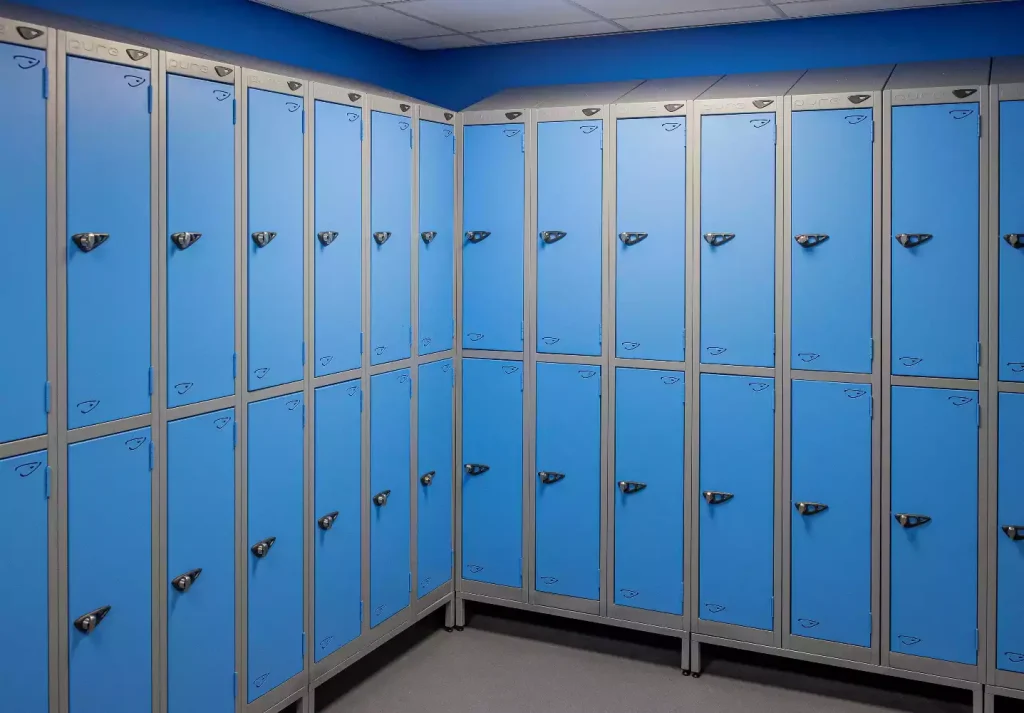
Compliant design features typically include:
- Powder-coated steel with anti-bacterial properties
- Minimal dirt traps and concealed hinges
- Raised sloping tops to prevent dust accumulation
- Ventilation slots designed to avoid contamination build-up
Standard domestic or low-grade commercial lockers are rarely suitable for NHS environments.
Anti-Ligature Requirements in Mental Health Facilities
Anti-Ligature Locker Requirements in Mental Health Settings
In psychiatric and high-dependency healthcare environments, locker design must reduce ligature risk. Although HTM 63 provides broad guidance, additional mental health design standards apply.
Anti-ligature lockers typically feature:
- Sloped tops
- Concealed hinges
- Flush handles
- Rounded edges
- Reduced anchor points
See our specialist Anti-Ligature Lockers for compliant healthcare environments.
Material Selection for Hospital Staff Lockers UK
Material Selection for Hospital Staff Lockers
Material choice directly impacts lifecycle cost and compliance. HTM 63 locker requirements emphasise durability and cleanability.
Common compliant materials include:
- Powder-coated mild steel
- Zinc-plated components
- Moisture-resistant laminate doors
- Non-rusting plastic lockers in wet areas
Explore compliant Steel Lockers suitable for NHS use.
Locker Security & Access Control
Security & Access Control in NHS Locker Compliance
Hospital staff lockers UK-wide must provide secure storage for personal belongings, medication items, electronic devices and confidential materials.
Common compliant locking options include:
- Cam locks with mastered override
- Mechanical combination locks
- Digital keypad systems
- Keyless RFID systems (where justified)
Integration with Medical Storage Systems
Integration with Medical Cabinets & Controlled Storage
Locker specification often sits alongside medical cabinet procurement. In many cases, estates departments procure both simultaneously.
Controlled drug storage must meet additional standards. See our compliant Secure Medical Cabinets for NHS facilities.
Installation & Fixing Requirements
Installation & Structural Fixing Under HTM Principles
HTM guidance supports safe installation practice. Lockers must be:
- Level and securely fixed where required
- Installed to prevent tipping hazards
- Positioned to maintain fire escape routes
- Configured to allow safe cleaning access
Procurement Checklist for NHS Estates Teams
HTM 63 Locker Procurement Checklist
- Confirm material specification
- Request infection control data sheets
- Verify locking compliance
- Confirm anti-ligature suitability (if applicable)
- Ensure supplier provides compliance documentation
Frequently Asked Questions
Frequently Asked Questions
Are HTM 63 locker requirements legally binding?
HTMs provide NHS guidance and are typically embedded within procurement frameworks and design specifications.
Do hospital staff lockers UK need anti-bacterial coating?
While not universally mandated, infection control teams strongly prefer easy-clean, powder-coated steel finishes.
Discover more from Blog Total Locker Service
Subscribe to get the latest posts sent to your email.