How to Order Engraved Tags: Sizes, Formats and What Information You Need to Provide
April 8, 2026
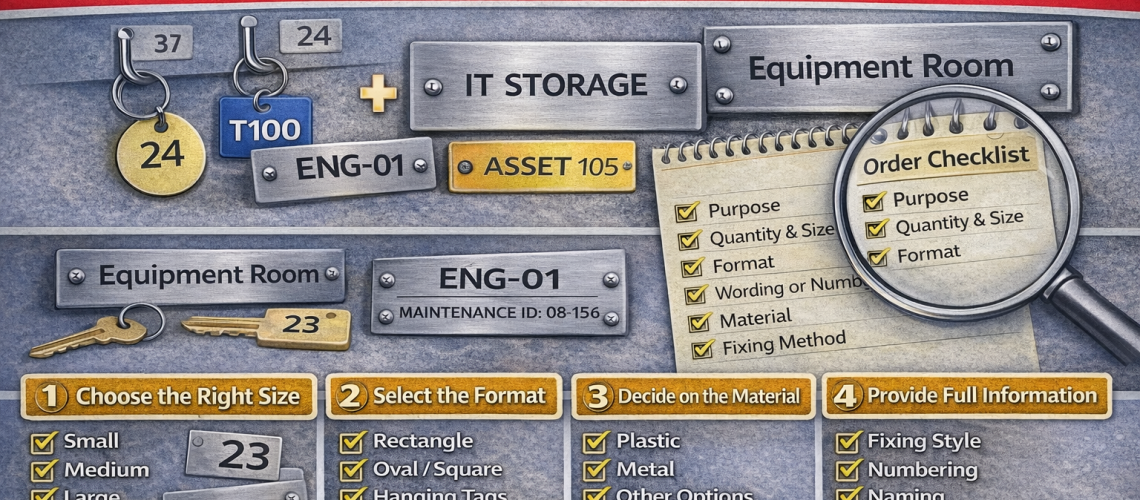
Ordering engraved tags is usually straightforward when the right details are gathered at the start. Problems tend to appear when key information is missing. The size may not suit the application. The fixing method may be overlooked. The wording may be too long for the format chosen.
Approaching engraved tags as practical products rather than simple labels helps avoid these issues. They need to suit the environment, stay readable and fit into a wider identification system.
Why preparation matters before ordering
Several small decisions shape how well an engraved tag performs.
- size and readability
- wording and layout
- material choice
- fixing method
- consistency with existing systems
Start with the purpose of the tag
Define what the tag is for before selecting size or format.
- locker numbers
- key fobs
- cabinet labels
- door nameplates
- storage markers
- equipment tags
Choosing the right size
Size depends on the surface, the amount of information and the reading distance.
- surface size
- text length
- viewing distance
- handling requirements
Small tags
Used for compact identification such as keys and small asset tags.
Medium tags
Suitable for cupboards, lockers and general workplace use.
Large formats
Best for doors, rooms and areas where visibility is important.
Choosing the right format
- rectangular plates
- square tags
- narrow strips
- hanging tags
- rounded corners
- drilled or slotted designs
Flat plates or hanging tags
Choose based on whether the tag is fixed or mobile.
- flat plates for lockers, doors and cabinets
- hanging tags for keys and mobile equipment
Deciding how much information to include
Clear and simple wording improves usability.
- numbers
- short codes
- names
- room titles
- asset references
Wording should be consistent
Consistency improves clarity and presentation across a site.
- use the same numbering format
- standardise naming styles
- apply consistent abbreviations
Choosing material
Material should match the environment and usage.
- plastic for indoor and general use
- metal for industrial or premium applications
Fixing details
- adhesive backing
- screw holes
- rivet holes
- holes for rings or hooks
Information to provide when ordering
- purpose of the tag
- quantity
- size or approximate size
- format or shape
- wording or numbering
- material
- fixing method
- environment details
Ordering numbered sets
- start and end numbers
- leading zeros if required
- prefixes or suffixes
- sequence format
Ordering named or mixed tags
Provide clear, consistent lists for named tags or mixed batches.
Matching existing systems
- existing sizes
- material types
- format and layout
- numbering style
Common mistakes to avoid
- choosing size before wording
- overcrowding text
- missing fixing details
- inconsistent numbering
- not checking spelling
Planning for future expansion
A scalable system allows for easy additions later.
- leave numbering gaps
- use flexible formats
- maintain consistent layouts
A clear specification delivers better results
Providing complete and accurate information ensures engraved tags are readable, durable and consistent across the workplace.
A well-planned order supports long-term organisation and reduces the need for corrections later.
Discover more from Blog Total Locker Service
Subscribe to get the latest posts sent to your email.