How Many Lockers Do You Need? Capacity Planning Guide for Changing Rooms
April 13, 2026
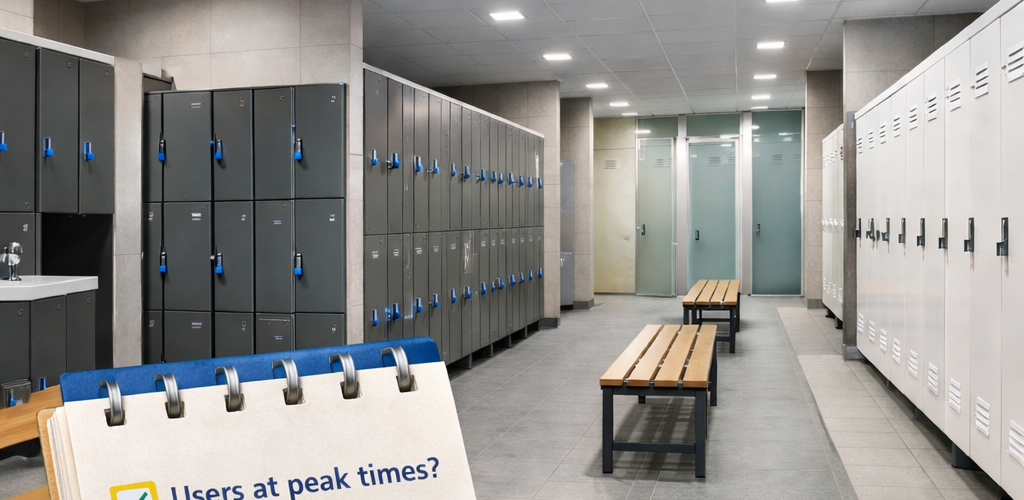
Choosing the right number of lockers is one of the most important decisions in locker room design. Too few lockers create frustration, congestion and poor organisation. Too many can waste space and reduce the effectiveness of the layout.
Locker capacity planning is not just about counting users. It depends on how the space is used, when it is used and what people need from it. A well-planned locker system supports smooth movement, efficient storage and a better overall experience for users.
This guide explains how to calculate locker numbers properly and how to match capacity to your environment.
For a full overview of layouts and design strategy, see our locker room design UK guide.
Why locker capacity matters
Locker numbers affect how the entire changing room works. If capacity is too low, users compete for space and belongings may end up left unsecured. If capacity is too high, valuable floor space is lost that could be used for benches, walkways or better layout flow.
- supports smooth user flow
- reduces congestion at peak times
- improves organisation and storage
- helps maintain a cleaner environment
- ensures lockers are used effectively
Getting the balance right is key to creating a practical and efficient locker room.
Step one: understand your user numbers
The starting point is knowing how many people will use the lockers. However, total users alone are not enough. What matters more is how many people need lockers at the same time.
Ask:
- How many users are on site?
- How many use the space at peak times?
- Are users arriving in waves (e.g. shift changes)?
- Is usage consistent or spread across the day?
Peak demand, not total headcount, should guide your decision.
Step two: decide on locker sharing vs dedicated use
Not every environment needs a one-to-one locker ratio. In some settings, lockers are shared across users throughout the day. In others, each person needs a dedicated space.
Dedicated lockers are common in:
- workplaces with assigned staff storage
- schools where students need consistent access
- industrial environments with PPE and personal items
Shared lockers are often used in:
- gyms and leisure facilities
- short-term visitor environments
- spaces with staggered usage patterns
This decision has a major impact on how many lockers you actually need.
Step three: consider locker size and configuration
The type of locker also affects capacity. Larger lockers take up more space, while smaller compartments allow higher density but may not suit all users.
Common configurations include:
- full-height lockers for clothing and bags
- multi-tier lockers for compact storage
- Z-lockers for combined hanging and storage space
- small compartments for valuables or short-term use
The right configuration depends on what users need to store.
For a deeper look at locker types and sizing, see our locker range.
Step four: plan around available space
Locker numbers must fit the physical layout. Even if demand suggests a higher number, the room must still allow for safe movement, seating and access.
A good layout should include:
- clear walkways
- bench seating for changing
- access to lockers without obstruction
- space for cleaning and maintenance
Locker capacity should never compromise the usability of the room.
See our changing room layout guide for planning advice.
Step five: allow for peak usage and growth
Locker demand is rarely static. Workforces grow, schools expand and facilities become busier over time. Planning only for current use can create problems later.
It is often sensible to:
- allow a buffer above current demand
- plan for peak usage rather than average use
- consider future expansion where possible
This helps avoid costly redesigns or overcrowding later on.
Typical locker ratios by environment
While every site is different, some general patterns can help guide early planning.
- schools: often close to 1:1 or shared between small groups
- workplaces: often 1:1 for staff or slightly reduced if shifts are staggered
- gyms: fewer lockers than users due to short-term use
- industrial environments: usually 1:1 due to PPE and clothing needs
These are guidelines, not rules. Actual requirements depend on how the space is used.
How benches affect locker capacity
Benches are a key part of locker room design and must be considered alongside locker numbers. More lockers mean less space for seating, while more seating reduces available locker capacity.
A balanced layout should:
- provide enough seating for users to change comfortably
- maintain clear access to lockers
- avoid overcrowding the room
- support efficient movement at peak times
Explore our changing room bench guide for more detail.
Common mistakes to avoid
Locker capacity planning often goes wrong in predictable ways.
- designing for total users instead of peak usage
- ignoring how lockers will actually be used
- overfilling the space with lockers and reducing usability
- choosing the wrong locker size for the environment
- failing to consider future growth
Most of these issues can be avoided with proper planning.
A simple locker capacity checklist
Before finalising your locker numbers, check:
- How many users need lockers at peak times?
- Will lockers be shared or dedicated?
- What size lockers are required?
- Does the layout allow safe movement?
- Is there enough seating and access space?
- Can the design adapt to future growth?
If these questions are answered clearly, your locker capacity will be much more accurate.
Final thoughts on locker capacity planning
Choosing the right number of lockers is about balancing demand, space and usability. The best solution supports how the room is actually used, rather than simply fitting in as many lockers as possible.
When capacity planning is done properly, the locker room becomes easier to use, easier to manage and better suited to long-term use.
“`
Discover more from Blog Total Locker Service
Subscribe to get the latest posts sent to your email.