How to Plan an Engraved Tag System for Workplaces (Numbering, Naming and Layout)
April 8, 2026
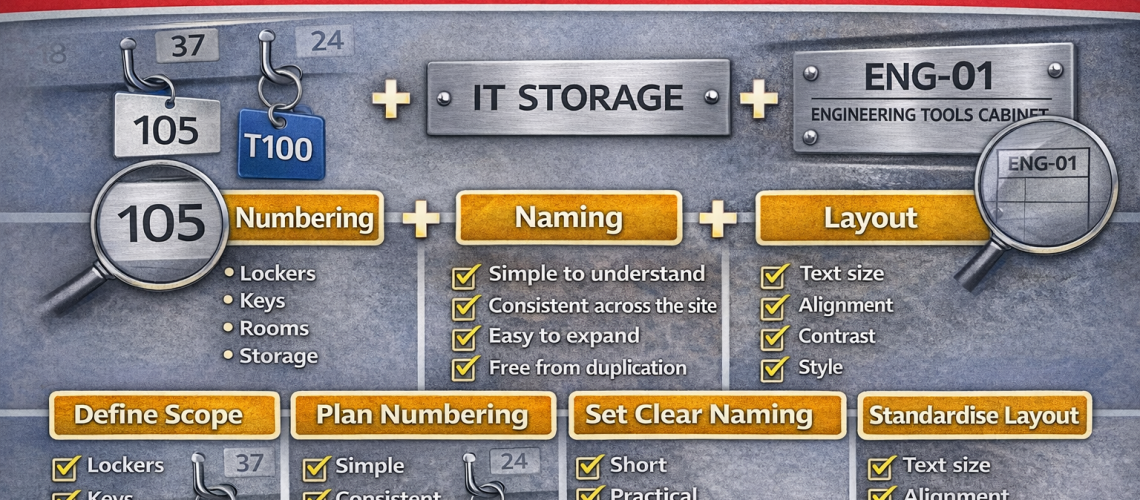
An engraved tag system works best when it is planned as a whole rather than built in stages. Ordering a few tags at a time may solve an immediate problem, but it often leads to inconsistency later. Numbers may not follow a clear sequence. Names may vary between areas. Layouts may not match across different parts of the site.
A structured approach avoids those issues. When numbering, naming and layout are planned together, the result is easier to understand, easier to manage and easier to expand. Staff can identify items quickly, and maintenance teams can locate assets without confusion.
Why planning matters
A single tag is simple. A full system needs to work across multiple areas, users and future changes.
- duplicate numbers or codes
- inconsistent naming formats
- mismatched sizes or styles
- difficult expansion later
- confusion when locating items
Start with what needs to be identified
Define the scope of the system before choosing formats or materials.
- lockers
- keys and key cabinets
- doors and rooms
- cupboards and storage areas
- equipment and assets
- shelving and storage bays
Designing a clear numbering system
Numbering provides a quick and consistent way to identify items.
- simple to understand
- consistent across the site
- easy to expand
- free from duplication
Sequential numbering
Simple sequences work well for grouped items.
- 001, 002, 003
- 101, 102, 103
Group-based numbering
Grouping numbers by area improves navigation.
- Floor 1: 1–50
- Floor 2: 101–150
- Warehouse: W01–W50
Combining letters and numbers
Adding letters helps identify departments or zones.
- HR-01, HR-02
- ENG-10, ENG-11
- GYM-001
Naming: when numbers are not enough
Names provide context where numbers alone are not clear.
- room names
- cupboard functions
- equipment types
Keep naming short, practical and consistent across the site.
Layout and formatting
Layout affects readability and usability.
- text size
- spacing
- alignment
- contrast
- amount of information
Important information should be easy to read at a glance, and layouts should remain consistent across all tags.
Zoning and grouping
Grouping tags by area improves navigation and organisation.
- lockers by department
- storage by aisle
- equipment by function
- keys by building or floor
Planning for future expansion
A system should allow for growth without major changes.
- leave gaps in numbering
- use scalable formats
- group items logically
- avoid overly specific labels
Matching tags to the environment
Offices
Simple numbering and clear naming support organisation and presentation.
Schools and colleges
Durability and visibility are important due to high usage.
Leisure centres and gyms
Quick identification and moisture resistance are key.
Healthcare settings
Clarity and accuracy are essential for safe operation.
Industrial environments
Durability and fast identification are priorities.
Avoiding common planning mistakes
- mixing numbering formats
- inconsistent naming
- overcrowded layouts
- no expansion planning
- poor readability
- unstructured ordering
Creating a system that works day to day
A good system allows users to quickly find and identify items without confusion.
- locate lockers easily
- identify keys quickly
- find equipment without delay
- understand layouts at a glance
Bringing it all together
An effective engraved tag system combines numbering, naming and layout into a consistent structure.
A structured approach delivers better results
Planning engraved tags properly improves organisation, reduces confusion and supports long-term workplace efficiency.
A well-designed system continues to work as the site grows and changes.
Discover more from Blog Total Locker Service
Subscribe to get the latest posts sent to your email.