Engraved Products UK: Uses, Materials, Business Applications and Buying Guide (2026)
April 8, 2026
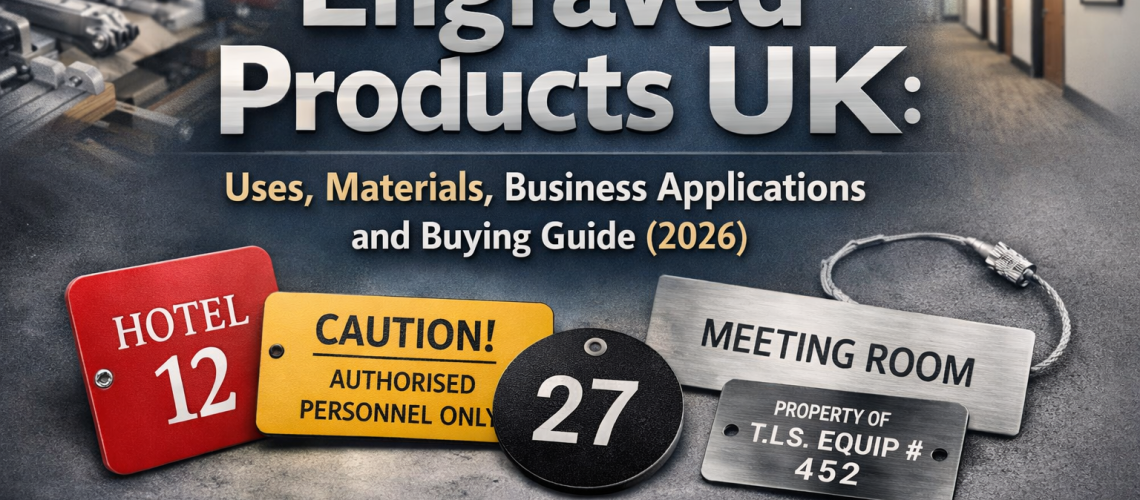
Engraved products do far more than add a name or number to an item. In real workplaces, they improve identification, support organisation, reinforce branding and help physical spaces run properly. From locker number plates and key fobs to door signs, cabinet labels and asset markers, engraving adds permanence where printed alternatives often wear out, peel away or become unreadable over time.
In the UK, engraved products are used every day in schools, hospitals, leisure centres, offices, hotels, factories and commercial buildings. Some are customer-facing. Others are purely operational. However, the purpose is usually the same. The item needs to stay clear, durable and easy to identify under repeated handling, cleaning and long-term use.
This guide explains what engraved products are, how they are made, which materials are commonly used and where they deliver the most value. It also looks at the difference between engraved and printed identification, how businesses choose the right format and why consistent specification matters when products need to be reordered across multiple sites.
If you are looking for engraved items for lockers, keys, rooms, departments or storage systems, this page will help you choose the right approach. It will also help you understand when standard products are enough and when bespoke engraving is the better option.
For readers looking for specific product types, you can also explore our engraved products page, our locker accessories range, our key cabinets and our guide to secure medical cabinets.
What Are Engraved Products?
Engraved products are items that carry permanent text, numbers, symbols or logos cut into the material surface rather than printed onto it. That cut marking creates a more durable finish. In many cases, the engraved detail remains legible for years even when the item is handled often, cleaned regularly or exposed to moisture, impact and friction.
The term covers a wide range of products. It includes laminate locker number plates, hotel key fobs, door signs, engraved discs, escutcheons, room markers, table numbers, cabinet labels and operational signage. In practical terms, engraving is not really a product category on its own. It is a production method and a value layer. It turns an otherwise generic item into something specific, useful and traceable.
That matters because workplaces depend on clear physical systems. A locker bank is easier to manage when every door has a durable number plate. A key board works better when each key carries a legible fob. A hospital treatment room is easier to organise when cupboards and storage points are consistently marked. A hotel improves guest confidence when room numbers and back-of-house signs are clear and professional.
Engraving can be simple, such as sequential numbering from 1 to 200. It can also be more detailed, including room identifiers, alphanumeric codes, departmental references, logos, accessibility markings or site-specific naming conventions. This flexibility is one of the main reasons engraved products remain widely specified across commercial environments.
Why Engraving Is Different from Printing
Printed identification has its place. It is useful for low-cost, temporary or short-term applications. Yet many businesses find that printed labels lose clarity too quickly in real operating conditions. Ink can fade. Surfaces can scuff. Adhesive layers can fail. Once that happens, identification becomes unreliable.
Engraving solves that problem by putting the information into the material itself. That usually means better long-term readability and fewer replacements. It also tends to look more professional. For customer-facing settings, that improves presentation. For operational settings, it reduces confusion.
This is especially important where the engraved item supports security, stock control, room identification or audit trails. In those situations, unclear labelling is not just untidy. It creates friction, delay and avoidable mistakes.
Why Engraved Products Still Matter in 2026
Digital systems have changed the way many organisations manage access, assets and users. Even so, physical identification still matters. Buildings still need room numbers. Lockers still need clear numbering. Keys still need visible tags. Cabinets still need labels. Maintenance teams still depend on simple, readable wayfinding. In short, physical environments continue to rely on physical markers.
That is why engraved products remain relevant. Engraved products provide a dependable bridge between people, places and systems. Clear identification helps staff find the right location quickly, while intuitive marking makes storage layouts easier to use. Consistency across departments is also easier to maintain with a well-planned system. In public-facing settings such as hotels, spas, gyms and hospitality venues, engraved details can strengthen branding as well.
Another reason they matter is replacement control. Many sites need numbered items to match an existing scheme. If one damaged plate needs replacing, the new one must look right beside the others. The colour, font, fixing method, shape and numbering style all matter. Engraved products are well suited to that kind of repeatable specification.
For multi-site organisations, standardisation is especially valuable. When one school, leisure centre, NHS property or office block uses the same numbering and identification system as another, staff training becomes easier and reordering becomes more efficient. Engraving supports that consistency.
Main Types of Engraved Products Used in the UK
There is no single engraved product that suits every application. The right choice depends on where the item will be used, how often it will be handled and what information it needs to display. Below are the main categories businesses most commonly specify.
Engraved Locker Number Plates and Discs
Locker numbering is one of the most common engraved applications. Schools, staff changing rooms, offices, gyms, leisure centres and industrial sites all rely on clear locker identification. Number plates can be round, oval, rectangular or made to a bespoke shape. They can be adhesive-fixed, inserted into a card holder or designed around a particular locker brand or door format.
Good locker numbering improves day-to-day management. Users find their locker faster. Staff can allocate storage more easily. Maintenance teams can identify the correct door without guesswork. If a lock or key needs replacement, the locker reference is immediately visible.
To explore compatible accessories, see our locker accessories page and our article on custom laminate engraving for locker systems.
Engraved Key Fobs
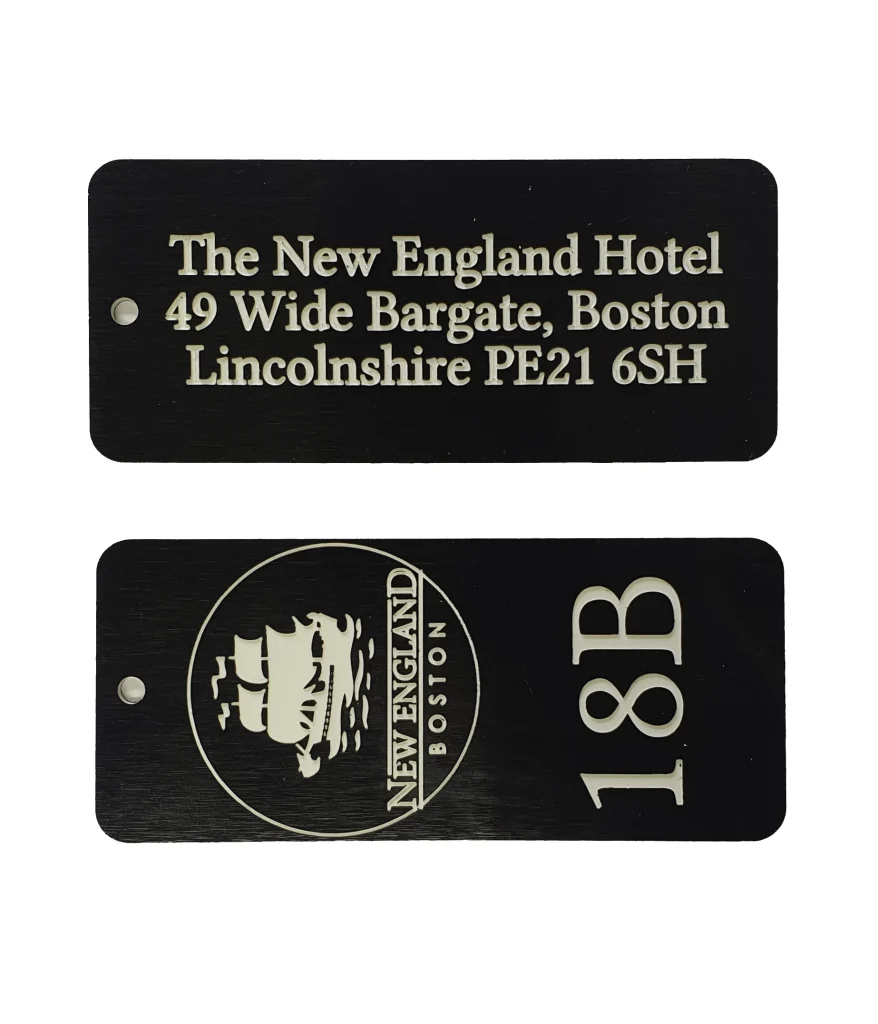
Engraved key fobs are widely used in hotels, schools, sports facilities, automotive environments, maintenance departments and secure storage systems. Their job is simple. They link a physical key to a room, locker, cabinet, vehicle or access point. Yet their design has a large effect on usability.
A well-made engraved fob should be easy to read, durable enough for repeated handling and appropriate for the environment. In some settings, a larger fob helps reduce loss. In others, colour coding helps staff separate departments or user groups. Some organisations add logos or branding. Others prefer plain numbering for speed and simplicity.
You can see product examples on our engraved products page and our locker key fobs page. For broader context, read The Complete Guide to Engraved Laminate Products for Hotels.
Engraved Door Signs and Number Plates
Door numbers and room signs are used across accommodation, education, healthcare and office buildings. Their role goes beyond appearance. They support wayfinding, reduce interruptions and help users move through buildings with less confusion.
In hotels, engraved signs help reinforce brand consistency. They also simplify navigation in schools and colleges, where clear room identification matters. Within offices, good signage helps staff and visitors find rooms quickly. Operational areas benefit as well, since engraved signs support safety and access control by making functions clear at a glance.
Where the site needs a more permanent finish than printed vinyl or paper inserts, engraved laminate is often the better long-term choice.
Engraved Labels for Cabinets, Storage and Equipment
Cabinets, cupboards and equipment points often need clear identification. This is common in healthcare, laboratories, factories, workshops, schools and facilities management. Labels may identify contents, departments, authorised users, room references or safety information.
For example, a healthcare environment may need consistent labelling to support medicine storage and internal organisation. An industrial environment may need cupboard and key tracking labels. A school site may need cabinet markers, room plates or sports facility numbering. The point is not decoration. It is reliable function.
If your project also involves specialist storage, browse our cabinet range and our page on secure medical cabinet storage.
Engraved Asset and Identification Tags
Asset tags are used to identify equipment, keys, tools or managed items within a building or organisation. In some environments, they support inventory control. In others, they support maintenance, allocation or loss reduction. While not every asset tag needs engraving, engraved formats are useful where durability matters and the item will be used for a long time.
This can be particularly helpful in workshops, estates departments, leisure centres, schools and vehicle environments, where tags are handled regularly and exposed to rough conditions.
Common Materials Used for Engraved Products
Material choice affects durability, cost, appearance and application. It also influences how the finished product behaves when cleaned, handled or exposed to moisture. Choosing the right material is one of the most important parts of specifying engraved products properly.
Engraved Laminate
Engraved laminate is one of the most common materials used for number plates, signs, discs and key fobs. It is popular because it balances appearance, durability and flexibility. Laminate is available in a range of colours and finishes, which makes it well suited to numbering systems, colour zoning and branded applications.
It also performs well in high-use environments. When engraved, the top layer is removed to reveal a contrasting core, which creates clear and lasting text or numbering. This is why laminate is widely used for locker discs, hotel fobs and operational signage.
For more on this material, see What Makes Engraved Laminate Products Special? and Laminate Locker Number Plates and Key Fobs.
ABS and Other Engraving Plastics
Many engraved number plates and fobs are produced from durable plastics such as ABS-based engraving laminate. These materials are lightweight, practical and available in many colour combinations. They are suitable for general indoor commercial use and can often provide an excellent balance between cost and lifespan.
Because plastic engraving materials are versatile, they are commonly used for bespoke numbering schemes and branded accessories. They also work well where the item needs a shaped cut rather than a plain rectangle.
Metal and Brass
Metal engraved products are often chosen for a more premium, traditional or heavy-duty finish. Brass is a familiar option for plaques, door plates and some signage applications. Other metals may be used where higher impact resistance or a specific visual style is required.
Metal can offer a strong, long-lasting appearance, but it is not always the best fit for every locker or key application. It is usually heavier and may cost more than laminate. The right choice depends on the environment, the design objective and the expected handling level.
Acrylic and Specialist Plastics
Some signs and markers may use acrylic or other specialist plastics when a different look or surface finish is needed. These can be useful in customer-facing spaces where visual presentation is a priority. However, they must still be suitable for the cleaning methods, mounting conditions and use level of the site.
How Engraved Products Are Used in Different Sectors
One reason engraved products remain important is that they are useful in so many sectors. The same production method can support very different environments. Below are some of the most common applications.
Schools, Colleges and Universities
Education settings rely heavily on durable identification. Locker numbering helps pupils and staff find the correct storage point quickly. Room signs improve navigation. Key fobs support key issue systems. Department labels help caretaking and estates teams manage storage more efficiently.
In larger sites, consistency matters. When room numbers, locker banks and storage labels follow a common format, the site becomes easier to manage. Replacements also become simpler because the style is already established.
Leisure Centres, Pools and Gyms
Leisure environments often place high demands on numbered products. Locker discs, key fobs and wrist strap identification are handled constantly. They may be exposed to moisture, chemicals and repeated cleaning. In these settings, durability is essential.
Colour coding is also useful here. Facilities can separate zones, user groups or locker banks with a clear visual system. For operators, that improves speed and reduces confusion during busy periods.
Relevant products can be found on our engraved products page and locker accessories page.
Hotels and Hospitality
Hospitality businesses use engraved products in both guest-facing and operational roles. Hotel key fobs, room numbers, table markers and directional signs all contribute to presentation and function. The better these items are specified, the more consistent the guest experience becomes.
Engraved laminate is particularly useful in this sector because it combines a neat appearance with strong day-to-day durability. For more detail, read The Complete Guide to Engraved Laminate Products for Hotels.
Healthcare and Care Settings
Healthcare environments need clear, dependable identification. Storage points, treatment areas, staff rooms and medicine-related spaces all benefit from consistent labelling. While engraved products are only one part of a wider storage and governance framework, they help support organisation, clarity and access control.
Where cabinets and secure storage are involved, see our guides to specialist cabinets and secure medical cabinets.
Factories, Workshops and Industrial Sites
Industrial spaces often need practical, tough identification rather than decorative finishes. Locker numbering, key tagging, cupboard labels and equipment identifiers all help support orderly operations. In these environments, a durable engraved product can be easier to maintain than a printed alternative, particularly when surfaces are cleaned often or exposed to rough use.
Offices and Commercial Buildings
Office projects increasingly focus on presentation as well as function. Engraved products are useful here because they can look smart while also improving building organisation. Room numbering, locker labels, departmental markers and storage identification all help staff navigate the space with less friction.
In hybrid workplaces, consistent locker and storage numbering also supports flexible allocation systems, staff changeovers and clearer facilities management.
Business Benefits of Engraved Products
Businesses do not buy engraved products just because they look neat. They buy them because they solve practical problems. Below are the main benefits.
- Clear identification: people can find lockers, rooms, keys and storage points quickly.
- Durability: engraved information lasts longer than many printed alternatives.
- Professional appearance: products look more permanent and better specified.
- Operational efficiency: staff spend less time checking, asking or correcting.
- Repeatability: numbering systems and branded formats can be reordered consistently.
- Reduced replacement waste: better lifespan usually means fewer replacements.
- Brand support: logos, colours and naming conventions can be built into the design.
These benefits apply differently depending on the sector, but the underlying value is similar. Engraving brings order to physical systems. It helps businesses keep things legible, consistent and easier to manage.
Engraved Products vs Printed Labels
This is one of the most useful comparisons for buyers. Both engraved products and printed labels have a place. The correct option depends on budget, lifespan and site conditions.
Printed labels are often cheaper at the start. They can work well for temporary use, low-value applications or fast-changing information. However, they are usually less durable. In busy environments, they may fade, scratch, peel or lift. Once that happens, the item often needs replacing in full.
Engraved products usually cost more upfront, but they tend to deliver better long-term value where the information needs to remain fixed. A more permanent appearance is achieved, along with improved resistance to handling. This added durability also helps prevent the untidy look often caused by damaged printed labels.
For long-life locker systems, hotel key fobs, room signs, number discs and cabinet labels, engraving is often the stronger investment.
How to Choose the Right Engraved Product
Choosing the right engraved item starts with context. The most attractive option is not always the most suitable one. The best specification is the one that matches the real use of the site.
1. Define the Purpose Clearly
Ask what the item needs to do. Is it there to number lockers, identify keys, mark a room, label storage or reinforce branding? The answer influences shape, material, size and fixing method.
2. Consider the Environment
Will the product be used indoors or outdoors? Will it be exposed to moisture, cleaning chemicals, impact or frequent handling? A poolside locker fob needs a different level of resilience from a low-touch office door plate.
3. Think About Readability
Text size, font choice, contrast and layout all matter. A product may look good in a mock-up and still perform badly in real use if the numbering is too small or the contrast is weak.
4. Choose the Right Fixing Method
Some products need adhesive backing. Others work better with screw fixing, clips, rings or inserts. The fixing method should match the substrate, the handling level and the likelihood of future removal or replacement.
5. Plan for Reorders
This is often overlooked. Many organisations need repeat orders months or years later. If the original specification is too vague, matching the existing style becomes harder. Good suppliers help maintain consistency across reorders, extensions and phased projects.
6. Decide Whether Bespoke Design Adds Value
Not every order needs a custom shape or logo. Sometimes plain numbered plates are ideal. In other cases, bespoke design improves usability or brand presentation enough to justify it. The key is to match the level of customisation to the real purpose of the item.
Bespoke Engraving: When Customisation Is Worth It
Bespoke engraving is especially useful when a site has an existing numbering scheme, unusual fixing requirement or strong brand identity. It can also help when a standard product does not fit the locker, cabinet or user workflow properly.
Examples include:
- locker number plates shaped for a specific holder or escutcheon
- hotel key fobs with logo engraving and matched colours
- alphanumeric numbering systems linked to room plans or departments
- cabinet labels designed around internal naming conventions
- custom signs for refurbishment projects or phased installations
Bespoke engraving can also make future maintenance easier. When a supplier already knows the format, repeat orders become simpler and more accurate. That matters for organisations managing several buildings or replacing items gradually over time.
Design Considerations That Affect Performance
Design is not just about appearance. Good design improves function. Poor design creates friction. These details have a direct effect on how well the product works once installed.
- Contrast: strong contrast improves readability.
- Character size: small numbers can be hard to read at distance.
- Shape: different shapes suit different holder types and visual styles.
- Colour coding: useful for zoning, departments or user groups.
- Edge finish: relevant for both appearance and handling comfort.
- Attachment method: affects durability and day-to-day practicality.
- Logo use: adds brand value, but should not reduce legibility.
Where products are used by the public, clarity should come first. Where they are used operationally, legibility and durability are usually the main priority.
Why Supplier Experience Matters
Engraved products can look simple, but correct specification often depends on experience. The supplier needs to understand the use case, the material, the fixing method and the likely reorder pattern. That is especially true for numbered products, branded accessories and items linked to existing site systems.
Total Locker Service supplies a wide range of engraved fobs, discs, accessories and related storage products for UK schools, councils, leisure centres, healthcare properties and commercial clients. Our engraved product range includes sequential and alphanumeric marking, custom shapes and a wide choice of colours and finishes, with applications across leisure, accommodation, education, healthcare and secure storage. :contentReference[oaicite:1]{index=1}
That wider context matters because engraving often sits inside a bigger storage or facilities project. A numbered disc may link to a locker installation. A key fob may sit within a controlled key system. A cabinet label may support a regulated storage area. Buyers usually get better results when the supplier understands that bigger picture.
Related Products and Internal Resources
If you are planning an engraving project, these pages may also help:
- Engraved products: key fobs, hotel fobs and number discs
- Locker accessories: number plates, key fobs and wrist straps
- Key cabinets for controlled key storage
- Specialist cabinets for workplace and healthcare storage
- Secure medical cabinet storage guide
- Custom laminate engraving for locker systems
- What makes engraved laminate products special?
- Laminate locker number plates and key fobs
- The complete guide to engraved laminate products for hotels
Conclusion: Why Engraved Products Are a Smart Long-Term Choice
Engraved products remain one of the simplest ways to improve clarity, consistency and durability in physical environments. Locker systems stay organised, keys remain easy to identify and buildings become easier to navigate. As a result, businesses can present a more considered and professional image.
The best engraved products are not chosen by appearance alone. They are chosen by use. The right material, format, fixing method and numbering style should reflect the building, the users and the daily demands of the site. When that match is right, the result is not only tidier. It is more efficient, easier to maintain and better value over time.
Whether you need engraved locker numbers, hotel key fobs, storage labels, door signs or bespoke identification products, a well-planned specification will save time later. It will improve replacements, support consistency and help the site function more smoothly from day one.
If you would like help choosing the right format, explore our engraved products range or contact Total Locker Service for guidance on numbering, materials, colours and bespoke engraving options.
Frequently Asked Questions
What are engraved products used for?
Engraved products are used for durable identification, numbering, branding and wayfinding. Common examples include locker number plates, key fobs, room signs, table numbers, labels and cabinet markers.
Are engraved products better than printed labels?
For long-term applications, engraved products are often the better choice because the information is cut into the material rather than printed onto the surface. That usually gives better durability and a more professional finish.
What material is best for engraved locker numbers?
Engraved laminate is a popular choice for locker numbering because it is durable, cost-effective and available in many colours and formats. The best option still depends on the environment, fixing method and locker type.
Can engraved key fobs be made with logos and colours?
Yes. Many engraved key fobs can be customised with logos, numbering schemes, colours and different shapes to match branding or operational requirements.
Can engraved products be supplied in numbered sequences?
Yes. Sequential numbering and alphanumeric marking are common for locker numbers, key fobs and room identification products.
Do engraved products work in wet or high-use environments?
Many do, provided the correct material and fixing method are chosen. This is why engraved products are widely used in leisure centres, pools, gyms and other demanding settings.
Discover more from Blog Total Locker Service
Subscribe to get the latest posts sent to your email.