Changing Room Benches UK | Workplace, School and Gym Bench Seating
April 12, 2026
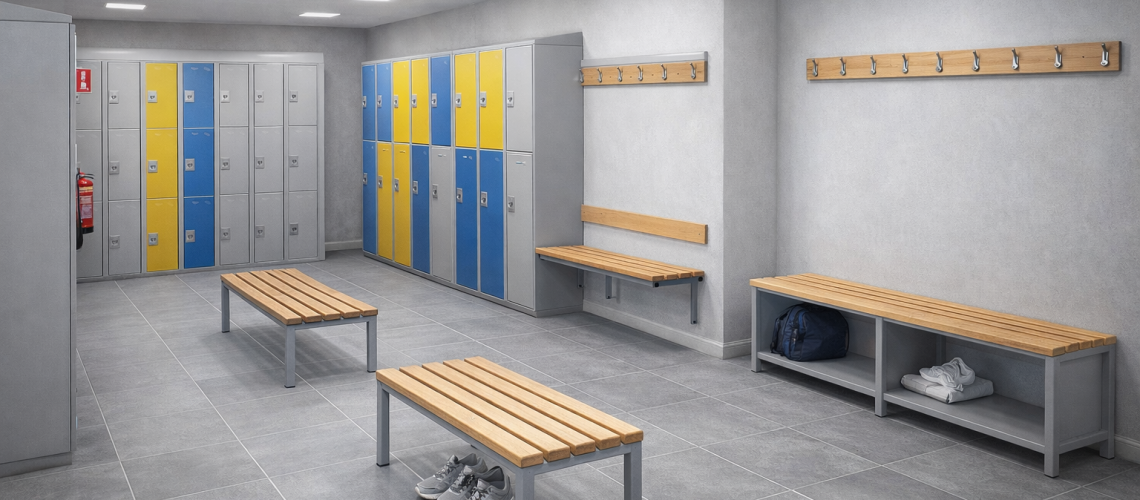
Changing room benches are a key part of any locker room, workplace welfare area, gym or school facility. While lockers provide storage, benches support how people actually use the space. They provide a place to sit, change, organise belongings and move comfortably through the area.
The right bench system improves layout, hygiene, durability and user experience. A poor choice can make the space harder to clean, more crowded and less practical for everyday use.
This guide explains the different types of changing room benches, materials, layouts and compliance considerations. It will help you choose the right bench seating for your environment.
Why changing room benches matter
Benches are often treated as a secondary item, but they play a central role in how locker areas function. Users rely on them for changing footwear, managing bags and organising clothing. In busy environments, they also help control movement and reduce congestion.
- support user comfort and usability
- improve flow in changing areas
- help keep belongings off the floor
- support hygiene and cleaning routines
- reduce wear on lockers and surrounding areas
- create a more organised and professional space
Types of changing room benches
Bench seating comes in several formats depending on the environment and layout requirements.
- freestanding benches for flexible layouts
- wall-mounted benches for improved cleaning access
- benches with integrated hook boards
- bench seating with under-storage space
- heavy-duty benches for industrial environments
Each type offers different benefits depending on how the space is used and how often it needs to be cleaned or reconfigured.
Bench materials explained
The material of the bench affects durability, hygiene and suitability for wet or dry environments.
- wood slat benches – traditional appearance and robust for dry areas
- plastic or polymer benches – ideal for wet areas and hygiene-sensitive spaces
- metal frame benches – strong structural support across all environments
Choosing the right material depends on moisture levels, cleaning requirements and the type of users.
Wet areas vs dry areas
Bench selection should always reflect the environment. Wet areas such as swimming pools and shower rooms require materials that resist moisture and are easy to clean. Dry areas such as offices and schools allow for a wider range of finishes.
In wet environments, plastic or polymer seating is often the most reliable long-term option. In dry environments, wood or laminate finishes may be more suitable.
Bench layout and spacing
Layout is just as important as the bench itself. Poor spacing can create congestion, make cleaning difficult and reduce usability.
- allow clear walkways between locker rows
- ensure bench placement does not block locker doors
- leave enough space for users to sit and move comfortably
- maintain access for cleaning equipment
Well-planned layouts improve both user experience and long-term maintenance.
Benches with hooks and storage
Many changing room benches are combined with hook boards or storage features. This helps users organise clothing and belongings more efficiently.
- coat hooks for hanging clothing
- upper rails for bags and uniforms
- under-bench storage space
- combined locker and bench systems
These features are particularly useful in workplaces, schools and gyms where space needs to be used efficiently.
Hygiene and cleaning considerations
Bench seating must be easy to clean and maintain. Designs that trap dirt or restrict access can quickly become a problem in busy environments.
- choose materials suited to regular cleaning
- avoid designs that trap moisture or debris
- ensure access to the floor beneath and around benches
- consider anti-bacterial or hygienic coatings where required
Compliance and safety
Bench installations must support workplace safety, hygiene standards and accessibility. This includes ensuring safe placement, adequate spacing and suitable materials for the environment.
Benches should not obstruct walkways or emergency routes, and they should be stable, durable and safe for daily use.
Choosing the right bench for your environment
The best bench solution depends on how the space is used. Start by considering the environment, user type and expected usage patterns.
- workplaces may need durable, functional seating
- schools require robust and space-efficient designs
- gyms benefit from compact, easy-to-clean layouts
- wet areas require moisture-resistant materials
Matching the bench to the environment ensures better performance and long-term value.
Explore bench seating and locker solutions
Changing room benches work best as part of a complete storage and layout system. To build an effective space, benches should be considered alongside lockers, locks and overall layout planning.
Explore our locker range, review locker lock options, and browse more guidance on the Total Locker Service blog.
Discover more from Blog Total Locker Service
Subscribe to get the latest posts sent to your email.